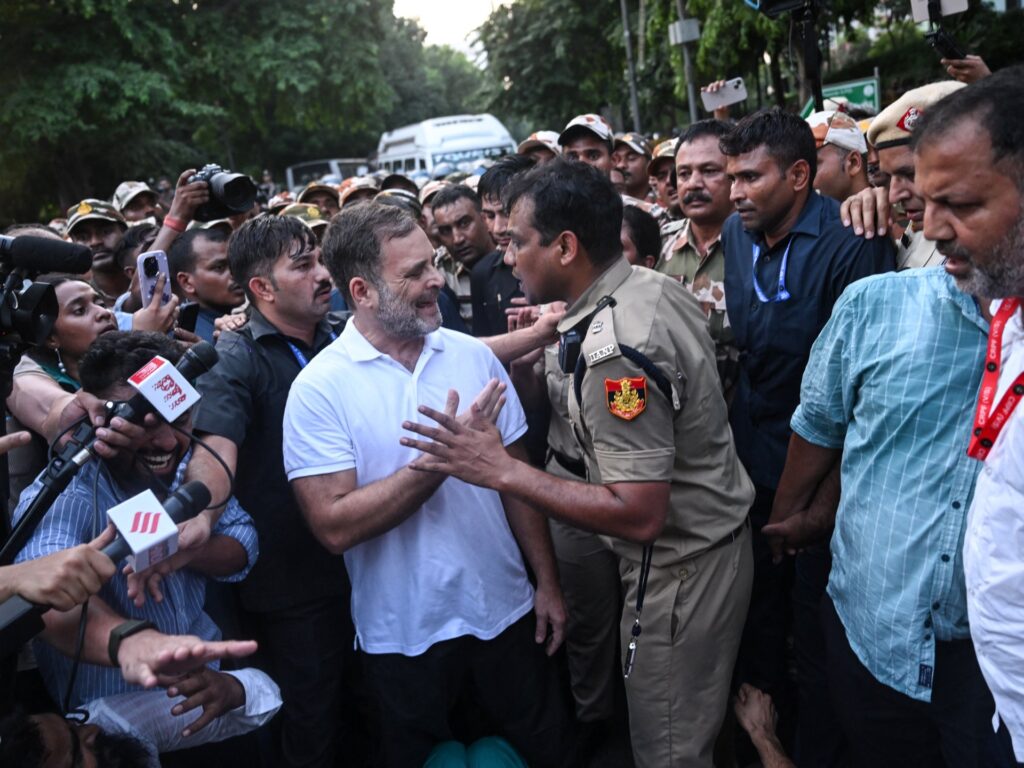
Rahul Gandhi, a prominent opposition leader in India, has been detained once again during a protest demanding the resignation of the country’s election commission chief. This recent arrest adds to a series of detentions Gandhi has faced at similar protests. The demonstrations center around allegations and dissatisfaction with the conduct and decisions of the election commission chief, which opposition parties regard as compromising the fairness and transparency of electoral processes in India.
Rahul Gandhi, a key figure in the Indian National Congress, has been vocal in his criticism of the election body, accusing it of partiality and failure to uphold democratic norms. The protests have drawn significant public attention, highlighting growing tensions between opposition parties and the authorities overseeing elections.
The repeated detention of Gandhi underscores the broader political struggle in India, where democratic institutions and their independence are often hotly debated topics. His arrests during such protests have sparked widespread discussions about the right to protest, freedom of speech, and the role of state authorities in managing dissent.
The election commission chief, a pivotal figure in India’s electoral framework, has faced calls for resignation from various quarters, pointing to incidents alleged to undermine the integrity of the election process. The opposition’s protest and Gandhi’s leadership signal the intensity of political dissatisfaction and the challenges facing India’s electoral governance.
Despite the detentions, Rahul Gandhi and his supporters continue to rally for accountability and reform within the election commission. These protests have mobilized a range of civil society actors and opposition parties, emphasizing the crucial role of fair electoral practices in sustaining India’s democratic fabric.
The ongoing arrests and protests highlight the fragile balance between maintaining law and order and respecting democratic freedoms to challenge and critique government bodies. As the situation unfolds, it remains a focal point of national debate on governance, democracy, and political rights in India.