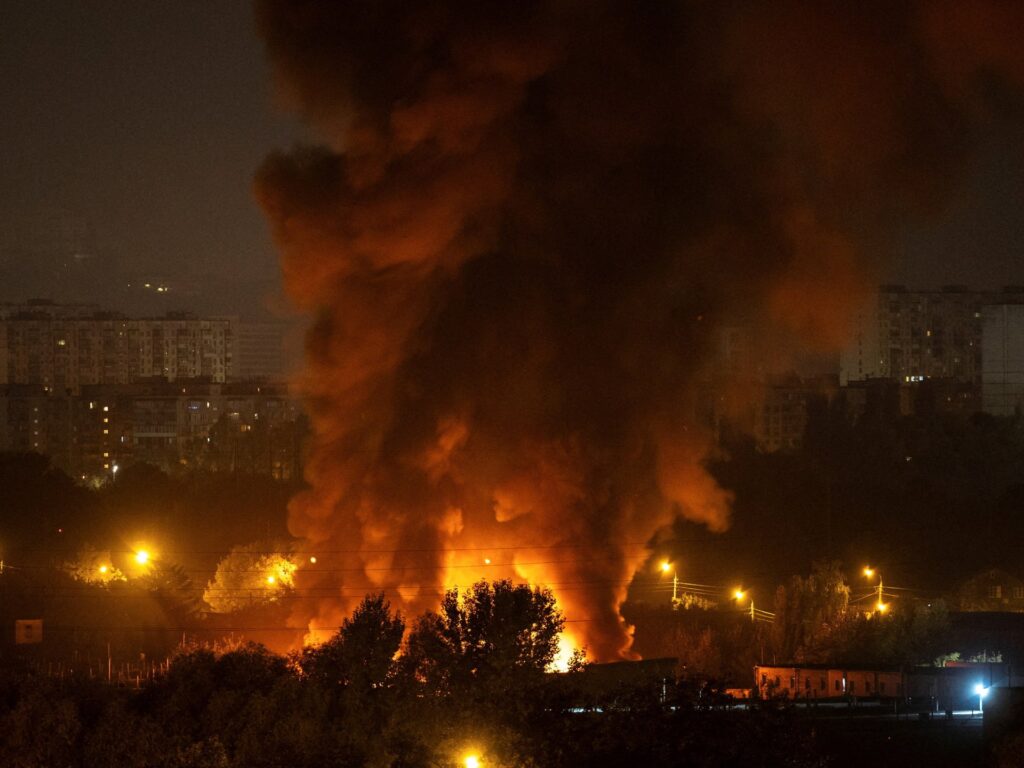
In a significant escalation of the ongoing conflict, Russia launched a massive overnight attack on Ukraine, resulting in at least 20 fatalities. According to Ukraine’s air force, the coordinated assault involved the deployment of 130 drones, 48 cruise missiles, and ballistic missiles targeting multiple regions across the country.
The attack was one of the largest in recent months, signaling a new phase of intensified hostilities between the two nations. Ukraine’s defense forces reported that the attackers aimed to weaken critical infrastructure and disrupt the country’s defensive capabilities.
The drone swarm, numbering 130, was deployed in waves to overwhelm Ukrainian air defenses. Despite the country’s efforts to intercept and neutralize the incoming threats, a portion managed to breach the defenses, causing significant damage.
The 48 cruise missiles targeted strategic military installations and urban areas, compounding the destruction and casualty count. Ballistic missile strikes added to the severity of the assault, penetrating through defense shields with high precision.
Casualty reports confirm at least 20 people were killed during the attacks, including both military personnel and civilians. Emergency services have been mobilized to assist affected areas and manage the aftermath of the strike.
Ukraine’s military spokesperson condemned the attack, labeling it an unprovoked act of aggression that violates international law and peace agreements. The government has called for urgent international support and reinforced its resolve to defend its sovereignty.
The international community has widely condemned the Russian offensive, with several countries expressing solidarity with Ukraine. Calls for diplomatic intervention and increased sanctions against Russia have gathered momentum amid fears of further escalations.
The attack has severely impacted Ukraine’s infrastructure, with reports of power outages, damage to communication networks, and disruption of essential services. Humanitarian agencies are concerned about the increasing civilian suffering and the potential for a worsening crisis.
In response, Ukraine has ramped up its air defense measures and announced plans for enhanced countermeasures to prevent future large-scale attacks. Military analysts suggest that the scale and intensity of this attack may indicate Russia’s intention to exert greater pressure on Ukraine ahead of any potential peace negotiations.
As the situation unfolds, residents in affected areas remain on high alert, preparing for possible additional attacks. The government advises civilians to adhere to safety protocols and remain vigilant.
This latest assault underscores the ongoing volatility of the Russia-Ukraine conflict, highlighting the risks of prolonged tension in the region. With casualties mounting and infrastructure damaged, the path to peace appears increasingly complicated.
Despite the challenges, Ukraine’s leadership remains committed to regaining control and restoring stability. International aid and diplomatic efforts continue to play a crucial role in supporting Ukraine through this turbulent period.
Observers warn that unless effective negotiations commence soon, further escalations could lead to broader regional instability, affecting neighboring countries and global security.
The world watches closely as both parties navigate this critical juncture, hoping for a resolution that prevents further loss of life and destruction.