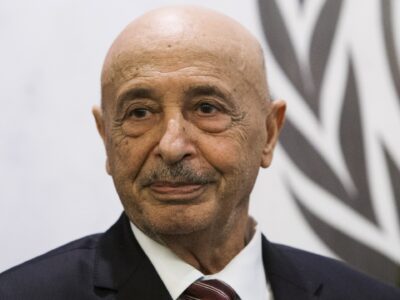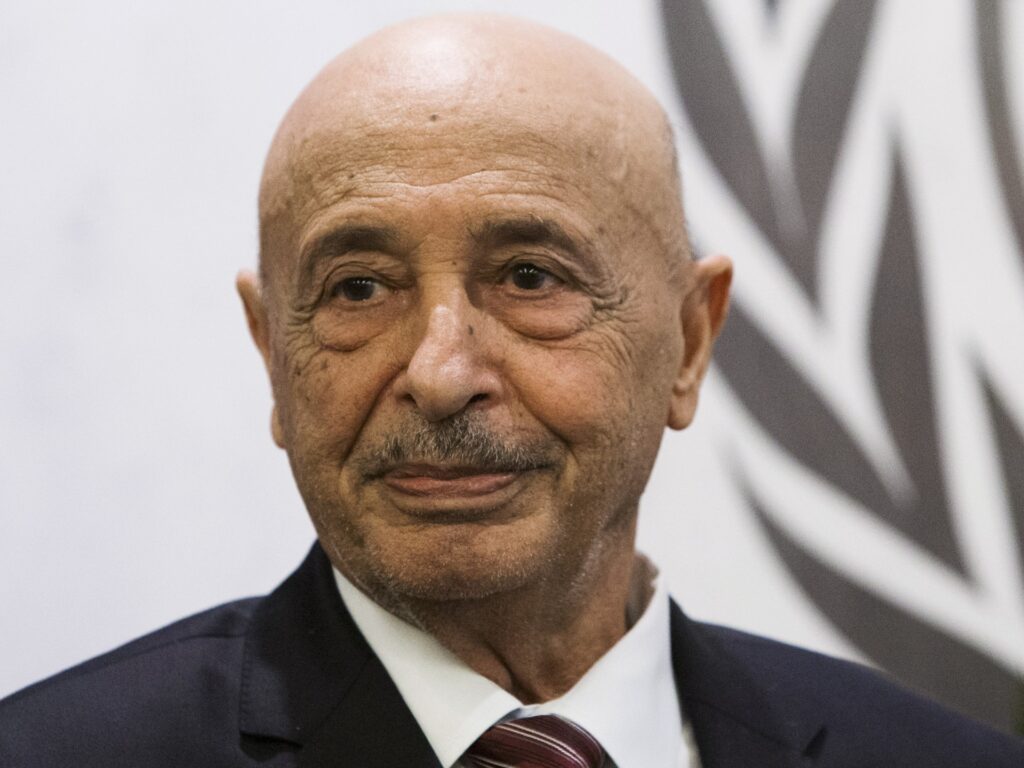
Libya’s Eastern-based parliament has voted to remove Speaker Aguil Saleh after an extensive 12-year tenure, signaling a significant shift in the country’s political landscape. Saleh, who has been a predominant figure in Libyan politics, particularly representing the eastern region, faced mounting criticism and growing discontent among lawmakers leading to his replacement.
The decision culminated in a vote where Saleh was ousted, and Al-Salhin Abdelnabi al-Obeidi was named as the new speaker of the parliament. Al-Obeidi, a relatively lesser-known figure in comparison to Saleh, now assumes a crucial leadership role as Libya continues to navigate a complex and often fragmented political environment.
The change in parliament leadership reflects increasing frustration over prolonged political deadlock and challenges that have hindered Libya’s efforts to stabilize and rebuild after years of conflict. Saleh’s long-standing presence was both a symbol of continuity and a point of contention, as some factions viewed his leadership as resistant to needed reforms.
Observers note that the transition could pave the way for renewed dialogue and potential reconciliation efforts between different political and regional actors in Libya. The eastern-based parliament’s move may also be indicative of shifting alliances and the demand for political renewal that resonates among Libyan citizens and parliamentarians alike.
Libya has been grappling with divided governance structures and ongoing tensions between the eastern and western parts of the country. This leadership change, therefore, has broader implications for the power dynamics at play and the pursuit of national unity.
Al-Salhin Abdelnabi al-Obeidi inherits the challenging task of steering the parliament towards greater functionality and inclusiveness. His ability to engage disparate groups and foster cooperation will be critical for advancing Libya’s political process and addressing issues such as national elections, security, and economic recovery.
The removal of Saleh, once considered a dominant political figure, underscores a period of transformation and the appetite for change among Libya’s lawmakers. It remains to be seen how this leadership transition will influence the overall trajectory of Libya’s fragile political stability in the months ahead. However, the parliament’s decisive vote marks a notable moment in the ongoing effort to reshape Libya’s political institutions for a more hopeful future.