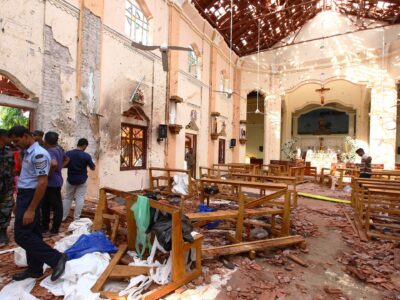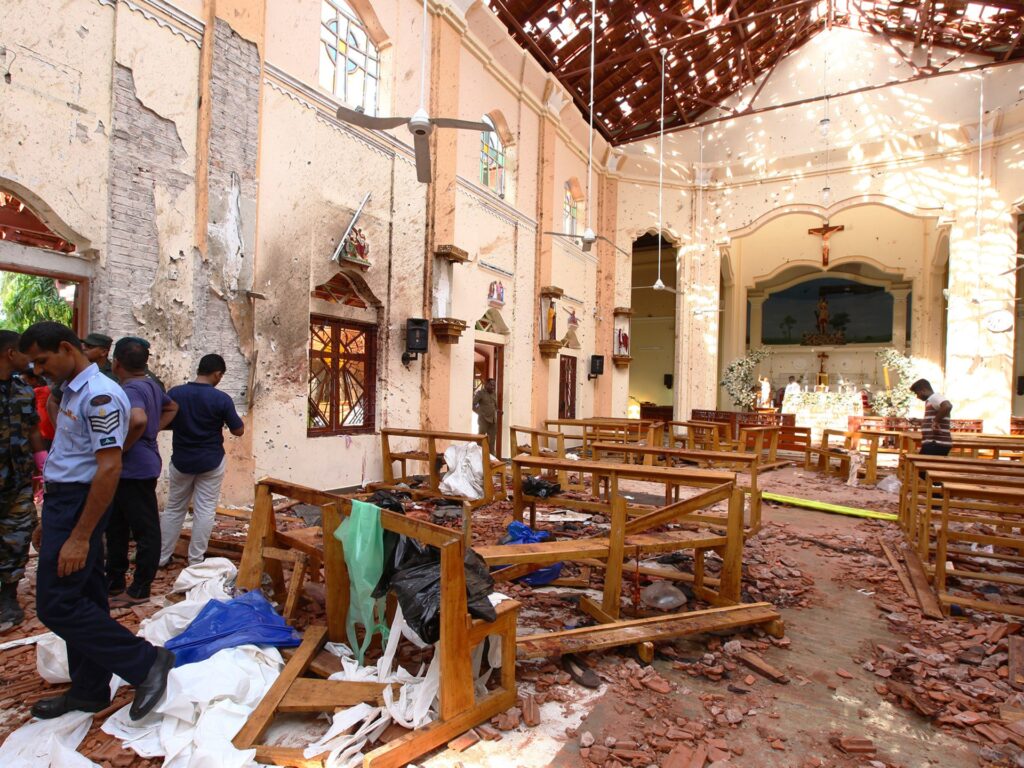
Sri Lankans have expressed mixed feelings following the recent court ruling that handed long prison sentences to 15 men convicted for the 2019 Easter Sunday bombings. The devastating attacks, which targeted churches and luxury hotels, claimed the lives of over 250 people and left the nation grappling with grief and outrage.
While the sentencing is being seen as a measure of justice achieved, there remains a significant caveat voiced by victims’ families and civil society. Many argue that the ruling only partially addresses the truth, leaving unresolved questions about the deeper forces behind the bombings.
Among the most vocal is a father who lost his teenage daughter in the attacks. He expressed his sorrow and frustration, acknowledging that while the courthouse verdict provides some closure, it fails to answer lingering questions about a possible political conspiracy underlying the tragedy.
Such suspicions are not unfounded in the complex political and social landscape of Sri Lanka. The bombings exposed significant intelligence failures and alleged political interference in security operations, stirring widespread speculation about whether certain elements within the government or political apparatus may have had knowledge of or links to the attackers.
Experts suggest that uncovering the complete truth is vital not only for justice but for the reconciliation and healing process in a country still recovering from decades of ethnic conflict. Transparency about the events leading to the attacks, including any political cover-ups, is essential to prevent recurrence.
The convicted individuals, many connected to extremist groups, represent a fraction of the larger narrative. Analysts highlight that focusing solely on the perpetrators obscures a broader investigation into systemic issues, such as intelligence lapses, inadequate law enforcement response, and political negligence.
Sri Lanka’s judiciary has been praised for its rigorous process in securing convictions, but the public discourse now turns towards demanding comprehensive truth-seeking initiatives. Calls for parliamentary inquiries and international investigations have gained momentum as part of the quest for full accountability.
Families of victims, survivors, and civil rights advocates stress the importance of recognizing all victims and ensuring that justice extends beyond prison sentences to include institutional reforms. These reforms are viewed as crucial for preventing extremist violence and promoting social cohesion.
The government’s response has been cautious. While affirming the court’s verdict, officials have not yet addressed allegations of political conspiracy, prompting criticism from opposition groups and human rights organizations.
Local media coverage reflects a nation caught between relief and skepticism. Forums and public debates continue to explore unresolved issues, fostering a climate of vigilance and demand for transparency.
International observers have welcomed the convictions as a step forward but encourage Sri Lanka to deepen its inquiry into the underlying causes. They underline that lasting peace and security depend on addressing political and systemic vulnerabilities exposed by the bombings.
In summary, the Sri Lankan public’s reception of the 2019 bombings court ruling is one of cautious optimism mixed with continued calls for truth and justice. The journey to fully healing from the wounds of that tragic day remains ongoing, with justice only one part of a more complex process involving political clarity, institutional accountability, and societal reconciliation.