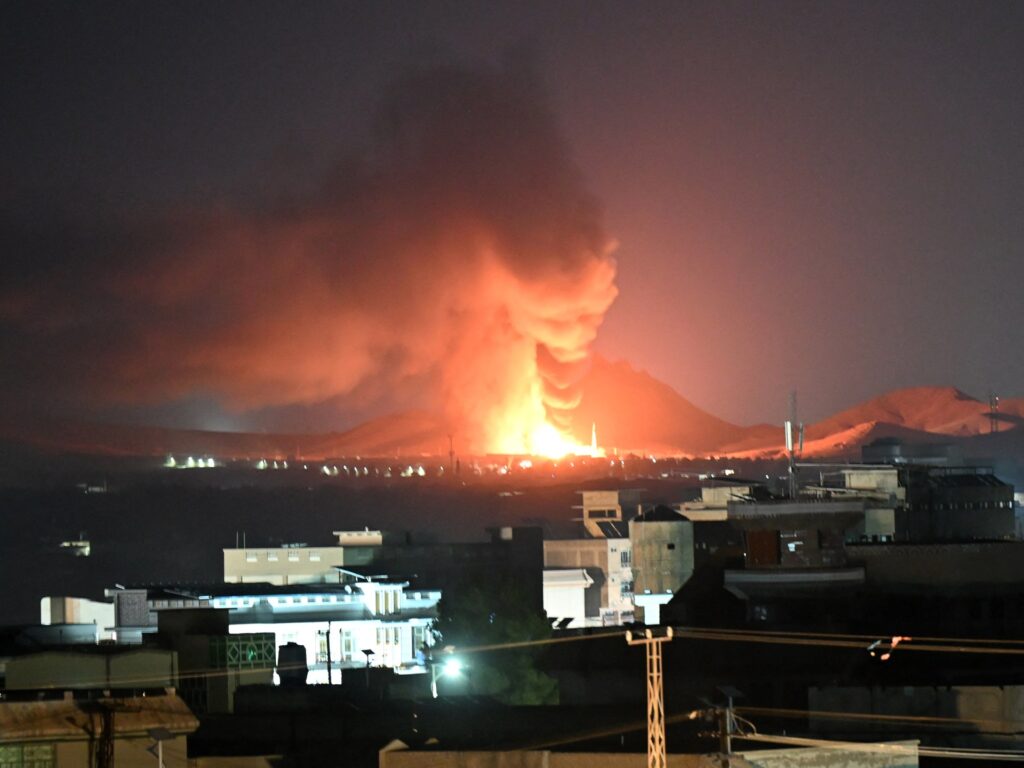
Tensions between Afghanistan and Pakistan have escalated sharply after Pakistan conducted air strikes on multiple locations across the Afghan border, resulting in the deaths of four individuals. Pakistan stated that the operations targeted ten locations within Afghanistan that were allegedly being used to store and launch drones. These acts have provoked a strong response from Afghanistan, which has vowed to respond to what it considers a violation of its sovereignty.
The recent air strikes highlight a growing conflict along the porous border between the two neighbors. According to Pakistani officials, the affected sites were involved in hostile activities, including the deployment of drones potentially used for attacks. Pakistan has justified the strikes as necessary measures to protect its national security interests.
In retaliation, Afghan authorities condemned the strikes as an infringement on their territorial integrity and promised to retaliate. Afghan leaders have called for international condemnation of the Pakistani actions, asserting that unilateral military incursions only exacerbate regional instability.
The continuing hostilities raise concerns about the fragile peace in the region, potentially undermining ongoing diplomatic efforts aimed at fostering cooperation between Afghanistan and Pakistan. Both countries share a long and complicated history marked by periods of cooperation and conflict. Border disputes and cross-border militancy have frequently tested their bilateral relationship.
Moreover, the strikes come at a time when Afghanistan is already grappling with internal security challenges and socio-economic hardships following recent political changes. The added pressure of external military actions threatens to deepen the crisis and impact civilian populations near the border areas.
International observers and experts have called for restraint and dialogue to prevent further escalation. They emphasize the importance of establishing transparent communication channels and confidence-building measures to reduce misunderstandings and potential confrontations.
Analysts warn that continued military exchanges could destabilize the broader South Asian region, potentially drawing in other actors and complicating the geopolitical landscape. Therefore, many hope that both Afghanistan and Pakistan will seek peaceful solutions through diplomacy rather than military actions.
As the situation develops, the global community watches closely, urging both parties to prioritize peace and stability. The incident underscores the need for robust mechanisms to address security concerns without resorting to armed conflict, which could have devastating consequences for the region’s future.
In summary, the Pakistani air strikes killing four individuals in Afghanistan have intensified an already tense situation. Afghanistan’s vow to respond marks a critical juncture, highlighting the risks of military escalation between the neighboring states. The path forward depends on dialogue, mutual respect, and adherence to international norms to ensure lasting peace and security in this strategically significant region.