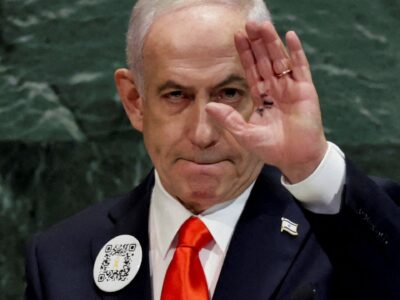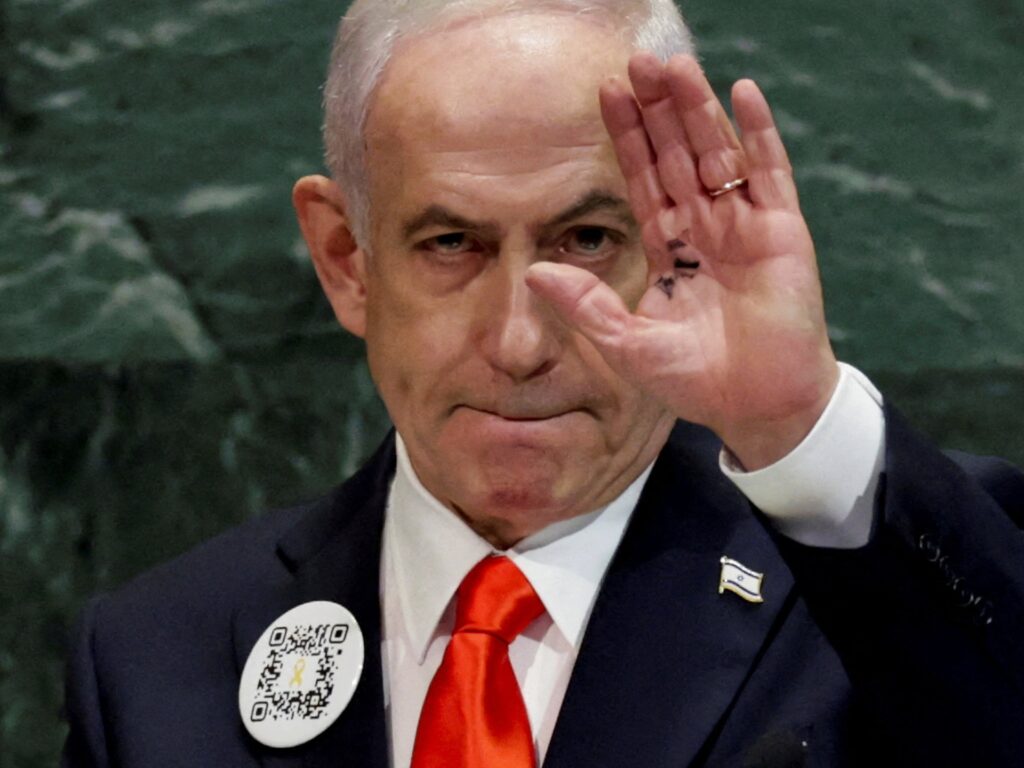
Israeli Prime Minister Benjamin Netanyahu has assumed the global spotlight once again, delivering a pivotal address at the United Nations. This year, his presence at the UN is underscored not only by international attention but also by the imminent Israeli elections that pose significant challenges to his political future.
Netanyahu arrived at the UN with a sharpened focus, navigating a complex landscape of international criticism and domestic political pressures. His speech at the UN highlighted key issues concerning Israel’s security, diplomatic relations, and his vision for the country’s future amidst a turbulent global environment.
The global community has intensified criticism of Israel in recent months, particularly concerning policies and actions related to the Israeli-Palestinian conflict. Netanyahu’s government has faced scrutiny over settlement expansions, security measures, and its approach to peace talks. At the UN, Netanyahu sought to defend Israel’s stance, stressing the nation’s right to self-defense and the challenges posed by regional instability.
Simultaneously, Netanyahu’s address was a strategic move to bolster his image on the home front. As Israeli voters prepare to head to the polls, the Prime Minister is acutely aware of the risk to his leadership. His UN appearance is seen as part of a larger campaign to solidify support among conservative and security-focused constituents by projecting strength and diplomatic gravitas.
Political analysts observe that Netanyahu’s balancing act at the UN reflects the broader tension between maintaining international relations and managing domestic political survival. His ability to navigate these dual pressures will likely influence his electability and the direction of Israeli politics in the coming months.
The Israeli election campaign has been marked by vigorous debates over national security, economic policies, and social issues. Netanyahu’s rivals are capitalizing on the growing dissatisfaction among certain voter segments, positioning themselves as alternatives to his long-standing leadership.
Despite the criticisms and political headwinds, Netanyahu’s stature as a seasoned leader and his adeptness in international diplomacy continue to resonate with a significant portion of the Israeli electorate. His UN speech was crafted to reinforce this image while addressing direct challenges posed by both internal opposition and external pressures.
Observers note that Netanyahu’s current political strategy involves leveraging his UN platform to reaffirm Israel’s strategic priorities and his vision for peace and stability in a region rife with conflict. By framing Israel’s narrative on the global stage, Netanyahu aims to mitigate some of the international criticism and portray strength to Israeli voters.
As the election looms, Netanyahu’s performance at the UN is likely to remain a significant talking point in ongoing political discourse. His ability to maintain support while addressing the complex issues facing Israel will be a decisive factor in the near term.
In conclusion, Netanyahu’s journey to the UN comes at a critical juncture, embodying the intersection of international diplomacy and domestic politics. His tenure, message, and political fate are increasingly intertwined with how he manages the dual challenges presented on the world stage and at home.