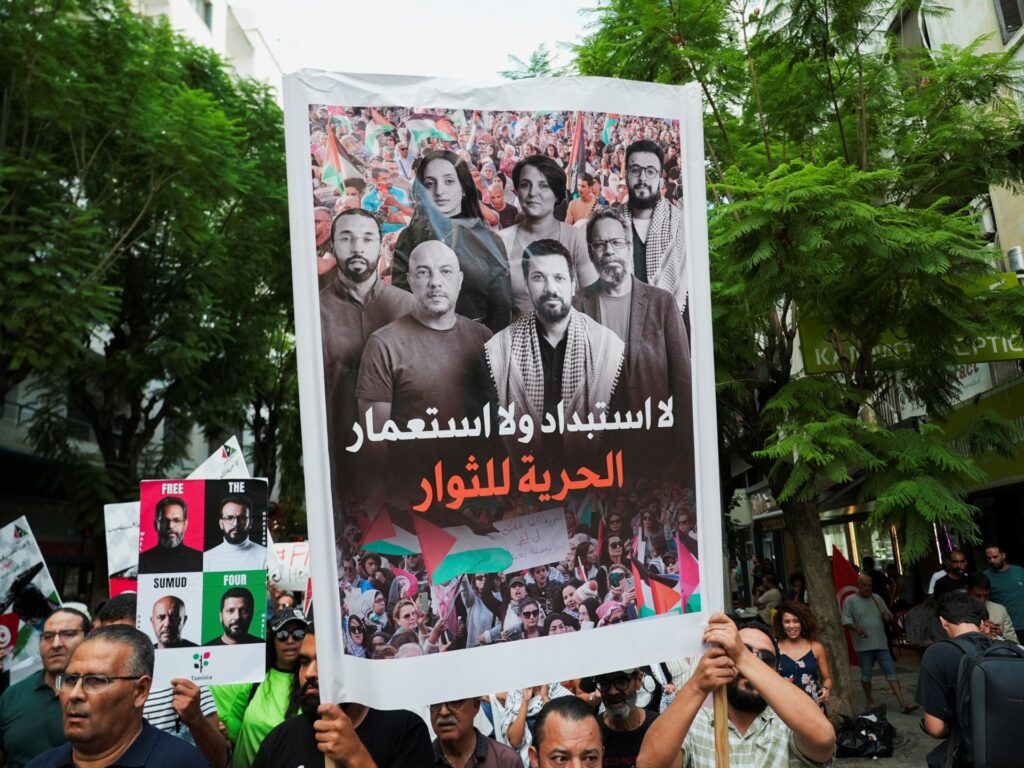
Wael Naouar, an activist involved in the Gaza Sumud Flotilla, has been on a hunger strike for 39 days in a Tunisian jail and is reportedly on the verge of death. His deteriorating condition has led to his hospitalization, raising serious concerns about his health and well-being.
Naouar’s hunger strike began as a form of protest while he was detained in Tunisia. The Gaza Sumud Flotilla, known for its efforts to challenge the Israeli blockade of Gaza, has brought attention to his plight, highlighting the urgent need for intervention to secure his release or adequate medical care.
The activist’s prolonged refusal to eat has significantly impacted his physical health, with his hospitalization indicating a critical stage. Hunger strikes are a desperate measure taken by prisoners to draw international attention to their cause or to protest perceived injustices.
Human rights organizations and international observers have expressed alarm over Naouar’s condition, calling on Tunisian authorities to address the situation humanely and to ensure his safety. The case underscores the broader issue of detainees using hunger strikes as a form of resistance and the responsibility of governments to respond appropriately.
The international community is being urged to intervene to prevent a potential tragedy and to uphold human rights standards. Naouar’s case exemplifies the risks faced by political activists in detention and the extreme measures they might resort to in the face of adversity.
As the hunger strike enters its 39th day, the health of Wael Naouar remains fragile, and the need for immediate action is critical. The situation continues to draw attention to the conditions of prisoners engaged in hunger strikes and the political contexts surrounding their detention.