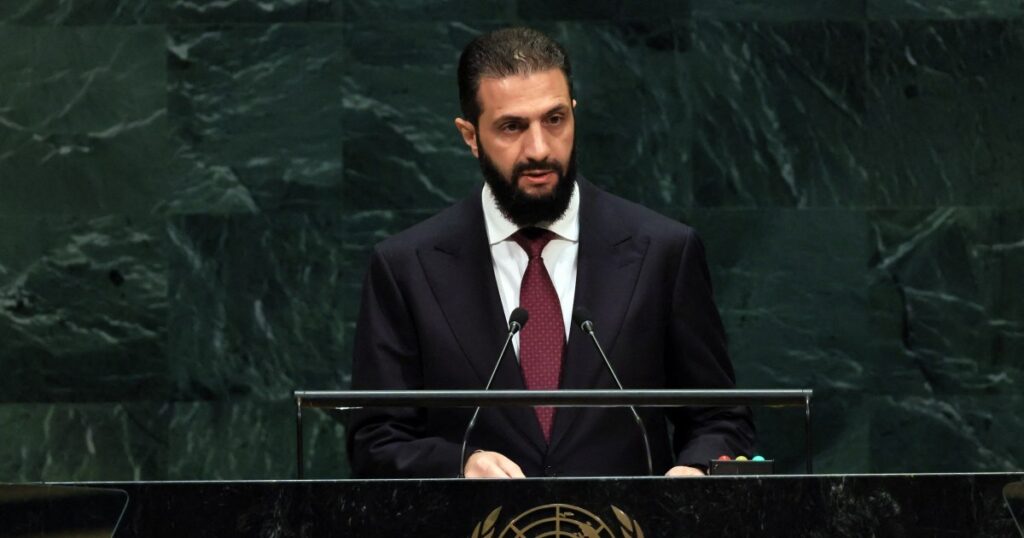
In a significant address at the United Nations General Assembly, Syrian President Ahmed al-Sharaa called for an immediate withdrawal of Israeli forces from occupied territories. Delivering the speech amidst Syria’s efforts to stabilize and recover from a prolonged civil war, al-Sharaa condemned Israeli attacks as violations of international law and obstacles to peace in the region.
Al-Sharaa emphasized the importance of respecting Syria’s sovereignty and territorial integrity, accusing Israel of exacerbating tensions through its military actions. He urged the international community to support Syria’s position and to hold Israel accountable for its actions.
The Syrian president’s speech marks a pivotal moment as the country seeks to rebuild and establish itself on the global stage following years of internal conflict. Al-Sharaa highlighted the devastation wrought by the civil war and expressed hope for a future of peace and cooperation in the Middle East.
He also called on the United Nations and other international organizations to play a more active role in resolving the Israeli-Palestinian conflict, which he described as a critical issue impacting regional stability.
Throughout the address, al-Sharaa appealed for solidarity among nations and emphasized the need for dialogue and diplomacy to ensure lasting peace. His strong condemnation of Israeli actions signals Syria’s firm stance on defending its borders and supporting Palestinian rights.
As Syria emerges from the shadows of civil war, al-Sharaa’s speech is seen as an attempt to reassert Syria’s position in international affairs and to rally support against what it views as continued Israeli aggression.
The UN General Assembly session provided a crucial platform for Syria to voice its grievances and to seek renewed engagement with global powers. Al-Sharaa’s call for withdrawal reflects broader regional concerns about ongoing conflicts and the quest for peace and security in the Middle East.
Observers note that Syria’s appeal comes at a time when the international community is increasingly focused on addressing human rights and the rule of law in post-conflict scenarios. Al-Sharaa’s statement underscores the complexity of the region’s geopolitics and the enduring challenges posed by unresolved territorial disputes.
This development highlights the continued volatility in the Middle East and the urgent need for comprehensive peace initiatives backed by international cooperation. As Syria steps onto the global stage anew, its leadership is keen to influence regional dynamics and promote a vision of peaceful coexistence and mutual respect among nations.