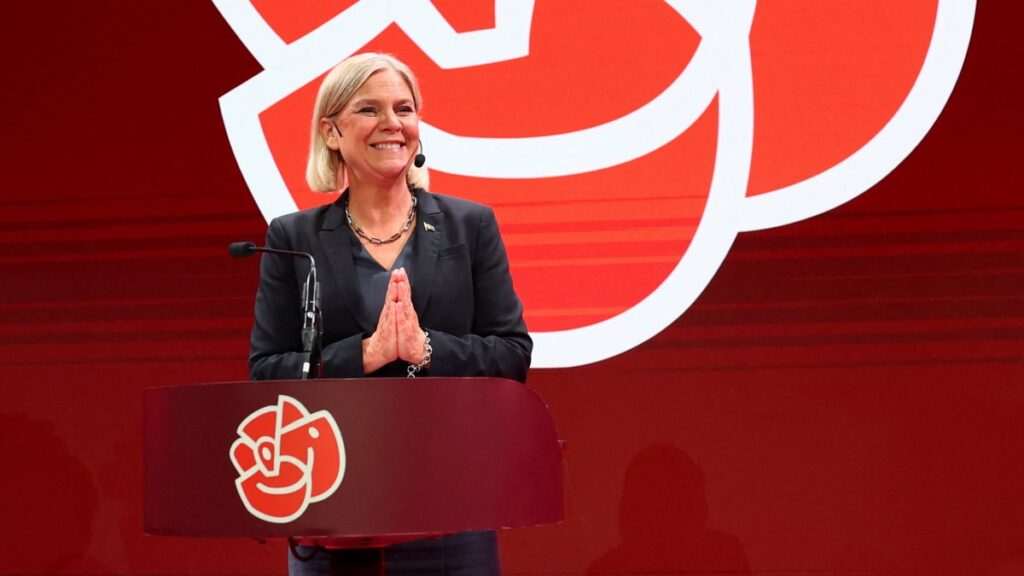
Magdalena Andersson, the leader of Sweden’s left-wing opposition, has initiated the process of forming a new government following recent political developments. As the head of the Social Democrats, Andersson’s move marks a crucial step in the country’s political landscape, signaling potential shifts in policy and governance.
The formation of a government in Sweden requires collaboration and unity among various parties, particularly within the left-wing spectrum. Andersson faces the daunting task of bringing together Sweden’s other left-wing parties, which include the Left Party and the Green Party. This coalition-building effort is essential to secure a parliamentary majority and ensure a stable government.
The challenges are significant, as each party holds distinct priorities and policy agendas. Andersson must navigate differing views on economic policies, climate action, welfare programs, and social issues to forge a cohesive and functional alliance. The process demands careful negotiation and compromise, balancing the ambitions of individual parties with the broader goal of national governance.
In addition to internal party dynamics, Andersson must address the expectations of the Swedish electorate, who are keenly observing how the opposition intends to lead the country. The political climate in Sweden has been marked by debates over immigration, healthcare, and economic recovery, making the government’s formation process all the more consequential.
Observers note that Andersson’s experience as a former prime minister and finance minister equips her with the expertise to manage these complexities effectively. Her leadership style, known for pragmatism and consensus-building, could prove advantageous in uniting the left-wing factions.
However, the path ahead is not without obstacles. The fragmentation of the left-wing vote in recent elections suggests potential difficulties in achieving a unified front. Moreover, negotiations must account for the influence of centrist and right-wing parties, which hold substantial sway in the Riksdag, Sweden’s parliament.
Andersson’s initiative comes at a time when Sweden faces critical challenges, including economic pressures, climate change commitments, and social cohesion. The successful formation of a left-wing government could lead to renewed focus on progressive policies and social welfare enhancements.
To consolidate support, Andersson is engaging in talks with party leaders, aiming to establish a shared platform that aligns with common values and objectives. These discussions are expected to cover key issues such as investments in renewable energy, strengthening healthcare services, and improving education systems.
Public response to Andersson’s government-building efforts has been mixed, with supporters expressing optimism about progressive reforms, while critics caution about potential political instability.
As the negotiations progress, the Swedish political scene remains dynamic, with all parties acutely aware of the implications of government formation on the nation’s future direction.
In summary, Magdalena Andersson’s efforts to unite the left-wing parties and form a government represent a significant chapter in Sweden’s political narrative. The process embodies both the complexities and possibilities inherent in parliamentary democracy, with the potential to shape Sweden’s trajectory in the coming years.