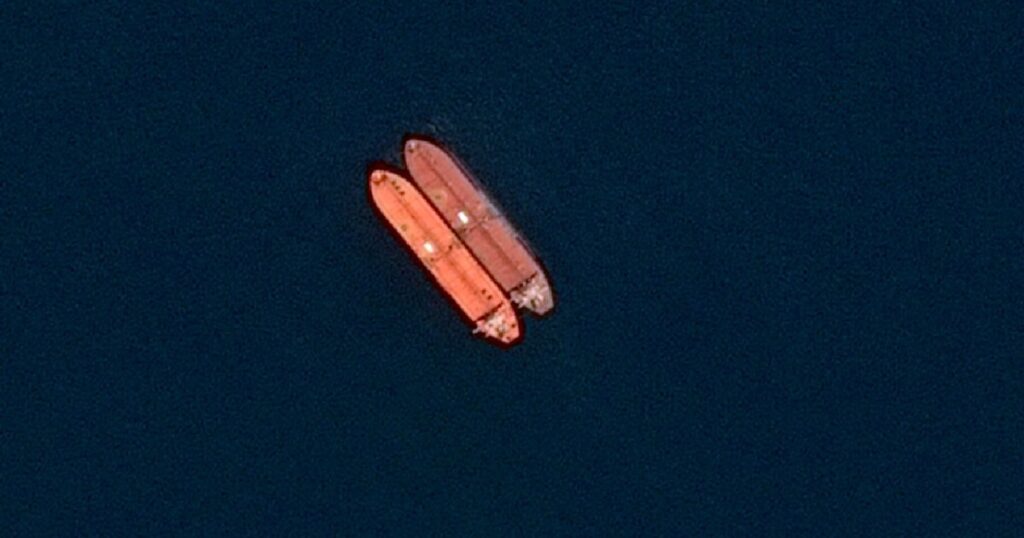
In response to continuing tensions and the blockade in the Strait of Hormuz, Oman’s Sohar port has emerged as a critical hub for ship-to-ship (STS) oil transfers. This method has become an essential alternative route for international oil shipments seeking to avoid the risky and congested waterways in the region.
Ship-to-ship transfers involve the direct movement of crude oil or petroleum products between two vessels positioned alongside each other at sea or within a sheltered port area. In Oman, Sohar port offers a strategic location with deepwater berths capable of accommodating large oil tankers, making it suitable for facilitating these operations.
The process starts with a laden oil tanker arriving at Sohar port, where it is anchored securely. A receiving tanker, often heading towards various global destinations, then docks in close proximity. Specialized equipment such as flexible hoses and transfer pumps are deployed to move oil between vessels under strict safety and environmental guidelines.
Despite Sohar port’s growing significance, ship-to-ship transfers carry substantial risks. The biggest concerns include the potential for oil spills, fire hazards due to volatile hydrocarbons, and navigational challenges, especially under adverse weather conditions. These risks require expert crews, meticulous planning, and adherence to international maritime safety standards to mitigate hazards.
Moreover, the geopolitical climate adds complexity to these operations. The blockade in the Hormuz Strait has forced multiple oil exporters and transit countries to adapt logistics to ensure consistent supply to global markets. Oman’s STS facilitation provides a crucial bypass, enhancing regional energy security and demonstrating the nation’s growing role in the international oil transport network.
Economic impacts are also significant. By enabling continued oil flow despite impediments at Hormuz, Oman helps stabilize global oil prices and supply chains. Additionally, the revenue from port operations and the supporting maritime services sector boosts the local economy.
The evolution of STS transfers at Sohar port reflects broader trends in maritime logistics, where innovation is driven by geopolitical constraints and economic necessity. Industry experts emphasize the importance of ongoing investments in infrastructure and technology to improve efficiency and safety.
In conclusion, as the Strait of Hormuz remains a hotspot for geopolitical tension, Oman’s Sohar port stands out as a vital conduit for global energy shipments. Ship-to-ship transfers, though challenging and laden with risks, are pivotal in maintaining the energy supply chain and mitigating the impact of regional instability on global oil markets.