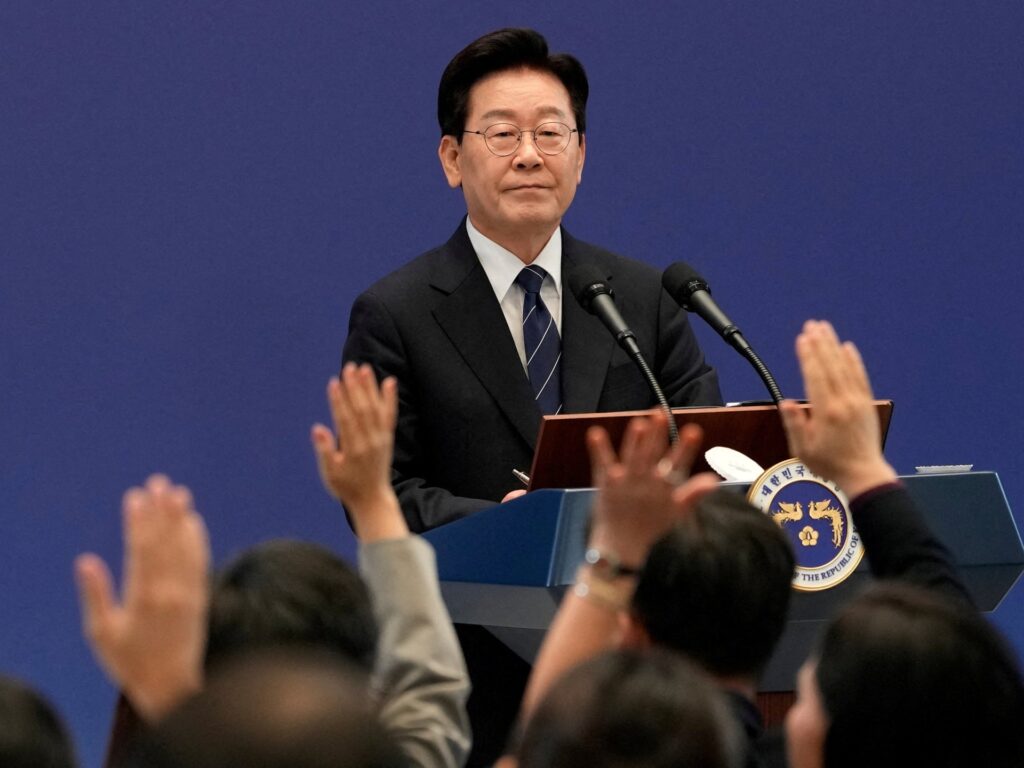
South Korea’s president has announced a willingness to facilitate dialogue between the United States and North Korea, signaling a potential thaw in relations and a strategic move toward diplomacy in the volatile region. This development highlights South Korea’s commitment to peace and stability on the Korean Peninsula amid ongoing tensions with North Korea.
Simultaneously, South Korea has made it clear that it will not participate militarily in the US-led efforts in the Strait of Hormuz regarding the conflict with Iran. The decision underscores Seoul’s careful balancing act between supporting its key ally, the United States, and avoiding deeper involvement in Middle Eastern conflicts.
The South Korean government’s stance was explicitly communicated, emphasizing that while it is open to supporting diplomatic efforts with North Korea, it prefers to refrain from direct military engagement in the Iran situation. This position reflects South Korea’s broader foreign policy approach, which prioritizes regional security and diplomatic resolutions over military interventions.
The potential US-North Korea talks could pave the way for easing long-standing hostilities and possibly lead to agreements on denuclearization and peace treaties. South Korea’s role as a facilitator can enhance trust and provide a neutral ground for discussions between the two nations, which have experienced decades of conflict and unpredictability.
On the other hand, by ruling out troop deployment in the Middle East, South Korea is signaling a degree of caution in extending its military commitments globally, focusing instead on direct regional security concerns.
This dual approach by South Korea highlights the complexities in international relations, where countries must navigate alliance obligations, regional threats, and global geopolitical dynamics carefully.
International observers have noted that South Korea’s position might influence other US allies in the region when considering their roles in conflicts extending beyond their immediate vicinity. Moreover, Seoul’s facilitation of US-North Korea talks could bring renewed hope for peace and stability in East Asia.
The US administration has welcomed South Korea’s readiness to support talks with North Korea, seeing it as a positive step towards a peaceful resolution of long-standing issues. Meanwhile, the US respects South Korea’s decision to abstain from involvement in the Strait of Hormuz military operations, underscoring the importance of each ally’s strategic choices.
In summary, South Korea is positioning itself as a pivotal player in regional diplomacy by advocating for dialogue with North Korea while maintaining a cautious and strategic stance on military involvement abroad. This approach may contribute significantly to fostering peace in East Asia and managing complex international alliances.