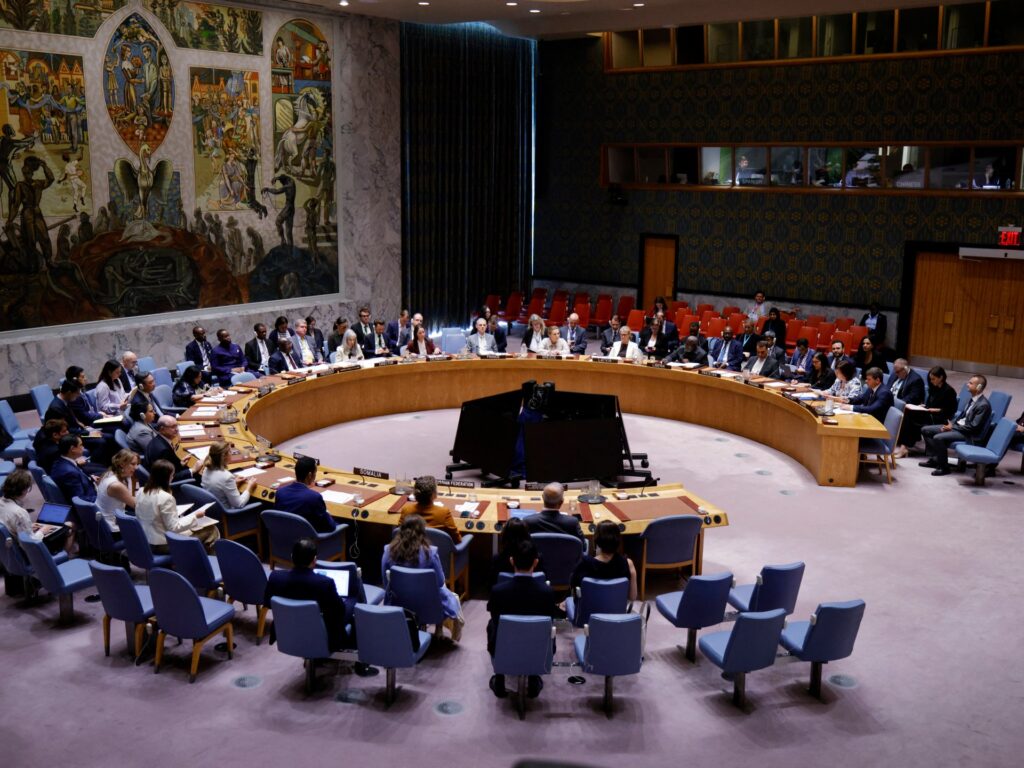
In a significant development at the United Nations Security Council, Russia and China have exercised their veto powers to block the renewal of the mandate for the panel responsible for monitoring sanctions on Iran. This move effectively ends the Security Council’s watchdog panel that oversees Iran sanctions, raising concerns among various member states about the future of enforcement and oversight of sanctions measures.
The sanctions against Iran have been a focal point of international diplomacy, aimed primarily at curbing Iran’s nuclear program and preventing the proliferation of nuclear weapons. The Security Council’s panel has played a crucial role in monitoring compliance and reporting violations, ensuring member states adhere to the established sanctions regime.
The veto by Russia and China signals a shift in the geopolitical landscape surrounding Iran sanctions. Both countries have historically advocated for a more lenient approach toward Iran, often emphasizing the importance of diplomatic engagement over strict punitive measures. Their joint veto has sparked debates and uncertainties about the efficacy of the sanctions moving forward, and the ability of the UN to hold Iran accountable through the existing frameworks.
Critics of the veto argue that it undermines international efforts to maintain nuclear non-proliferation and security in the Middle East. They fear that without a dedicated body to scrutinize and report on sanctions compliance, illicit activities and violations may go unchecked, potentially destabilizing the region further.
Supporters of Russia and China’s decision contend that the sanctions and their enforcement mechanisms have been counterproductive, arguing for renewed negotiations and dialogue with Iran. They propose that lifting the monitoring panel could pave the way for a more constructive diplomatic process to address outstanding security concerns in a balanced manner.
The termination of the watchdog panel also leaves the UN Security Council facing significant challenges in garnering consensus on Iran-related policies. With two permanent members exercising vetoes, achieving unified action on Iran sanctions becomes increasingly complex.
International analysts predict that this veto will have wide-reaching implications beyond immediate UN proceedings. It could influence global energy markets, as Iran remains a key player in the oil sector, and affect broader strategic alliances, potentially realigning relationships within the Asia-Pacific and Middle Eastern regions.
The veto underscores the ongoing tensions in the Security Council where competing national interests and strategic alliances often dictate decisions. It highlights the difficulties in balancing collective security responsibilities with the varied geopolitical priorities of council members.
Looking ahead, diplomatic efforts are likely to intensify as other UN members seek alternate paths to ensure Iran’s compliance with international obligations. Multilateral forums, regional partnerships, and bilateral negotiations may play more prominent roles in filling the gap left by the absence of this UN monitoring mechanism.
Meanwhile, Iran’s response to the veto remains cautiously optimistic, framing the development as an opportunity for progress in its relations with both Russia and China and the broader international community. Tehran emphasizes its willingness to engage in constructive dialogue but insists on the need for mutual respect and sovereignty.
In summary, the decision by Russia and China to veto the renewal of the UN panel monitoring Iran sanctions marks a pivotal moment in international diplomacy. It challenges existing mechanisms for sanctions enforcement and opens new avenues for diplomatic engagement, with significant repercussions for regional security, international law, and global political dynamics.