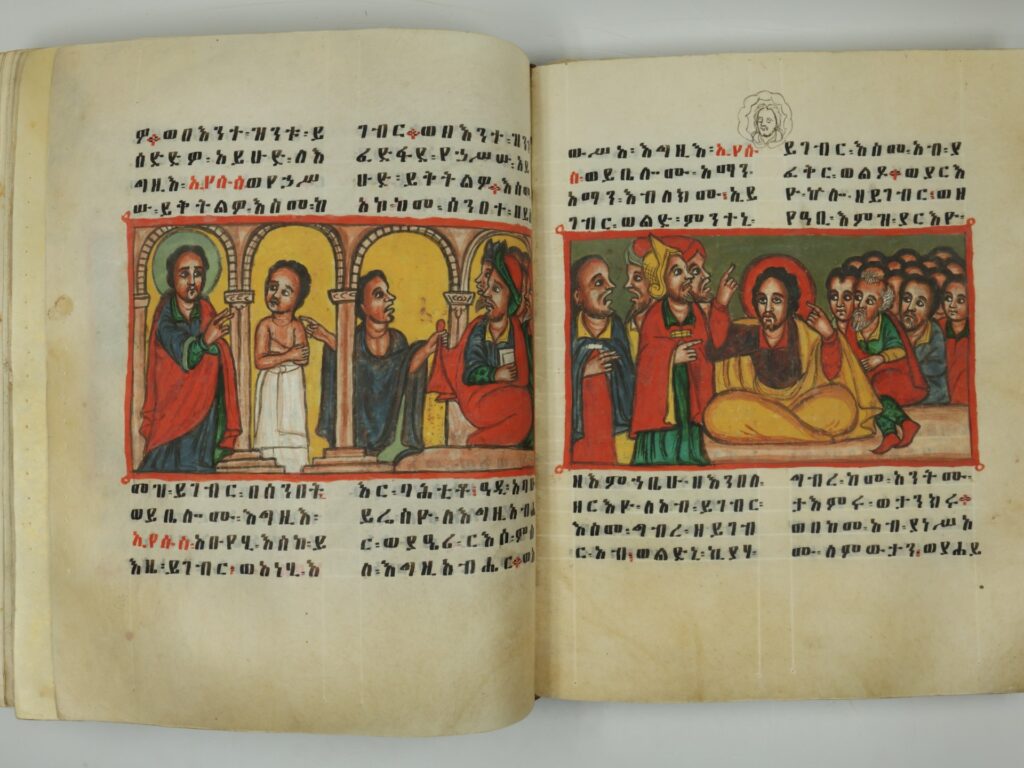
A rare and invaluable Ethiopian manuscript, known as the Gondar Gospel, has become the center of an intense restitution dispute. The manuscript originally belonged to the library of Emperor Tewodros II, a significant and revered figure in Ethiopian history. It was taken during the British expedition to Abyssinia in 1868, when British forces defeated Emperor Tewodros’s army and seized numerous artifacts and manuscripts from his fortress in Magdala. The Gondar Gospel is treasured not only for its historical but also for its cultural and religious significance, representing a crucial part of Ethiopia’s heritage.
The manuscript’s removal dates back over 150 years, but the controversy surrounding its ownership has recently gained renewed attention amid a broader global movement demanding the return of cultural artifacts taken during the colonial era. Ethiopian authorities have requested the British government or institutions holding the manuscript to return it, emphasizing its importance to Ethiopian identity and religious history.
British institutions currently holding the Gondar Gospel have highlighted the manuscript’s preservation under their care, arguing that it has been maintained and made accessible to scholarly research. However, critics of this stance point out the ethical implications of retaining such artifacts obtained through military conquest, suggesting that justice demands their repatriation to their rightful owners.
Historically, Emperor Tewodros II was a unifying figure in Ethiopia, known for his attempts to modernize and centralize the nation. His library contained many ancient scripts and books, some of which were lost or dispersed following the British expedition. The loss of the Gondar Gospel thus represents both a tangible and symbolic violation of Ethiopian cultural sovereignty.
The restitution debate extends beyond this single manuscript, reflecting wider issues about the ownership and stewardship of historical artifacts globally. Many former colonies have launched campaigns to reclaim cultural treasures taken during periods of imperial expansion, asserting the necessity of restoring heritage to the communities that created it.
Ethiopian scholars and religious leaders have voiced strong support for the return of the Gondar Gospel, framing it as a matter of cultural justice, national pride, and spiritual significance. They argue that such manuscripts should be returned not only to preserve Ethiopian history but also to allow the people of Ethiopia to reconnect with their heritage.
In response, some British museums and libraries are reassessing their collections with calls for transparency and accountability, considering how to approach repatriation requests ethically. This ongoing dialogue between Ethiopia and the UK may set precedents for how similar cases are handled in the future.
The Gondar Gospel case symbolizes a complex intersection of history, culture, and post-colonial ethics. It raises profound questions about how nations reconcile with the legacies of imperialism and war, and how to honor the cultural histories of all peoples fairly.
As negotiations continue, the international community watches closely, recognizing the importance of cultural restitution in healing historical wounds and fostering mutual respect between nations. The eventual return of the Gondar Gospel would be a landmark achievement for Ethiopia, reaffirming the power of cultural artifacts to unify and inspire across generations.