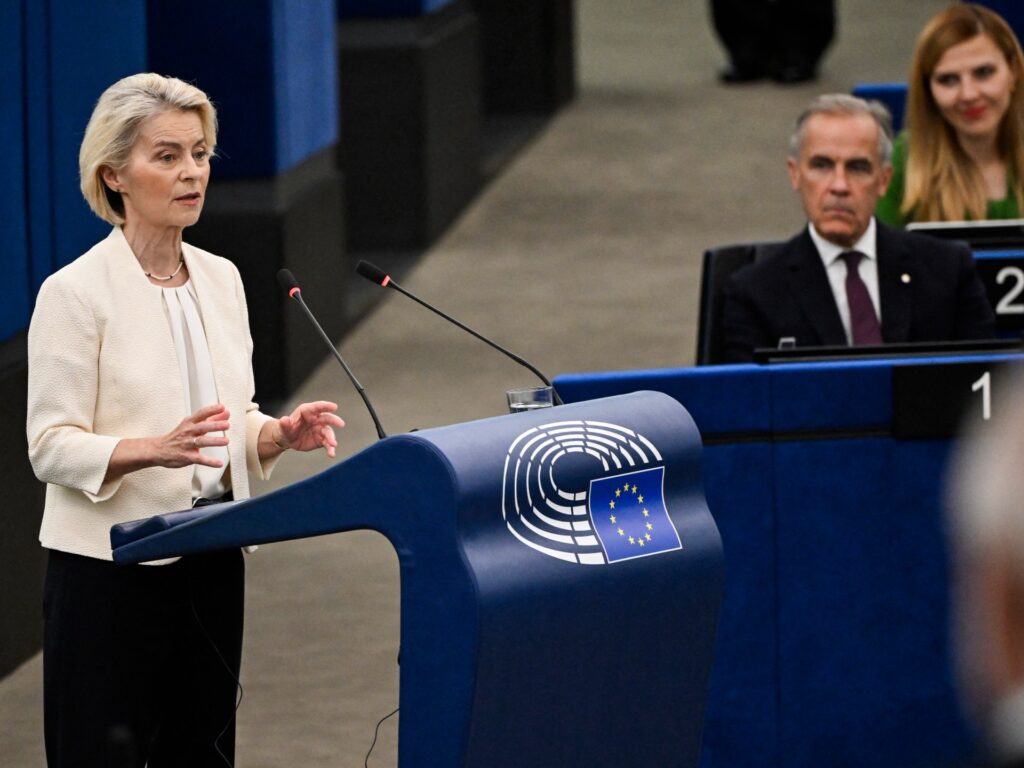
In a recent development, EU Chief Ursula von der Leyen has proposed granting Canada an ‘associate member’ status within the European Union. This suggestion comes as Prime Minister Mark Carney expressed Canada’s interest in forging a “unique alliance” with the EU earlier this week.
The proposal marks a significant step in the evolving relationship between Canada and the European Union, indicating a move beyond traditional partnerships towards deeper integration. The ‘associate member’ status would potentially grant Canada a closer collaboration framework with the EU institutions, possibly including participation in certain EU programs and policy discussions without full membership obligations.
Prime Minister Carney’s earlier remarks highlighted Canada’s ambition to redefine its relationship with the EU, seeking a partnership that goes beyond existing trade agreements and cooperative frameworks. The concept of a ‘unique alliance’ suggests a tailored approach, respecting both Canada’s sovereignty and the EU’s structural integrity while enhancing bilateral cooperation.
Historically, Canada and the EU have maintained strong economic and political ties, underscored by agreements like the Comprehensive Economic and Trade Agreement (CETA). However, the associate membership idea reveals a desire to deepen these ties in new dimensions, possibly encompassing policy alignment on issues such as climate change, security, and technology innovation.
Ursula von der Leyen’s proposal has sparked discussions among EU members about the scope and implications of such an arrangement. Questions remain regarding the rights and responsibilities that would accompany the associate member status, including voting rights within EU institutions, sovereignty considerations, and contribution mechanisms.
Supporters of the initiative argue that Canada’s inclusion would benefit both parties. For the EU, it offers an opportunity to strengthen transatlantic ties and promote global cooperation on pressing challenges. For Canada, closer engagement with the EU could facilitate access to a broader market and influence on international policy settings.
Critics, however, caution about the complexities of integrating a non-European country into EU structures, warning of potential political and legal hurdles. They emphasize the importance of maintaining the coherence of the EU’s internal market and decision-making processes.
This proposal coincides with a global trend where regional blocs are exploring new forms of partnerships beyond traditional membership, seeking flexible alliances that cater to unique geopolitical circumstances. Canada’s geographic location and economic stature make it an attractive candidate for such innovative partnerships.
Moving forward, detailed negotiations will be essential to define the parameters of the associate member status and address concerns from all stakeholders. The process will likely involve consultations with EU institutions, member states, and Canadian authorities.
If successful, this initiative could set a precedent for how the EU engages with key global partners outside the continent, potentially opening doors to similar arrangements with other countries.
In summary, the proposal from EU Chief Ursula von der Leyen to grant Canada an ‘associate member’ status reflects a significant shift towards a more integrated and strategic relationship between the two entities. Echoing Prime Minister Mark Carney’s vision of a unique alliance, both Canada and the EU appear poised to deepen their partnership in ways that could reshape international cooperation frameworks. Stakeholders around the world will be watching closely as this novel approach to transatlantic relations unfolds.