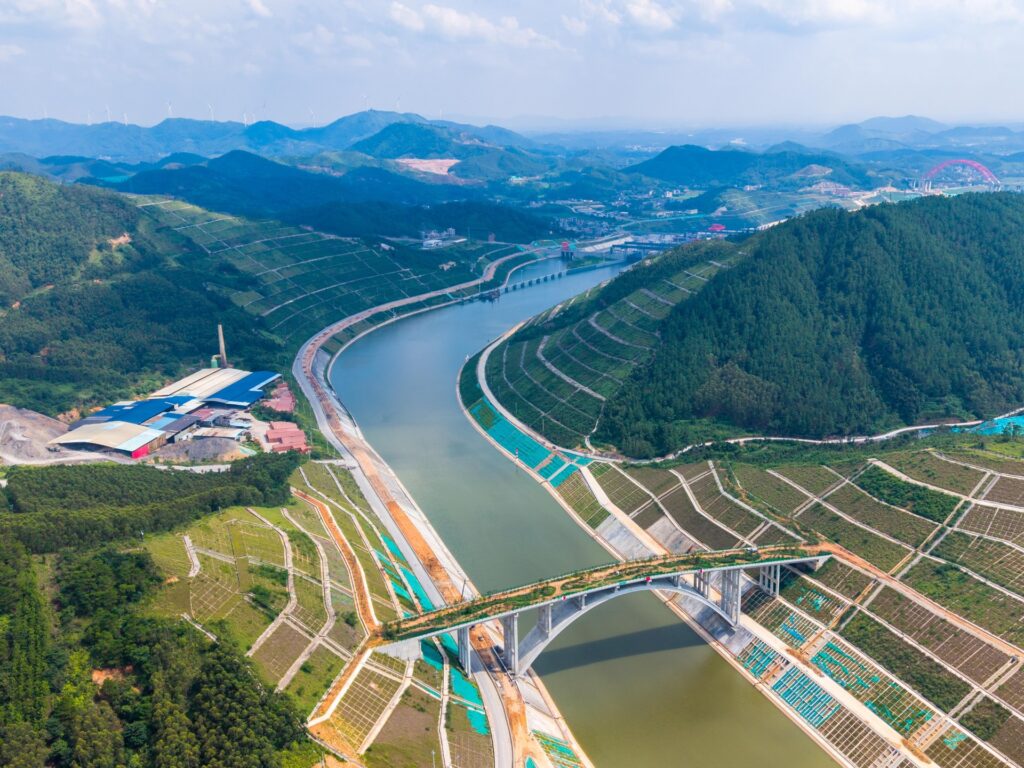
China has embarked on an ambitious infrastructure project with the Pinglu Canal, its first modern river-to-sea canal, designed to revolutionize trade between China and Southeast Asia. This canal represents a strategic development in enhancing connectivity and economic integration in the region.
The Pinglu Canal stretches across a significant stretch linking major inland waterways to the South China Sea. By providing a direct waterway, the canal offers an alternative route that bypasses traditional longer and more complex trading routes.
One of the most significant advantages of the Pinglu Canal is its ability to dramatically reduce transportation time. Traditionally, goods traveling from inland China to Southeast Asian markets have had to take lengthy detours through congested ports or via overland routes, both of which increase shipping durations and costs. The canal cuts this travel time by several days, enabling faster delivery and fresher goods, which is especially beneficial for agricultural and perishable products.
Cost reduction is another major benefit. With a more direct route, shipping companies can save on fuel and other operational expenses. These savings potentially translate to lower prices for consumers and higher competitiveness for businesses engaged in cross-border trade.
Beyond economic impacts, the Pinglu Canal also holds geopolitical significance. As China strengthens its logistical networks, it enhances its influence in Southeast Asia, a region critical for global trade and politics. Improved connectivity via the canal may pave the way for deeper economic partnerships and regional cooperation.
From an engineering perspective, the Pinglu Canal is a feat of modern infrastructure engineering, involving advanced technologies in water management and construction. The project required extensive planning to ensure environmental sustainability, minimizing the ecological footprint while maximizing economic benefits.
The canal’s opening is expected to spur development in the surrounding regions, promoting urbanization and creating job opportunities across multiple sectors, including logistics, manufacturing, and tourism. It is anticipated that towns and cities along the canal will transform into bustling hubs of commerce.
In sum, the Pinglu Canal is not just a waterway, but a vital artery for China’s vision of increased trade connectivity with Southeast Asia. It embodies innovation in infrastructure, economic foresight, and strategic planning, promising to reshape regional commerce and relations in the years to come.