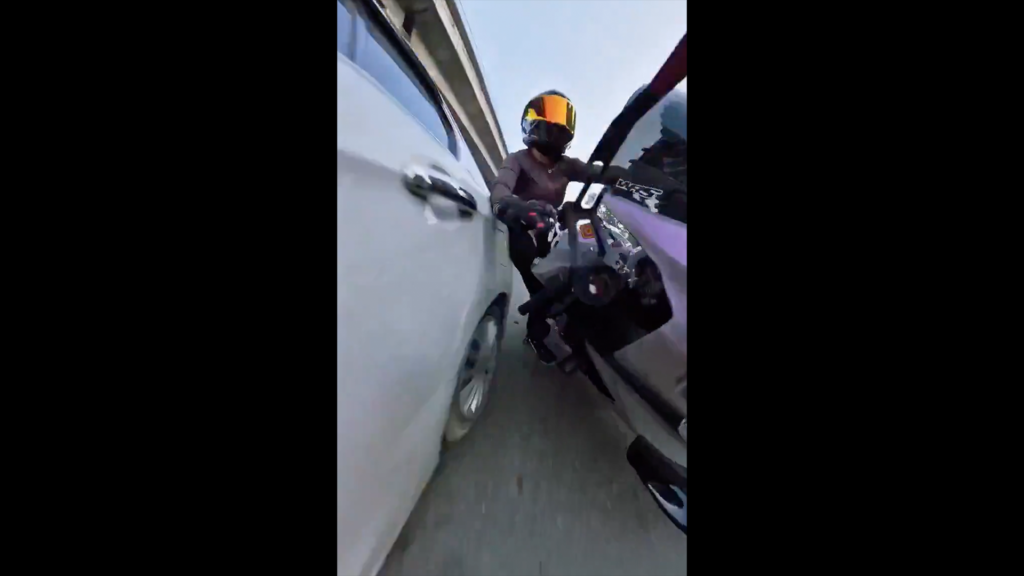
In a recent incident that has stirred widespread concern across India, a viral video surfaced showing a car deliberately ramming into a woman riding her motorcycle. The disturbing footage, shared by the victim herself, has ignited discussions on the increasing prevalence of road rage and reckless driving on Indian roads.
The incident took place in a busy urban area, where traffic congestion is a daily challenge. The woman biker was caught off guard when the aggressive driver collided with her bike multiple times, apparently without provocation. The video captures the tense moments vividly, highlighting the dangers faced by two-wheelers on crowded streets.
Following the video’s circulation on social media platforms, the Indian police promptly initiated an investigation. Authorities have assured the public that they are committed to identifying the driver responsible and bringing them to justice. The case has also drawn attention to the urgent need for stricter enforcement of traffic laws and improved road safety measures.
Experts suggest that the incident is symptomatic of a larger issue plaguing urban transportation in India—heightened road rage and impatience among drivers. Factors contributing to this volatile behavior include heavy traffic, inadequate infrastructure, and a general lack of awareness about road etiquette.
The victim has received widespread support online, with many users condemning the reckless act and calling for heightened vigilance on the roads. Road safety advocates emphasize the importance of campaigns to educate drivers about respectful and responsible driving.
This event underscores the vulnerability of motorcyclists and other two-wheeler riders who frequently navigate congested roads alongside larger vehicles. The Indian government and local authorities are urged to prioritize initiatives that promote safer driving environments and reduce incidents of road rage.
As investigations continue, this case serves as a stark reminder of the potential consequences of aggressive driving and the critical need for societal change in attitudes toward traffic behavior. The incident has reignited debates on how best to manage road safety and foster a culture of mutual respect among all road users in India.
In conclusion, the viral hit-and-run has not only highlighted a criminal act but also brought to light the broader challenges of road rage in India. It calls for concerted efforts from law enforcement, policymakers, and the public to ensure safer roads for everyone.