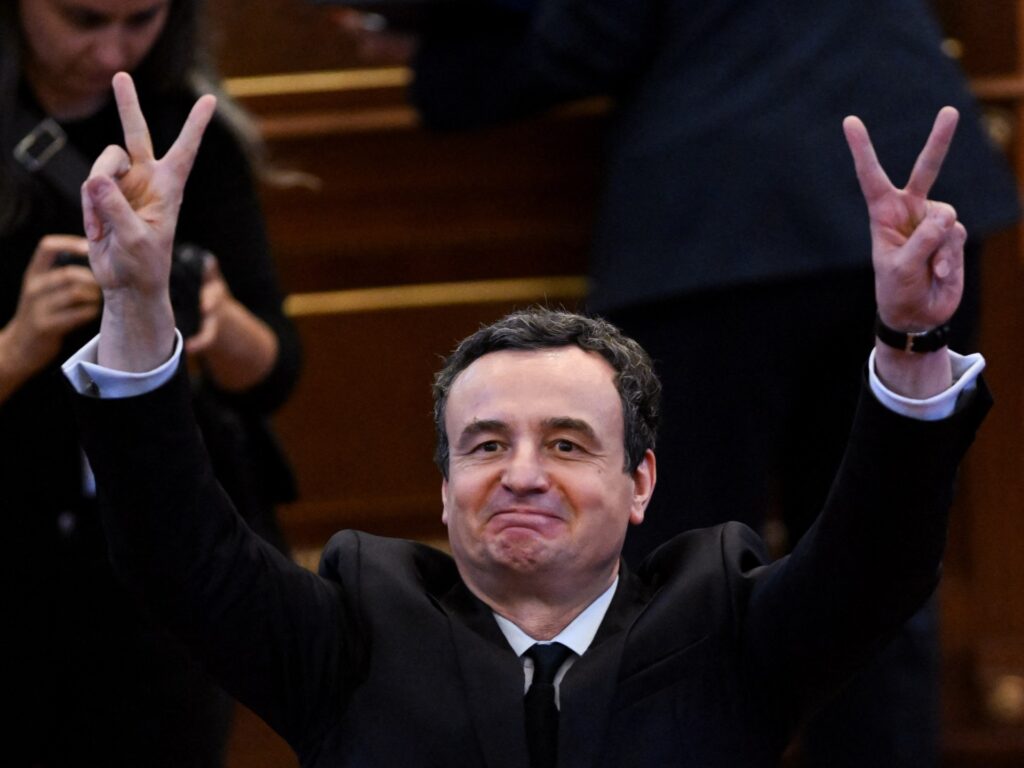
After enduring months of political deadlock, Kosovo has finally approved a new government, signaling a temporary break from ongoing political instability. This new administration is expected to navigate the challenges facing the young Balkan state, but the respite may be short-lived as a contentious presidential vote looms on the horizon.
Kosovo’s political landscape has been marred by division and stalemate since parliamentary elections were held months ago. The failure to form a government immediately post-election led to a period of uncertainty and slowed down the governance process, impacting everything from economic reforms to foreign policy.
The new government was approved after intensive negotiations among Kosovo’s political parties, which eventually led to a coalition agreement. This coalition is a blend of different political groups aiming to bring a semblance of stability to the fragmented parliament. The approval was met with cautious optimism by the international community, many of whom see Kosovo’s progress as vital to regional stability in the Western Balkans.
Key figures in the new government include a mix of experienced politicians and fresh faces, symbolizing an effort to balance continuity with new approaches. The prime minister, who played a critical role in brokering the coalition deal, emphasized the government’s commitment to tackling corruption, improving the economy, and advancing Kosovo’s integration into European institutions.
Despite the relief brought by the government’s approval, challenges remain. The upcoming presidential vote is expected to be highly contentious, with deep divisions among political parties threatening to destabilize the fragile coalition. The presidency in Kosovo holds significant influence over foreign relations and security matters, amplifying the stakes of the vote.
Political analysts warn that if the presidential vote fails to produce a consensus candidate, the country could face renewed political paralysis or even fresh elections. Such an outcome would undermine the progress made with the newly approved government and could delay Kosovo’s aspirations of European Union membership.
The international community, including the European Union and the United States, has urged all parties in Kosovo to act responsibly and ensure a peaceful and democratic process during the presidential vote. They have also pledged continued support to help Kosovo overcome its political challenges and strengthen its institutions.
Kosovo’s journey towards stable governance is crucial, not just for its citizens but for the broader region. Political stability will be essential for economic development, attracting foreign investment, and ensuring security. It will also be vital in maintaining good relations with neighboring countries and advancing Kosovo’s international recognition.
In conclusion, while the approval of a new government in Kosovo marks a positive step after months of political deadlock, the true test lies ahead with the upcoming presidential vote. The ability of Kosovo’s political actors to work together will determine whether the country can build on this momentum and move toward a more stable and prosperous future.