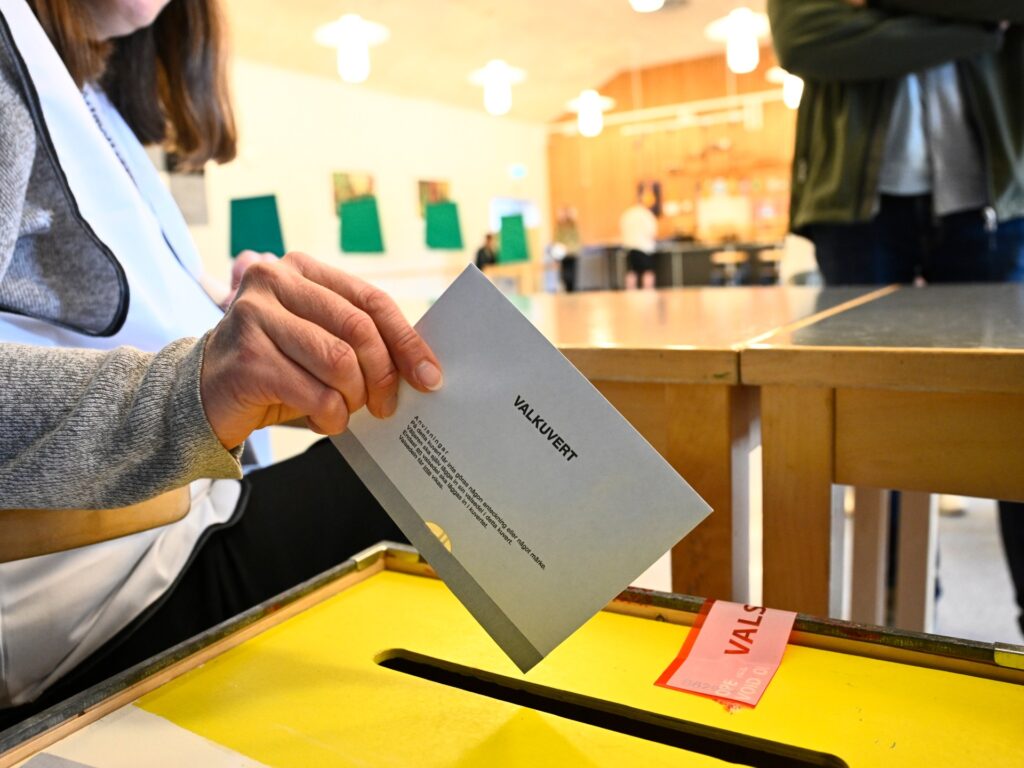
Voting is currently underway in Sweden’s general election, an event that holds significant implications for the country’s political landscape. The election is closely watched, not only within Sweden but internationally, due to the potential for the far-right Sweden Democrats party to enter government for the first time.
This election marks a pivotal moment in Swedish politics. Traditionally, Sweden has been governed by center-left or center-right coalitions, but the rise of the Sweden Democrats, a far-right party known for its strong stance on immigration and nationalist policies, could shift this dynamic dramatically.
The Sweden Democrats have gained substantial support in recent years, benefiting from public concerns over immigration, integration, and national identity. Their agenda includes stricter immigration controls, stronger law enforcement policies, and a pushback against what they describe as the excessive influence of the European Union.
If the right-wing bloc, which includes the Sweden Democrats alongside other conservative and liberal parties, secures a majority, it may lead to the far-right party taking part in governing for the first time in the country’s modern history. This scenario is unprecedented in Sweden, which has long upheld a political tradition of inclusive and consensus-driven governance.
The implications of such a political shift are numerous. On one hand, supporters of the Sweden Democrats argue that their participation in government would address ignored societal issues and enhance national security. On the other hand, critics warn that their policies may increase social division and undermine Sweden’s commitment to human rights and multiculturalism.
Election campaigns this year have been intense, with debates centered around immigration policy, crime prevention, economic strategies, and Sweden’s role in the European Union. The outcome will not only decide who rules Sweden but may also influence the broader European political discourse, where far-right movements have been gaining traction in several countries.
As voters cast their ballots, many are aware that this election could redefine Sweden’s political identity and its future direction on key social and economic policies.
International observers and local analysts alike are eager to see whether the traditional political order holds or if the emergence of the far-right will reshape the nation’s governance structure. Sweden’s election results are expected to set the tone for upcoming elections across Europe and could signal shifts in policy and alliances both domestically and internationally.
The final results are anticipated after the polls close later today, with a coalition government likely required due to Sweden’s multi-party system. Regardless of the outcome, this election is a critical reflection of current societal trends and voter priorities in a time of global political change.