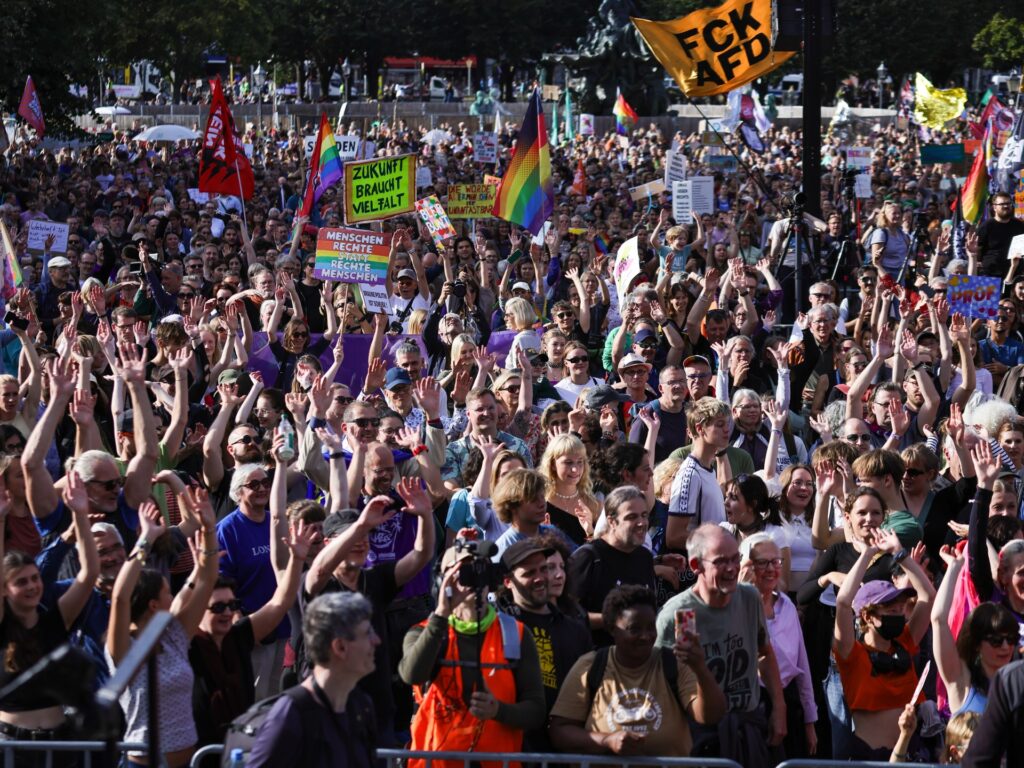
In a sweeping display of political activism, tens of thousands of protesters took to the streets of approximately 20 cities across Germany, including major urban centers such as Berlin, Hamburg, and Munich. The mass demonstrations were organized to oppose the far-right political party Alternative for Germany (AfD), with demonstrators demanding that the party be banned. The AfD has been a controversial and polarizing force in German politics, known for its nationalist rhetoric and anti-immigration stance. Protesters, representing a broad cross-section of German society, expressed concern over what they perceive as the normalization of extremist views within the political landscape. They called for decisive action to prevent the spread of ideologies they believe threaten democratic values and social cohesion. The protests reflect growing unease about the rise of far-right populism in Germany and Europe at large, as well as a determination among many citizens to defend principles of tolerance, diversity, and inclusivity. Authorities reported that the demonstrations were largely peaceful, with participants peacefully voicing their opposition through marches, speeches, and banners. Organizers emphasized that the protests were a democratic exercise in free expression and an urgent call to safeguard Germany’s post-war democratic order from extremist influences. The events have attracted attention both nationally and internationally, highlighting ongoing debates about the balance between free speech, political pluralism, and the limits of acceptable political discourse in modern democratic societies. As Germany prepares for future elections and navigates the complexities of its political landscape, the demonstrations signal a significant moment of civic engagement and a collective stand against the far-right agenda.