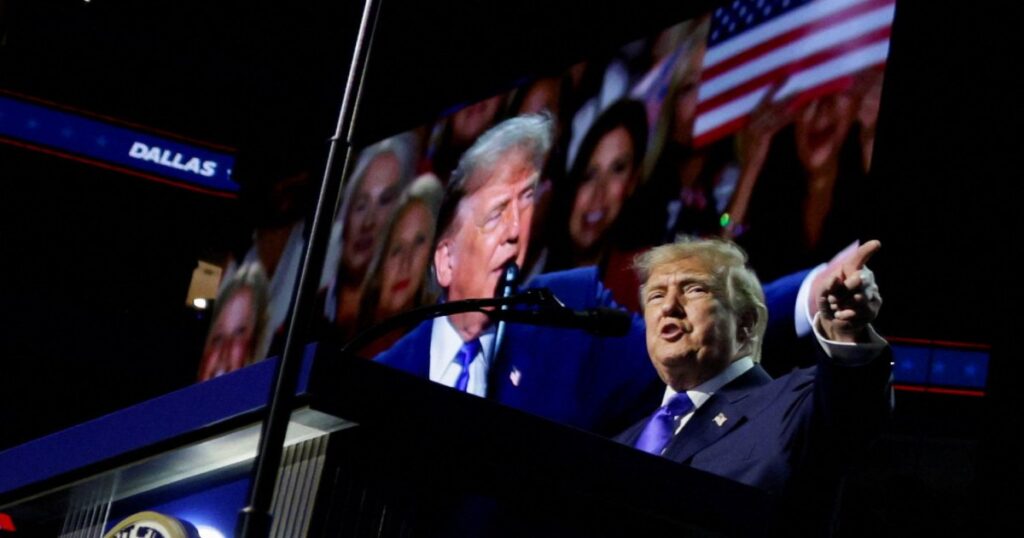
In a bold campaign promise, former President Donald Trump has pledged $5,000 payments to American citizens if the Republican Party secures victory in the upcoming midterm elections. This proposal, part of a broader $1.3 trillion spending plan, has sparked intense debate about its feasibility and the potential economic impact on the United States.
The U.S. national debt currently stands at an unprecedented $40 trillion, a figure that has raised concerns among economists and policymakers alike. Trump’s pledge, while popular among some voters, threatens to further escalate this debt, potentially leading to long-term financial instability.
Critics argue that such massive payouts would strain the federal budget, forcing either significant tax increases or severe cuts to other essential services. They warn that ballooning debt levels could undermine the country’s credit rating, increase borrowing costs, and reduce fiscal flexibility in times of crisis.
Supporters of Trump’s plan contend that direct cash payments would stimulate economic growth by increasing consumer spending and boosting demand. They believe this infusion of cash could help revitalize struggling communities and reduce income inequality.
However, experts caution that without corresponding revenue increases or spending cuts elsewhere, the plan could exacerbate inflationary pressures already challenging the economy. An expanded debt burden might also complicate efforts to address other critical issues such as healthcare, infrastructure, and national security.
The debate over Trump’s promise highlights the broader ideological divide on fiscal policy between the Republican and Democratic parties. While Republicans often emphasize tax cuts and deregulation, Democrats typically advocate for increased spending on social programs and investments funded by higher taxes on the wealthy.
As the midterm elections approach, voters face crucial decisions about the direction of the country’s economic future. The feasibility of Trump’s $5,000 payouts hinges on complex factors including political will, economic conditions, and long-term fiscal sustainability.
Ultimately, the promise underscores the challenges of balancing ambitious policy goals with the realities of managing the national debt. Whether the U.S. can afford such expansive payouts remains a contentious question that will shape political discourse and policy decisions in the months ahead.