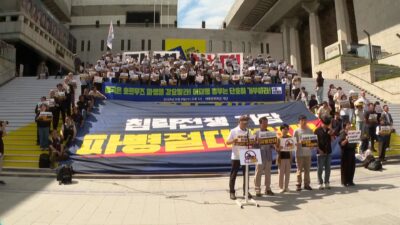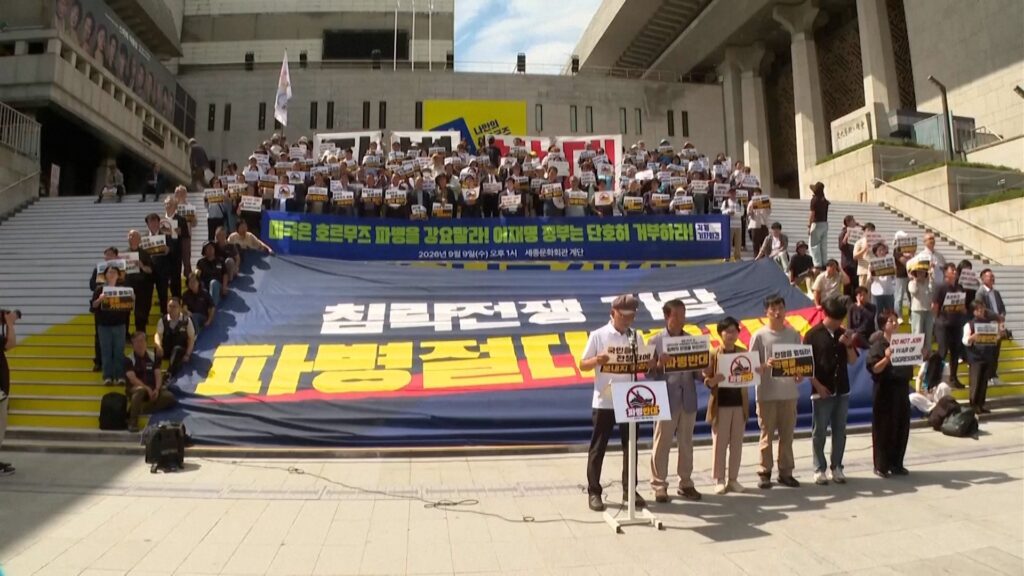
On Wednesday, nearly 100 anti-war activists gathered outside the Sejong Centre in Seoul to protest against the potential deployment of military forces to the Strait of Hormuz. The demonstration highlighted growing public concern over escalating tensions in this strategic and volatile region. Activists voiced their opposition to any military intervention, emphasizing the risks of increased conflict and calling for diplomatic solutions to ensure peace and stability.
The Strait of Hormuz, an important maritime chokepoint between the Persian Gulf and the Gulf of Oman, is a vital passage for global oil shipments. Recent geopolitical developments have escalated tensions, raising fears of military confrontations that could disrupt international trade and security.
Protesters carried banners and chanted slogans advocating peace and warning against the dangers of war. They urged their government to reconsider any plans to participate in military deployments that could exacerbate tensions in the region. The activists’ message resonated with many citizens concerned about the consequences of armed conflict and the importance of peaceful diplomacy.
This protest in Seoul is part of an emerging wave of anti-war sentiment as geopolitical dynamics in the Middle East continue to impact global security. The demonstrators called for governments worldwide to prioritize dialogue, cooperation, and peaceful conflict resolution over military action.
Officials have yet to announce concrete decisions regarding any potential deployment. However, the protest serves as a clear indication of public apprehension and demand for transparency and accountability in decisions affecting national and international peace.
The event also underscores the role of civil society in influencing foreign policy and promoting nonviolent approaches to international disputes. As tensions persist, the voices of these activists contribute to shaping discussions about the best path forward in managing regional conflicts and safeguarding global stability.