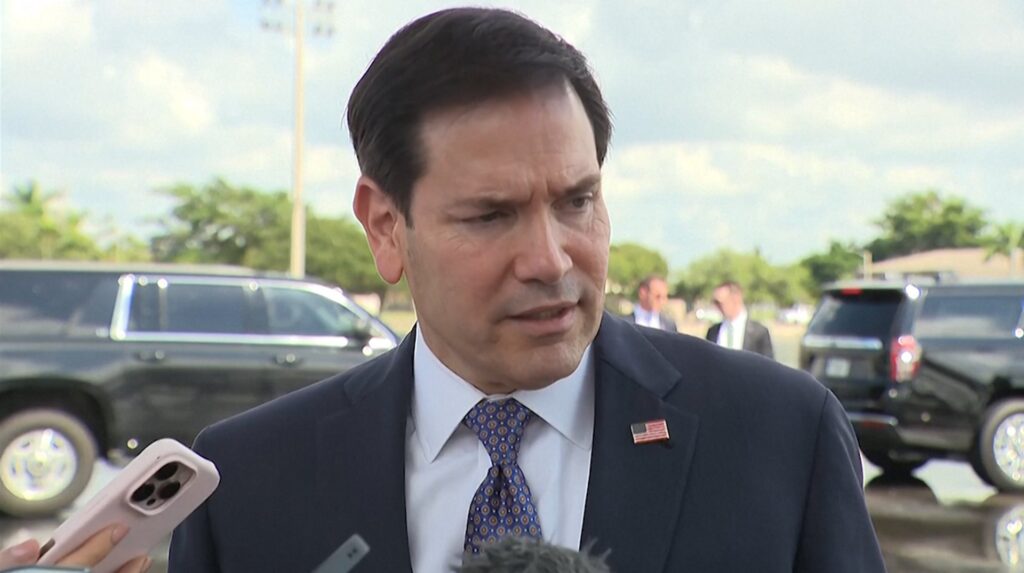
The United States has made it clear that it will not join the United Kingdom in banning trade with Israeli settlements deemed illegal under international law. Secretary of State Marco Rubio explicitly stated that the US would “obviously not” follow the UK in imposing sanctions against these settlements. This stance underscores a significant divergence between the two allies in their approach to the Israeli-Palestinian conflict and the international community’s response to settlement activities.
The UK’s decision to impose trade restrictions on goods and services originating from illegal Israeli settlements is part of its broader commitment to uphold international law and support a two-state solution. The British government argues that these settlements, located in occupied territories, violate international legal norms and hinder the peace process.
In contrast, the US position, articulated by Secretary Rubio, aligns with its long-standing policy of supporting Israel and refraining from unilateral punitive actions that could destabilize the region or complicate ongoing peace negotiations. The US administration emphasizes diplomacy and bilateral negotiations rather than sanctions as the preferred method to address settlement issues.
This policy disagreement highlights the complexities of international diplomacy surrounding the Israeli-Palestinian conflict. While some countries advocate for economic measures to pressure Israel to halt settlement expansion, others, like the US, prioritize strategic alliances and regional stability.
Critics of the US stance argue that failure to condemn and restrict trade with illegal settlements effectively endorses their expansion, undermining efforts to achieve peace and justice for Palestinians. Supporters contend that maintaining strong US-Israel relations is essential for regional security and that economic sanctions could backfire by escalating tensions.
The debate over trade with Israeli settlements is part of a broader international discussion about the legality and legitimacy of these communities. United Nations resolutions and various human rights organizations consider the settlements illegal under international law, a position Israel disputes.
As global attention focuses on this contentious issue, the differing policies of the US and UK reflect their unique geopolitical interests and foreign policy priorities. The US decision not to follow the UK’s lead may influence other countries’ approaches and shape the international community’s strategy toward resolving the Israeli-Palestinian conflict.
Analysts suggest that the US stance could embolden Israel to continue its settlement activities without fear of significant economic repercussions from major Western powers. Conversely, the UK’s policy may encourage other nations to adopt similar measures, increasing pressure on Israel.
In summary, Secretary of State Marco Rubio’s declaration signals a clear US policy path that resists adopting trade sanctions against illegal Israeli settlements. This positions the US distinctly from the UK and others advocating for tougher measures, highlighting the ongoing complexities in international relations regarding the Middle East peace process.