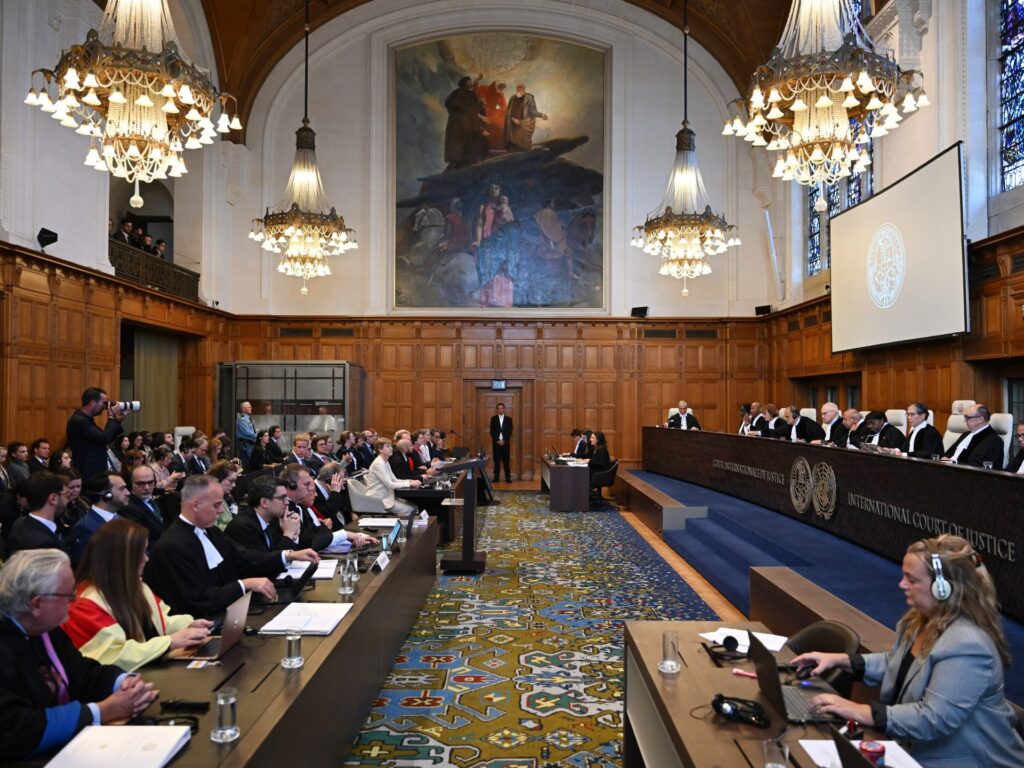
In a significant development at the International Court of Justice (ICJ), Nicaragua has strongly urged the court to reject Germany’s bid to dismiss a pivotal case alleging genocide in Gaza. This legal confrontation underscores the growing complexity of international accountability amid ongoing conflict.
Nicaragua asserts that Germany’s substantial arms exports to Israel played a critical role in facilitating actions that led to what Nicaragua terms the Gaza genocide. The Central American nation stands firm in its position that Germany’s military support directly contributed to the severe humanitarian crisis and widespread suffering in Gaza.
Germany, on the other hand, has moved to halt the case, arguing various legal grounds to seek its dismissal. This move aims to shield Germany from liability or responsibility related to the allegations connected to its arms transactions and their impact on the conflict.
The ICJ case centers on grave accusations of genocide against the backdrop of the Israel-Palestine conflict, attracting global attention. Nicaragua’s insistence on holding Germany accountable highlights a growing demand for scrutiny over arms supplies and their roles in armed conflicts worldwide.
Experts believe this case could set a precedent concerning the international community’s approach to state responsibility in conflicts, particularly where arms exports are implicated. If the ICJ rejects Germany’s motion, it could pave the way for a full hearing on the merits of the genocide allegations, emphasizing the accountability of third-party states in conflict scenarios.
Human rights organizations have long criticized arms sales that escalate conflicts and result in civilian casualties. Nicaragua’s stance reinforces calls for stricter regulations and ethical considerations in international arms trade.
The proceedings at the ICJ are closely watched by governments and human rights advocates alike, as the outcome may influence future international legal standards and the enforcement of humanitarian law.
Nicaragua’s actions signal a broader movement among smaller nations to bring greater transparency and justice in global conflict zones through international judicial mechanisms. This case not only challenges traditional diplomatic alignments but also raises essential questions about sovereignty, accountability, and the role of international law in mitigating human rights abuses.
As the ICJ deliberates on Germany’s attempt to dismiss the case, the international community waits with keen interest. The decision will likely have significant implications for international relations, export controls, and the universal pursuit of justice and peace in conflict-ridden regions such as Gaza.