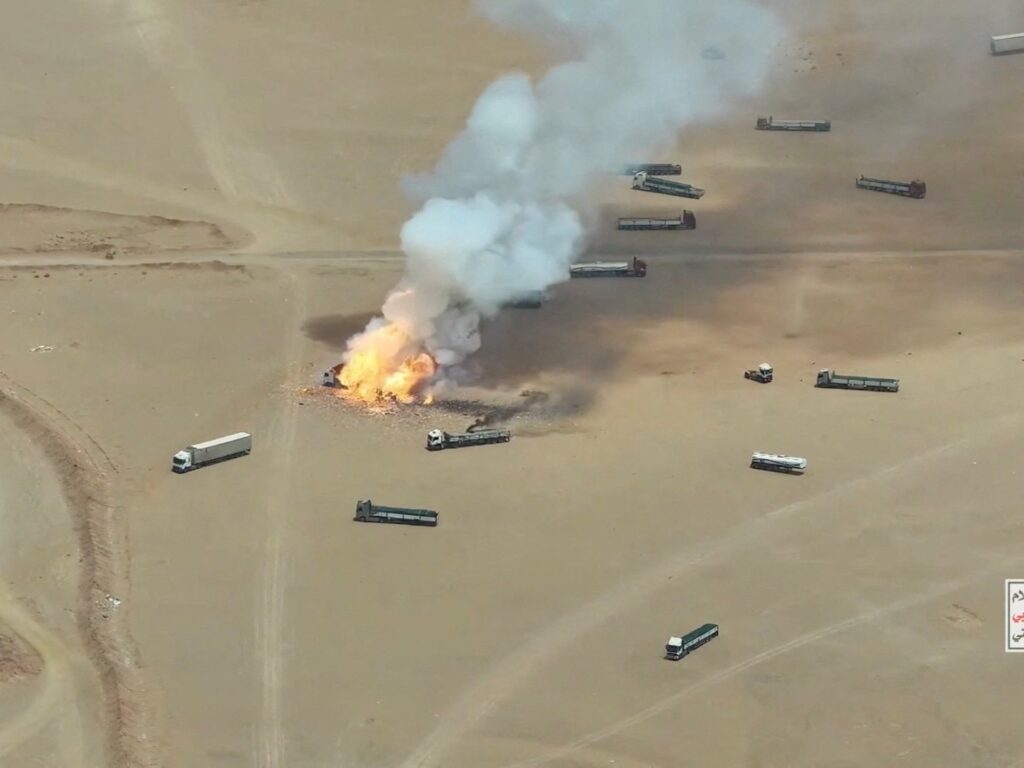
In a significant escalation of the ongoing conflict in Yemen, Yemeni forces have launched a robust counter-offensive against the Houthi movement with the stated goal of retaking the capital city, Sanaa. This move marks a critical phase as clashes between the Yemeni government forces and Houthi rebels have intensified notably in the provinces of al-Bayda and al-Jawf.
The counter-offensive represents a strategic attempt by the internationally recognized Yemeni government to regain control over key territories, including Sanaa, which has been under Houthi control for several years. The recent surge in fighting demonstrates the government’s resolve to reclaim the capital and undermine Houthi dominance in the region.
Al-Bayda and al-Jawf provinces have become hotspots for fierce battles as both sides vie for strategic advantage. These areas are crucial due to their geographic significance and the control they exert over supply routes and military access points.
Sources report that the Yemeni forces have deployed additional troops and military resources to these provinces as part of the counter-offensive initiative. The clashes have led to increased displacement and humanitarian concerns as civilians find themselves increasingly caught in the crossfire.
The international community has been closely monitoring these developments, with calls for restraint and the resumption of peace talks to prevent further deterioration of the humanitarian situation. However, the Yemeni government’s announcement of its commitment to retake Sanaa indicates a toughened stance on the military front.
Historically, the conflict in Yemen has been multifaceted, involving various factions and external actors. The Houthis, a Zaidi Shia-led movement, took control of Sanaa in 2014, prompting a costly and protracted war involving a coalition led by Saudi Arabia supporting the Yemeni government.
The current counter-offensive could potentially alter the dynamics of the conflict, depending on its success. Retaking Sanaa would be a significant symbolic and strategic victory for the Yemeni government, potentially shifting momentum in the prolonged war.
However, the intensification of fighting also raises concerns about increased casualties and the worsening of humanitarian conditions. Yemen is already facing one of the world’s worst humanitarian crises, with millions dependent on aid and basic services severely disrupted.
Efforts to broker peace have been ongoing but fragile. The escalation in al-Bayda and al-Jawf might complicate these diplomatic undertakings, making it harder to achieve a lasting resolution.
In summary, the Yemeni forces’ counter-offensive against the Houthis and their vow to retake Sanaa marks a pivotal development in the conflict. The outcome of this military campaign will have profound implications for the future stability and governance of Yemen, as well as for regional security and humanitarian relief efforts.