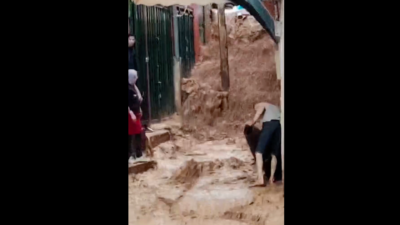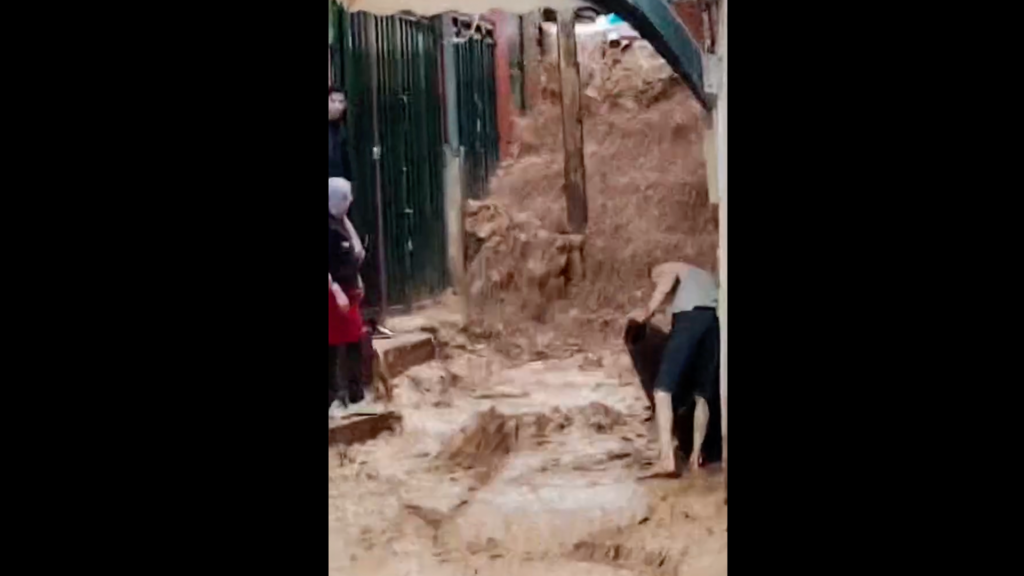
Central Morocco’s Azilal region experienced severe flash flooding following intense thunderstorms, leading to significant damage in local neighborhoods. Videos circulating on social media have captured the dramatic scenes of floodwaters inundating homes, shops, and streets, illustrating the sudden and catastrophic nature of the event.
The heavy rainfall that prompted the flash floods was part of a series of thunderstorms that swept through the region, overwhelming the natural and man-made drainage systems. As a result, floodwaters rapidly filled residential streets, disrupting daily life and causing extensive property damage.
Residents of Azilal were caught off guard by the speed and volume of the flooding, as water surged into homes and commercial establishments, leaving many stranded and in need of assistance. Emergency services were reportedly mobilized to aid those affected, although specific details on rescue operations remain limited.
The flash floods have prompted concerns about the adequacy of infrastructure to handle sudden weather events in mountainous and semi-arid areas like Azilal. The local government has been urged to invest in improved drainage solutions and disaster preparedness to mitigate such incidents in the future.
Climate experts note that the increasing frequency and intensity of thunderstorms in Morocco may be linked to broader climate change patterns, emphasizing the importance of adaptive strategies for vulnerable communities. Azilal’s experience serves as a stark reminder of the urgent need for resilience against natural disasters exacerbated by changing environmental conditions.
Relief efforts are currently underway to support the residents affected by the floods. Local authorities and humanitarian groups are coordinating to provide food, shelter, and medical assistance to those displaced or injured during the floods.
This incident underscores the challenges faced by central Moroccan communities in coping with extreme weather events, highlighting the necessity for both immediate responses and long-term planning to protect lives and property. Further monitoring of weather conditions is expected as the region recovers from the impact of the flash floods.