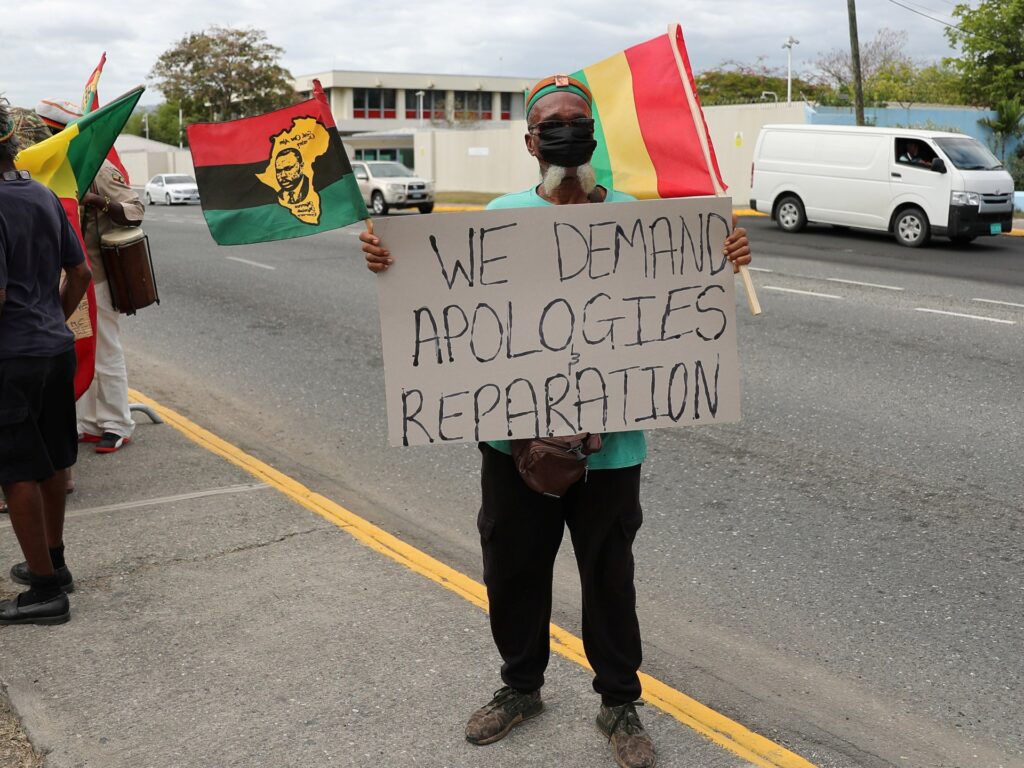
The United Kingdom government has officially declined to provide financial reparations for slavery, despite expressing sorrow over the historical injustices. This decision comes amidst rising calls from Jamaica for reparations and for the UK’s monarch to take an active role in addressing the legacy of slavery.
Following decades of dialogue and activism, Jamaica’s government has urged the British crown to step forward and recognize the suffering endured by enslaved Africans and their descendants. The request includes not only formal apologies but also tangible compensation to support reparative justice.
The British government, while acknowledging the profound harm caused by slavery, stated that it would not be participating in any reparations scheme. Officials cited that such claims have been settled through previous legal frameworks and agreements.
This stance has sparked significant backlash both in Jamaica and internationally, where advocates argue that reparations are essential for healing and rectifying systemic inequalities rooted in the past.
Historians note that the British Empire profited extensively from slavery during its colonial rule, with economic benefits contributing to Britain’s growth and industrialization. These benefits came at an unimaginable human cost, leaving long-lasting social and economic disparities.
In response to the refusal, Jamaican leaders emphasized the need for a moral reckoning and called upon global institutions to support a reparative approach. The debate continues to highlight the complexities of addressing historical injustices in today’s world.
Meanwhile, several Caribbean nations have joined Jamaica in demanding reparations, framing the issue as not only a matter of historical accountability but also economic justice in the present day.
The British monarchy’s role remains symbolic yet significant, as calls increase for a formal apology from the King, recognizing the direct involvement of the crown during the era of slavery.
This development underscores the ongoing global conversation about the legacy of colonialism and the responsibilities of former imperial powers in addressing the consequences of their past actions.
As the debate advances, it remains to be seen whether diplomatic efforts can bridge the divide between demands for reparations and the current political will in the UK.
The issue of slavery reparations continues to be a pivotal point in discussions about racial justice, historical memory, and the future relationships between Britain and its former colonies.
Reparations advocates note that addressing economic disparities linked to historical slavery is crucial for achieving equality and reconciliation.
The UK’s refusal has drawn criticism from human rights groups, which argue that acknowledging historical wrongs with financial reparations sets an important precedent for other nations grappling with legacies of injustice.
Legal experts highlight that while reparations may not have been enacted by governments, ongoing lawsuits and claims keep the discussion alive in international spheres.
As both sides present their positions, there is a growing call for comprehensive educational initiatives to ensure the history of slavery is properly taught and understood.
This renewed attention on reparations signals a broader movement towards recognizing the enduring impact of slavery on societies and economies worldwide.
Ultimately, the debate surrounding the UK’s response to slavery reparations encapsulates the challenges of reconciling history with contemporary justice imperatives, a discourse that continues to evolve globally.