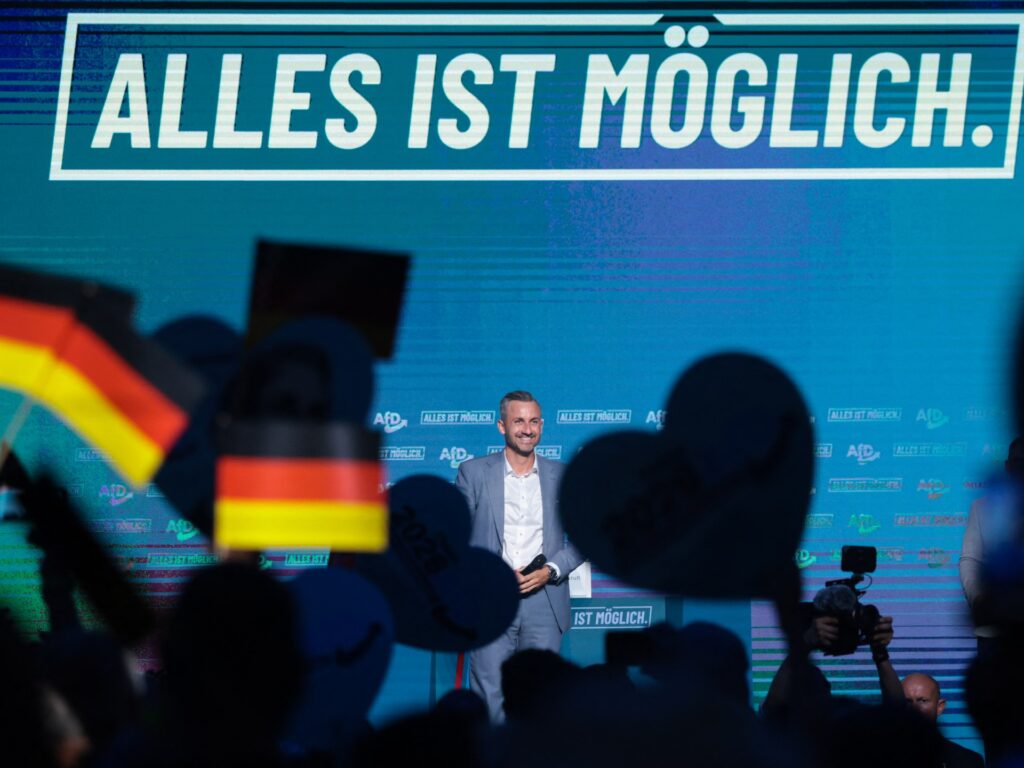
In a pivotal election in the eastern German state of Saxony-Anhalt, voters are heading to the polls amidst heightened political tensions and significant historical implications. The far-right Alternative for Germany (AfD) party is poised to potentially make history by becoming the first far-right party to take power at the state level since World War II.
Saxony-Anhalt, a region that has experienced economic and social upheaval since reunification, has become a battleground for competing political ideologies. The AfD’s rise reflects growing dissatisfaction among some voters with the traditional parties and concerns over immigration, economic prospects, and national identity.
The AfD has campaigned aggressively, promising to prioritize native citizens’ interests and overhaul policies they see as detrimental to Germany’s stability. Their political ascent is viewed with alarm by many, both within Germany and internationally, due to the party’s controversial stances and far-right rhetoric.
Political analysts see the Saxony-Anhalt elections as a litmus test for the influence of far-right politics in Germany’s broader political landscape. A victory here would embolden the AfD and could signify a shift in voter attitudes, particularly in former East German states where economic disparities persist.
Traditional parties such as Chancellor Olaf Scholz’s Social Democrats (SPD), the Christian Democratic Union (CDU), and the Greens face the challenge of countering this surge by addressing the concerns of the electorate without endorsing extremist positions.
Election campaigns have spotlighted issues including economic development, law and order, education, and immigration policies. The AfD’s promises to tighten immigration controls and prioritize German culture have resonated with parts of the population, especially among older and rural voters.
Turnout, voter sentiment, and the election result in Saxony-Anhalt will be closely watched as indicators of the country’s political direction. This election could either mark the normalization of far-right influence in regional government or a rejection of it, reinforcing Germany’s commitment to its post-war democratic values.
Observers emphasize the need for unity and dialogue to prevent the polarization that has characterized political discourse in many parts of the world. Whether the AfD can leverage its momentum or whether countervailing forces can reassert influence will have implications not only for Saxony-Anhalt but for Germany’s future political stability and identity.
The stakes are high as Saxony-Anhalt voters decide their state’s leadership, balancing historical legacy with contemporary challenges. The outcome will likely ripple through national politics and impact how Germany confronts complex issues like integration, social cohesion, and economic recovery in the years ahead.