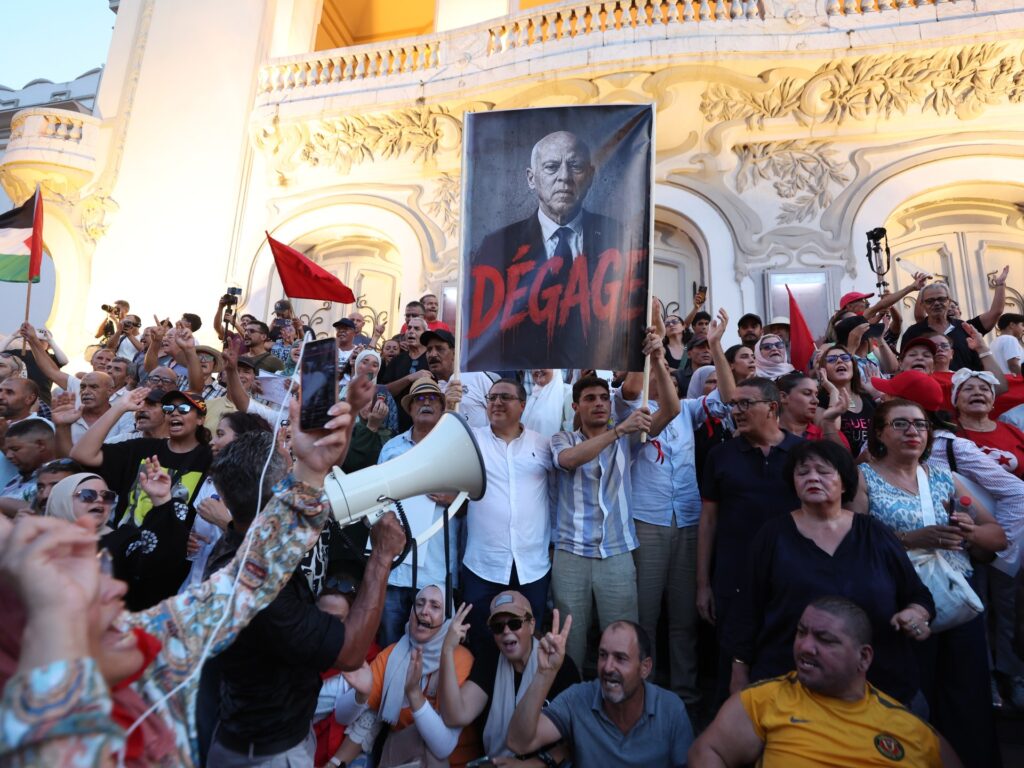
Tunisia’s top court has upheld the convictions of several opposition figures and activists, a decision that has sparked widespread criticism both domestically and internationally. The convicted individuals face lengthy prison terms, prompting accusations that the judiciary is acting under political pressure to suppress dissent.
The case has deepened concerns about the state of democracy and judicial independence in Tunisia, a country that has been widely viewed as a beacon of democratic progress in the Arab world since the 2011 revolution. Critics argue that the court’s ruling is emblematic of a broader crackdown on opposition voices and civil society activists, which threatens the gains made in Tunisia’s democratic transition.
Several prominent opposition leaders and activists were convicted on charges related to their political activities, which many believe are fabricated or exaggerated to silence criticism of the current government. Human rights organizations have condemned the verdict, calling it a blatant misuse of the judicial system to target political opponents.
The government’s supporters, however, maintain that the convictions are legitimate and necessary to maintain stability and order in the country. They argue that the judicial process was fair and that the defendants were found guilty based on evidence presented in court.
Tunisia’s judiciary historically enjoys a reputation for independence, but recent developments suggest increasing interference by political forces. Observers note that the judiciary’s compromised position undermines public trust and complicates the country’s ability to uphold the rule of law.
This ruling comes at a sensitive time for Tunisia, as the nation grapples with economic challenges, social unrest, and political tensions. Many Tunisians worry that the suppression of dissent will exacerbate these issues and further destabilize the country.
International bodies, including the United Nations and the European Union, have expressed concern about the convictions and urged the Tunisian government to ensure judicial independence and protect fundamental freedoms. They emphasize the importance of upholding human rights as Tunisia continues its democratic development.
Opposition parties have vowed to continue their struggle despite the setbacks, calling for reforms to guarantee fair trials, end political interference in the judiciary, and restore democratic norms.
Activists have also intensified their calls for solidarity protests and international support, highlighting the need for Tunisia to return to the path of genuine democracy free from intimidation and repression.
As Tunisia faces these critical challenges, the durability of its democratic institutions remains uncertain. The judiciary’s role and its perceived impartiality will be pivotal in shaping the country’s future political landscape.
The unfolding situation underscores the fragile nature of Tunisia’s democracy and the ongoing battle between authoritarian tendencies and democratic aspirations. The outcome of this judicial process could set an important precedent for how Tunisia handles political dissent and governance in the years to come.
For many, the key question remains whether Tunisia can balance stability with respect for human rights and political freedoms, or whether the current trajectory will lead to increased authoritarianism and social division.