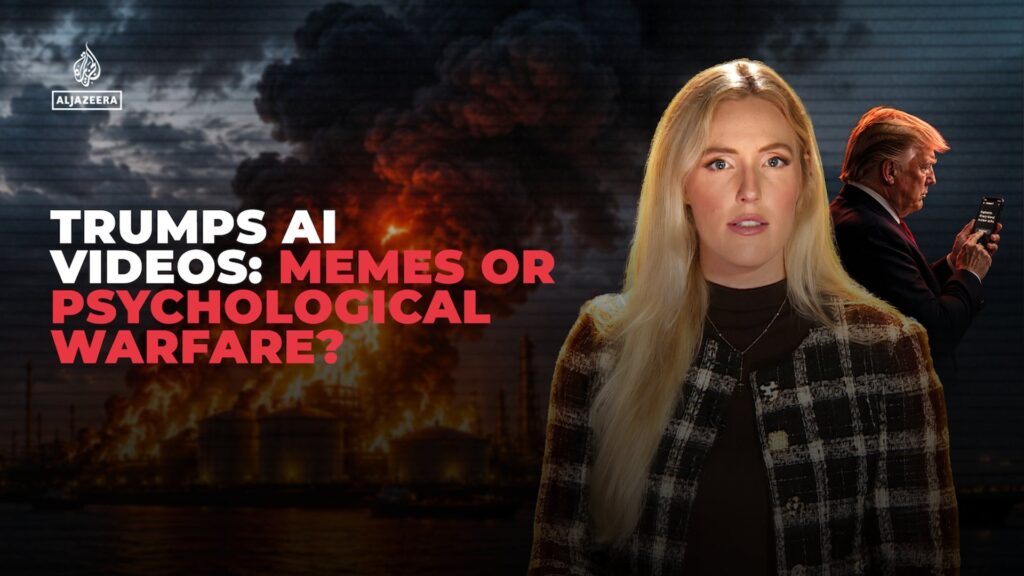
In recent months, former President Donald Trump has increasingly used AI-generated videos on social media, showcasing fictitious military actions. These videos, created through advanced artificial intelligence technology, depict scenarios such as military strikes that never actually occurred. The rise of these AI videos has sparked a debate on whether they are merely humorous internet memes or a form of psychological warfare.
The use of AI in political messaging is not entirely new, but Trump’s deployment of fabricated military scenes pushes the boundaries of digital content in politics. Supporters argue these videos serve as satirical commentary on political and military issues, intended to entertain or provoke thought among followers. On the other hand, critics warn that such fake content can mislead the public, spread misinformation, and heighten tensions both domestically and internationally.
Experts in psychology and digital warfare have noted that AI-generated videos that mimic real-world events carry the potential to manipulate public perception. The emotional impact of visual media is significant, and when combined with AI’s capacity for realistic fabrication, it can create powerful propaganda tools.
Analysts note that Trump’s adoption of these videos might be part of a broader strategy to influence public opinion and media narratives. By presenting dramatized military actions, the content could be designed to evoke fear or demonstrate strength, potentially swaying political viewpoints or undermining opposition.
Furthermore, the legal and ethical implications of using synthetic media in political discourse remain a gray area. There are ongoing discussions about the responsibility of public figures to avoid spreading disinformation and the need for regulations to address AI-generated political content.
Social media platforms, where these videos are mostly circulated, face challenges in moderating and fact-checking such content. The rapid advancement of AI technology often outpaces platform policies, allowing manipulated media to reach wide audiences quickly.
In conclusion, while some may view Trump’s AI videos as mere memes, their psychological impact and potential to influence public opinion suggest a more complex use as a form of digital psychological warfare. As AI-generated content becomes more sophisticated, it highlights the growing need for critical media literacy and regulatory measures to address new challenges in the digital information environment.