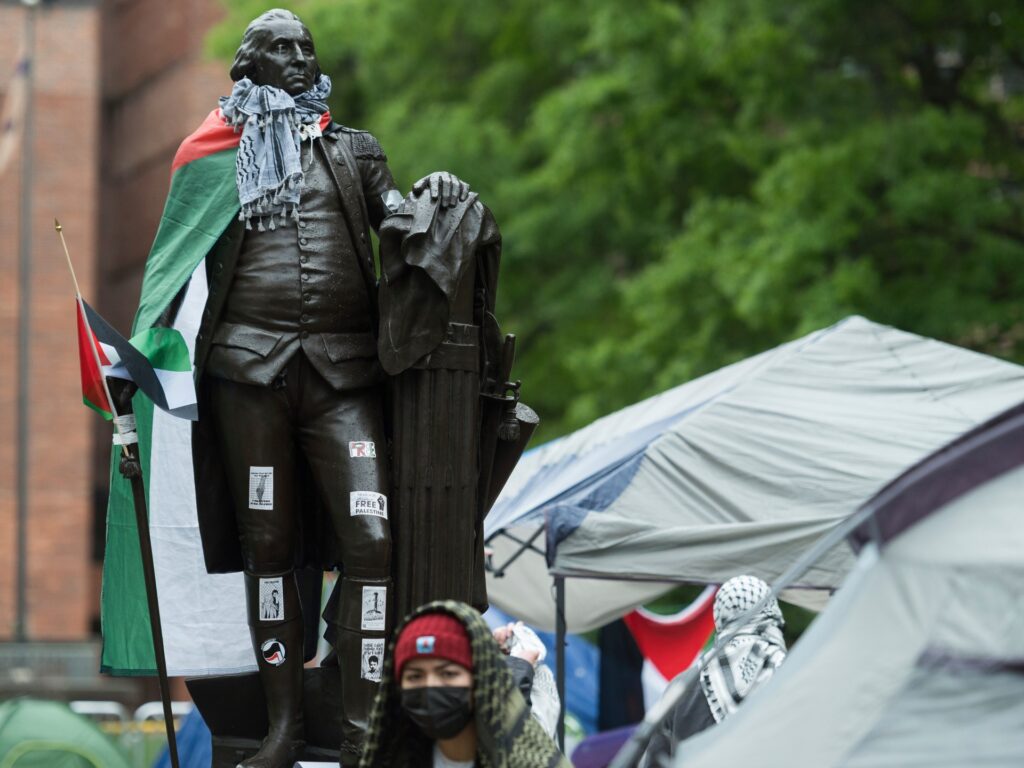
In a recent and highly controversial decision, the US House of Representatives voted to defund universities that participate in or support boycott movements against Israel. This legislative move has sparked a significant backlash from civil rights advocates and various rights groups who argue that the measure infringes upon the freedom of speech rights protected by the Constitution.
The bill aims to penalize American universities financially if they are involved with the Boycott, Divestment, and Sanctions (BDS) movement, which targets Israel over its policies towards Palestinians. Proponents of the bill claim that supporting this boycott undermines the US-Israel partnership and could negatively impact diplomatic relations between the two countries.
However, opposition voices emphasize that the punitive measure sets a dangerous precedent by using government funding as leverage to suppress political expression. Activists argue that universities ought to remain spaces for free exchange of ideas, including controversial or unpopular opinions about international politics.
According to rights groups, the legislation effectively curtails academic freedom and silences one segment of political discourse within American institutions of higher education. Many see this as a betrayal of core democratic principles, including the protection of First Amendment rights.
Legal experts have also questioned the constitutionality of the measure. They point out that the government restricting funds based on political conduct could lead to numerous lawsuits and further polarize an already divided political landscape.
The vote comes amid broader debates within the United States about the appropriate stance on Middle East conflicts and the role of universities in political activism. Many academic leaders have voiced concerns about the potential impacts of this law on diversity of thought and institutional autonomy.
Civil liberties organizations are mobilizing to challenge the law, emphasizing the importance of safeguarding free speech irrespective of political leanings or geopolitical considerations. They stress that defending rights at home should not be compromised for foreign policy objectives.
This issue not only highlights tensions surrounding US foreign policy but also raises fundamental questions about the balance between government authority and individual freedoms. As the measure advances, the conversation about how to uphold democratic values in times of international disputes continues to gain urgency and attention across the nation.