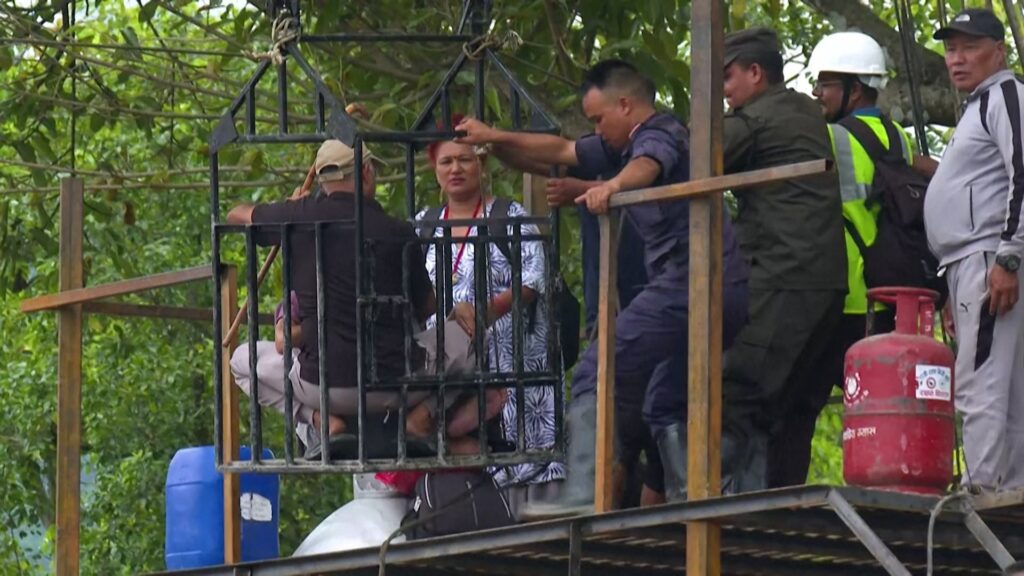
In the aftermath of a devastating natural event in Nepal, stranded survivors have resorted to using a zip line to cross the raging Trishuli River, highlighting the severe challenges faced in the region. The Trishuli River, known for its turbulent waters especially during the monsoon season, has become a formidable barrier for many isolated communities.
Survivors trapped in remote areas and relief camps are struggling to obtain basic necessities such as food and medicine. The destruction of infrastructure, including roads and bridges, has complicated the delivery of essential supplies, forcing residents to find innovative and dangerous methods to access relief.
The use of zip lines emerged as a critical solution for those cut off by the swollen river. This makeshift mode of transport allows individuals to traverse the river safely when conventional means are unavailable. Local volunteers and affected families have constructed these zip lines using ropes and pulleys, demonstrating resilience and resourcefulness in dire circumstances.
Relief camps scattered across the affected regions are working tirelessly to support survivors, but the logistical difficulties posed by the damaged landscape have hindered efforts. Aid organizations and government agencies are collaborating to restore access routes and ensure a steady flow of aid. However, the immediate needs remain acute as thousands continue to face shortages.
Health risks are escalating as access to medical supplies diminishes. The scarcity of medicines and sanitation products increases the vulnerability of survivors to disease outbreaks. Medical teams are prioritizing emergency care, but the lack of infrastructure poses ongoing challenges.
Community leaders are urging for increased support and more rapid deployment of resources to prevent further suffering. In addition to food and medical aid, there are calls for psychological support services to address trauma caused by the disaster.
Efforts to rebuild and reconnect the isolated areas are underway, with engineers assessing damage to critical infrastructure and planning repairs. Restoring road and bridge access is expected to significantly improve the delivery of essential supplies and the mobility of residents.
The situation in Nepal remains precarious, with natural hazards continuing to threaten vulnerable populations. The use of zip lines symbolizes both the desperation and determination of survivors as they navigate these hardships.
International aid organizations have responded by increasing their assistance, providing emergency relief kits and deploying field teams to the hardest-hit zones. Despite these efforts, the need for sustained support remains urgent.
This crisis in Nepal underscores the broader challenges faced by mountainous and rural communities in disaster resilience and response. As climate change intensifies the frequency and severity of natural disasters, it is crucial to invest in robust infrastructure and emergency preparedness to safeguard lives.
For now, the zip lines across the Trishuli River stand as a poignant reminder of human endurance amid crisis, as survivors continue their struggle to secure basic survival needs in the face of overwhelming obstacles.