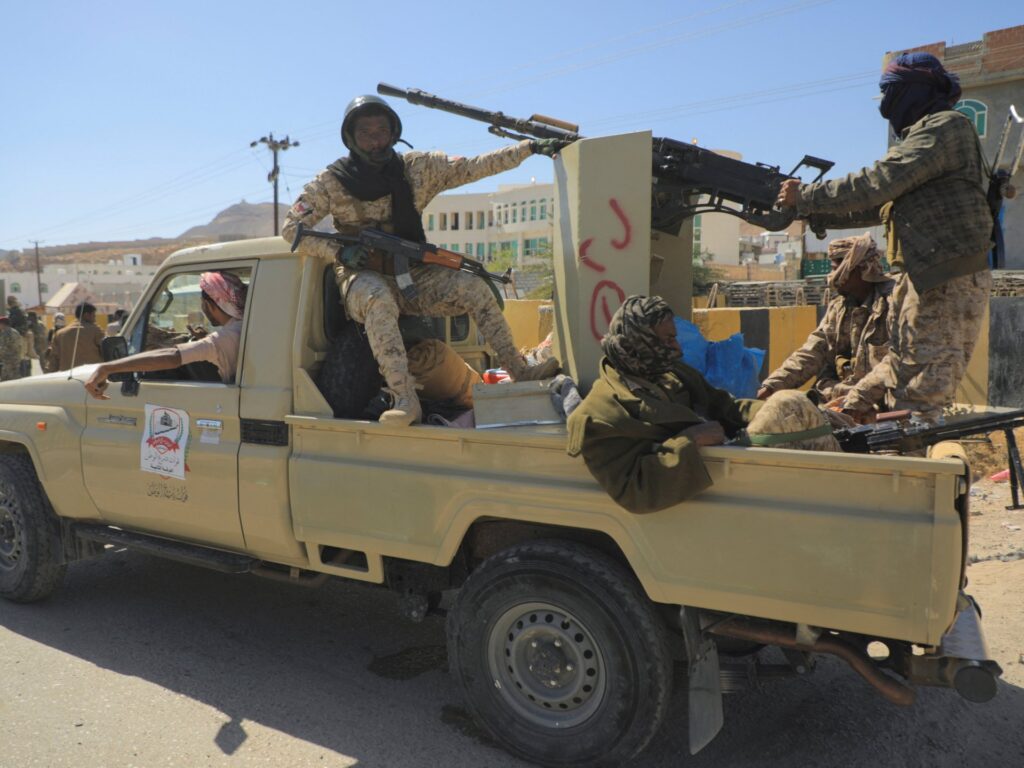
In the southwestern region of Yemen, intense clashes have erupted between Houthi fighters and Yemeni government forces, marking another violent escalation in the country’s ongoing conflict. The confrontations are centered around a key area where Houthis are attempting to cut off a critical road linking the city of Taiz to the port city of al-Makha.
This strategic route is vital for the government as it serves as a major supply line, facilitating the transport of goods, reinforcements, and humanitarian aid between inland and coastal areas. By seeking to sever this connection, the Houthis aim to disrupt government logistics and tighten their control over the region.
The fighting underscores the volatile nature of southwestern Yemen, where control over transport arteries often dictates regional power dynamics. Taiz, a city that has witnessed some of the fiercest battles during the Yemen conflict, remains a focal point for both Houthi and government ambitions. Meanwhile, al-Makha’s strategic coastal position makes it a crucial hub for supply and trade.
Reports suggest that the Houthis launched a coordinated offensive to seize control of strategic points along the road in an apparent attempt to isolate Taiz from maritime resupply through al-Makha. This move could significantly hinder government forces’ operational capabilities and strain civilian access to essential supplies.
Yemeni government forces have responded with counterattacks aimed at repelling the Houthi advance and maintaining open lines of communication and supply. Both sides have suffered casualties in the fierce engagements as they vie for dominance.
The clashes have raised concerns about the broader humanitarian implications, as disruptions in supply routes exacerbate the already dire conditions faced by civilians in contested areas. Aid agencies warn of increased challenges in delivering food, medicine, and other critical assistance amid the heightened insecurity.
Analysts note that control of transport routes remains a key tactical objective for all parties in Yemen’s complex conflict landscape. The Houthis’ attempt to block the Taiz-al-Makha road reflects their strategic intent to consolidate territorial gains and restrict government mobility.
In response, international stakeholders have called for restraint and renewed efforts towards negotiating a peaceful resolution, emphasizing the urgent need to alleviate the suffering of civilians trapped in conflict zones.
The Yemeni government’s determination to keep the supply route open highlights its awareness of the road’s importance for maintaining governance and civilian support in contested regions.
As clashes continue, the situation remains fluid, with the potential for further escalations or shifts in territorial control. The conflict in southwestern Yemen is emblematic of the broader struggle affecting millions across the country, underscoring the challenges of achieving lasting peace.
Observers continue to monitor the developments closely, noting that the outcomes of these battles could influence the strategic balance in Yemen’s protracted civil war. Efforts to restore stability hinge on securing critical infrastructure and ensuring humanitarian access, both of which are threatened by the ongoing fighting.
The international community’s engagement remains crucial in supporting dialogue and delivering aid, aiming to prevent further deterioration of the humanitarian situation while encouraging political solutions.
In the meantime, residents in affected areas face uncertainty and hardship as clashes disrupt daily life and access to essential services. The conflict’s continuation serves as a stark reminder of the urgent need for comprehensive peace efforts in Yemen.
This latest round of battles highlights the enduring complexity and volatility of the conflict, with strategic transport routes continuing to play a central role in the struggle for control and influence across Yemen’s fragmented landscape.