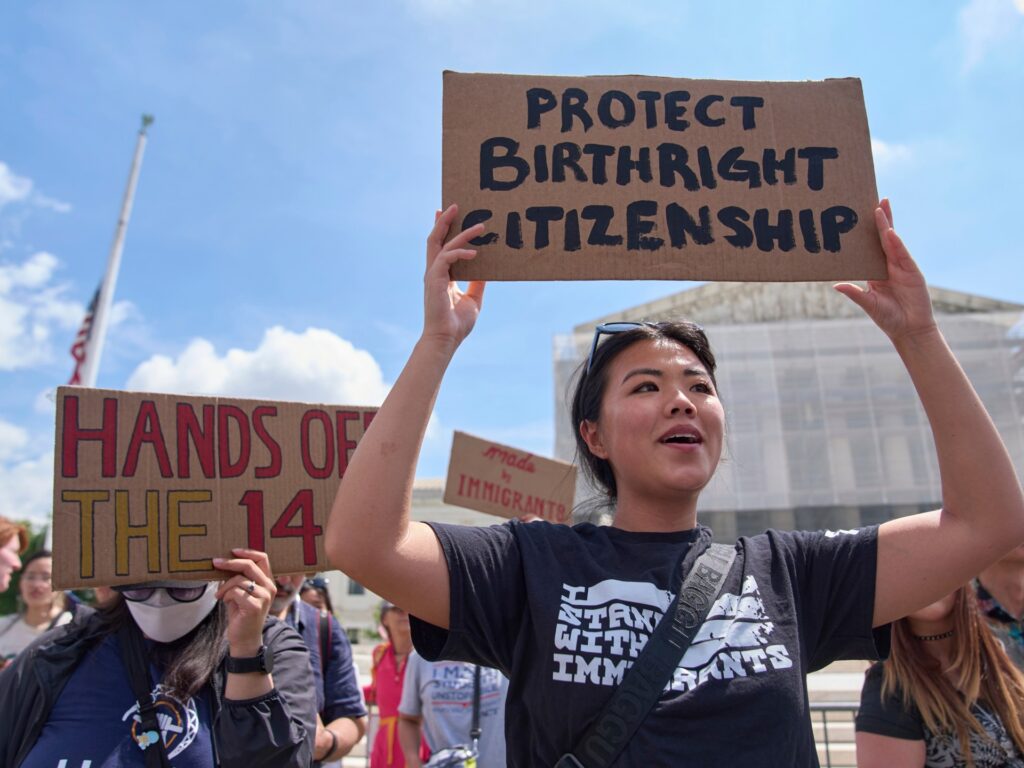
In a significant legal development, a U.S. judge has blocked former President Donald Trump’s latest effort to restrict birthright citizenship. This ruling comes on the heels of a decisive 6-3 Supreme Court decision that declared Trump’s attempt to curtail birthright citizenship as illegal. Birthright citizenship, which grants citizenship to anyone born on U.S. soil regardless of their parents’ nationality, has long been a contentious issue in American politics. Trump’s administration had sought to impose restrictions on this principle, aiming to limit automatic citizenship to children of non-citizens, a move opponents argued would undermine constitutional rights and create legal ambiguities.
The Supreme Court’s decision firmly sided against these efforts, emphasizing the constitutional guarantee that anyone born in the United States is a citizen. The recent ruling by the lower court judge reaffirms this stance, effectively halting any attempts by Trump or his allies to change the policy through executive action alone. Legal experts believe this outcome reinforces the judiciary’s role in upholding the Constitution against executive overreach.
Supporters of birthright citizenship argue that this principle is fundamental to American values and identity, ensuring equal treatment and legal protection for all born in the country. Critics of Trump’s efforts view the attempts to limit citizenship as politically motivated maneuvers that could disenfranchise thousands and complicate immigration policy.
The ongoing debates over birthright citizenship reflect broader discussions about immigration reform, national identity, and the balance of power in the United States. While Trump and some political figures continue to call for stricter controls and changes to citizenship laws, the courts have thus far consistently protected the established constitutional framework.
This legal saga highlights the tensions between executive power and constitutional mandates, demonstrating the complexities involved in changing foundational policies through unilateral action. Advocates for maintaining birthright citizenship see the judicial rulings as victories for civil rights and legal clarity, while critics lament what they see as judicial overreach preventing necessary reforms.
As the political landscape evolves and immigration remains a hot-button issue, the matter of birthright citizenship will likely continue to provoke intense legal battles and political debates. For now, the judicial system stands as a key arbiter, ensuring that any modifications to citizenship laws adhere to constitutional principles rather than political expedience.
In conclusion, the recent blocking of Trump’s latest effort to limit birthright citizenship reaffirms the constitutional protections surrounding citizenship and sets a precedent for future legal challenges. It underscores the importance of the judiciary in maintaining the rule of law and protecting individual rights against executive attempts to reshape fundamental American policies.