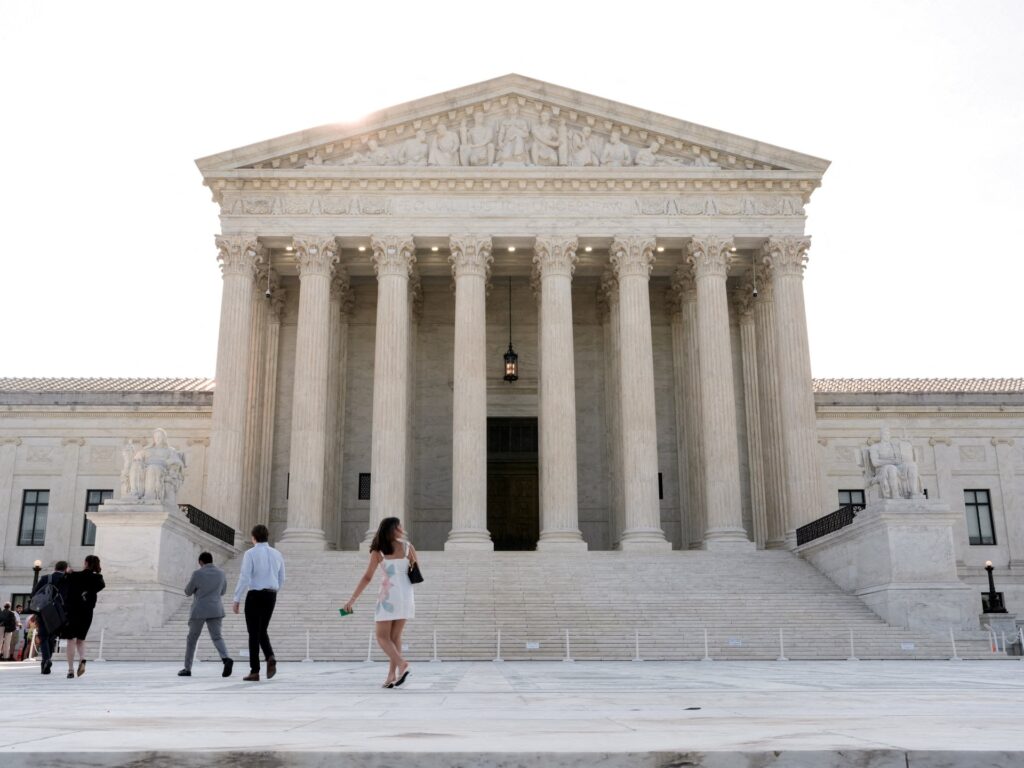
In a significant political development, the United States Congress has recently rejected a proposed constitutional amendment aimed at restricting the size of the Supreme Court. The vote has sparked intense debate and highlighted the ongoing tensions surrounding the judiciary and its role in American governance.
The amendment was introduced with the intent to limit the number of justices on the Supreme Court, a move that some proponents argued was necessary to maintain the balance and integrity of the court. Critics, however, viewed it as a politically motivated attempt to influence the Supreme Court’s composition and decisions.
Republican Congressman Mike Johnson emerged as a vocal critic of the opposition to the amendment. Johnson sharply rebuked Democrats for their united stance against the measure, accusing them of failing to defend what he termed “the integrity” of the Supreme Court. According to Johnson, the amendment was a crucial step towards preserving the court’s credibility and preventing potential overreach.
Democrats, on the other hand, defended their decision by emphasizing the importance of maintaining judicial independence and continuity. They argued that attempts to alter the court’s size represent a slippery slope that could undermine the foundational principles of the U.S. Constitution and destabilize the nation’s legal system.
The debate over the Supreme Court’s size is not new. Historically, the number of justices has fluctuated since the court’s inception, but it has remained at nine for over 150 years. Recent political and social issues have reignited discussions about whether the court’s size should be adjusted to reflect contemporary needs or to counter perceived ideological imbalances.
Supporters of the amendment viewed it as a mechanism to prevent future court-packing by political majorities seeking to tilt judicial outcomes. They contended that reducing or capping the number of justices would safeguard the court from such maneuvers and ensure its decisions remain impartial and respected.
Opponents warned that changing the court’s size for political ends could erode public trust in the judiciary and create a precedent for tit-for-tat changes, leading to increased instability and partisanship.
This latest congressional vote underscores the deep political divisions surrounding the judiciary and raises questions about the future of the Supreme Court and its role in American democracy. As the nation continues to grapple with these issues, the discourse around judicial reform remains a critical aspect of broader conversations about governance, law, and constitutional integrity.