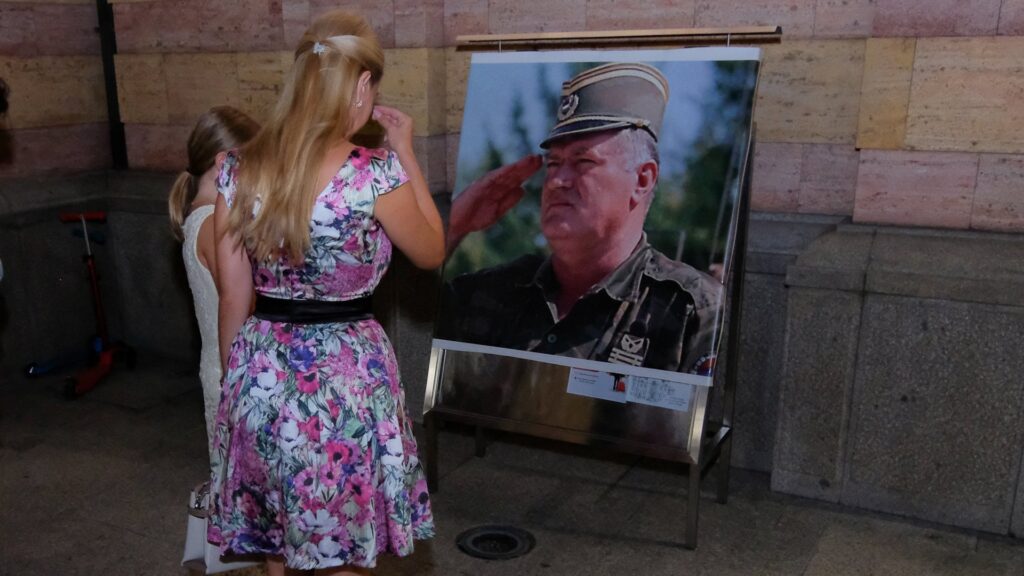
Despite his notorious legacy as the ‘Butcher of Bosnia,’ Ratko Mladić, the former Bosnian Serb military commander, continues to be hailed as a hero by a part of the Bosnian Serb community. Recently, hundreds of Bosnian Serbs gathered to pay tribute to Mladić, reflecting the deep divisions and controversial sentiments surrounding his figure.
Ratko Mladić is widely known for his role in the Bosnian War from 1992 to 1995, where he was charged with war crimes, including genocide, by the International Criminal Tribunal for the former Yugoslavia (ICTY). He played a central role in the Siege of Sarajevo and the Srebrenica massacre, events that resulted in the deaths of thousands of civilians and are among the most tragic in modern European history.
Despite his conviction for these crimes, Mladić maintains a complicated legacy among the Bosnian Serb population. For many, he symbolizes resistance and defense of their ethnic group during the conflict. Supporters argue that he was a military leader protecting their people under difficult circumstances and view his trial and sentencing as politically motivated.
The tribute event saw a gathering of hundreds who celebrated Mladić as a hero and freedom fighter, emphasizing the ongoing ethnic tensions and unresolved issues from the war. The event was marked by speeches extolling his leadership and sacrifices, as well as calls for unity among Bosnian Serbs.
The commemoration has sparked widespread criticism and concern from international observers, human rights organizations, and other ethnic groups in Bosnia and Herzegovina. Many see it as a painful reminder of the past atrocities and worry about the implications for reconciliation and peace-building efforts in the region.
Bosnia remains a country deeply scarred by its recent history, with ethnic divisions persisting despite efforts at integration and coexistence. Events like these illuminate the challenges of coming to terms with the war’s legacy and highlight ongoing disputes over historical narratives.
In broader terms, the situation surrounding Ratko Mladić’s legacy underscores the complexity of post-conflict justice and memory. It raises important questions about how societies remember and interpret traumatic periods, deal with war crimes accountability, and work toward healing and unity.
The international community continues to call for respectful remembrance that honors victims and promotes peace, urging all groups in Bosnia and Herzegovina to reject glorification of figures associated with atrocities. Meanwhile, within Bosnian Serb communities, the divide persists between viewing Mladić as a criminal or a heroic defender, reflecting a still-vibrant struggle over identity and memory in the region.
As Bosnia charts its path forward, the legacy of figures like Ratko Mladić will remain a contentious issue, challenging reconciliation efforts and the vision of a united, peaceful future for all citizens.