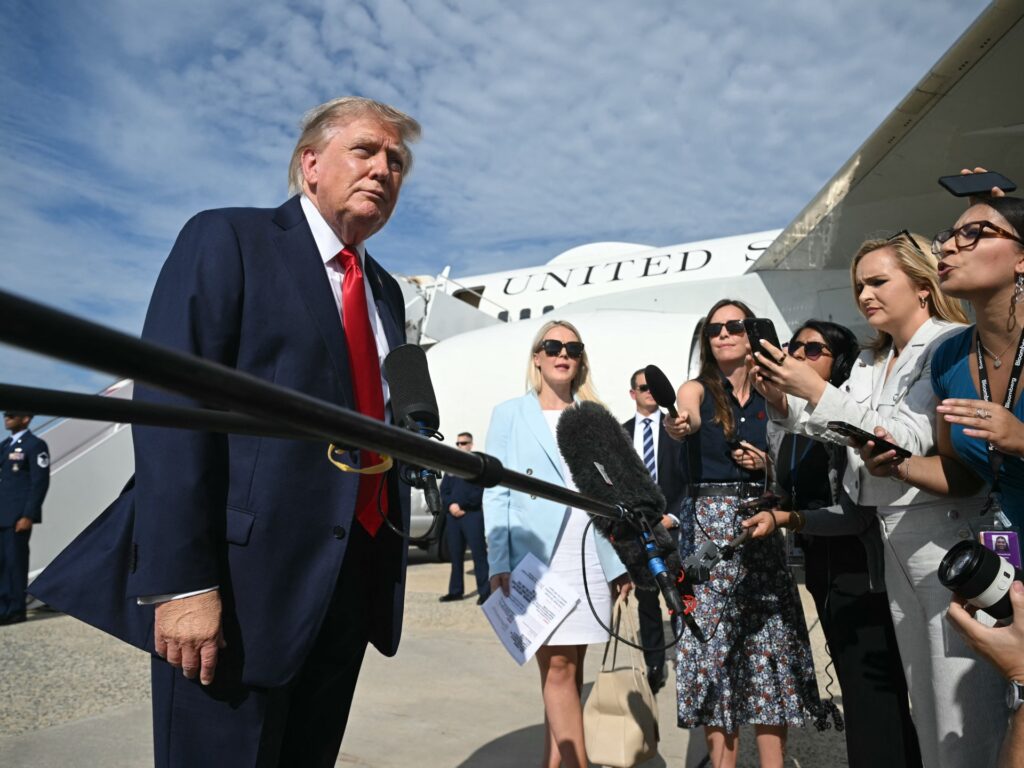
In a recent development that has stirred significant attention, former President Donald Trump has reportedly threatened to report journalist Kristen Welker to the Federal Communications Commission (FCC), the broadcast regulator in the United States. This move marks another chapter in the ongoing conflict between Trump and the media, particularly journalists who have covered his administration critically.
The Federal Communications Commission, a government agency, is responsible for regulating interstate and international communications by radio, television, wire, satellite, and cable across the United States. Under Trump’s presidency, the FCC made headlines for its controversial efforts to target news outlets it accused of spreading “fake” news, raising concerns about freedom of the press and government overreach.
Kristen Welker, a seasoned journalist and White House correspondent, is known for her rigorous reporting and has been a prominent figure in political journalism. She gained wider recognition as a co-anchor of NBC’s “Today” show and as a moderator of presidential debates. Welker’s reporting has often scrutinized the actions and policies of the Trump administration, which appears to be at the core of this new confrontation.
The threat to report Welker to the FCC suggests an attempt to leverage regulatory power against a journalist based on the nature of her reporting. Critics argue that such actions undermine the foundational principles of free speech and press freedoms essential to a democratic society. The media community has expressed alarm at this development, interpreting it as a potential intimidation tactic aimed at discouraging critical journalism.
Historically, the FCC has been cautious in intervening directly in content-related disputes, emphasizing its role in regulating technical and licensing issues rather than editorial content. Trump’s previous FCC appointments had sparked debates about the agency’s neutrality and its potential use as a tool against unfavorable media coverage.
In response to the threat, media advocacy groups have called for robust protections for journalists and have highlighted the danger of allowing political figures to use regulatory bodies as weapons against the press. They stress that preserving an independent and fearless media is crucial for holding those in power accountable.
This incident comes amid ongoing tensions between the Trump administration and the press, a relationship marked by frequent accusations from Trump about biased and unfair coverage. Trump’s characterization of certain news as “fake” has led to a polarized media environment and increased skepticism among his supporters regarding mainstream journalism.
As the situation unfolds, all eyes are on the FCC to see whether it will entertain the complaint against Welker or uphold its tradition of non-interference in journalistic content. The outcome will likely have lasting implications for the relationship between government regulators and the press.
In summary, Trump’s threat to report journalist Kristen Welker to the FCC highlights continuing struggles over media freedom, government power, and the ethical responsibilities of both the press and political leaders. This episode underscores the fragile balance between regulatory authority and the imperative of preserving democratic values such as free expression and an independent media.