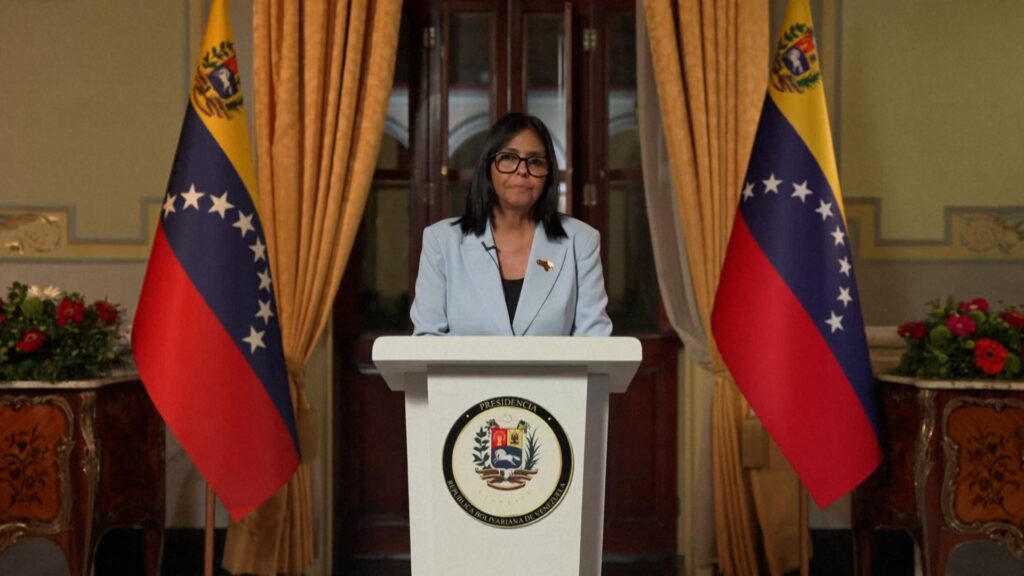
In a nationally televised address, Venezuela’s interim President Delcy Rodriguez asserted that the nation retains its sovereignty despite entering into an oil deal with the United States. The agreement marks a significant development in the geopolitical landscape, as Venezuela, traditionally wary of US influence, engages in an oil exchange that some have viewed as controversial.
Rodriguez emphasized that Venezuela’s decisions regarding its natural resources remain fully under the country’s control, asserting that the deal does not compromise national sovereignty. “Venezuela retains sovereignty over our oil and our resources,” she declared, addressing concerns that the arrangement might signal a loss of autonomy.
The deal involves Venezuela supplying oil to the US market, a move seen as pragmatic given the economic challenges Venezuela currently faces, including ongoing sanctions and economic instability. Analysts suggest that while the country benefits economically from the deal, it also navigates a complex balance between maintaining its political independence and engaging with global markets.
Opposition leaders and international observers have reacted with mixed feelings. Some critics argue that the agreement could be seen as a concession to US interests, potentially undermining Venezuela’s longstanding stance against American policies. Supporters, however, view it as a necessary step to stabilize the economy and alleviate the hardships faced by Venezuelans.
Historically, Venezuela has been one of the world’s largest oil exporters, with oil revenues serving as a critical pillar of its economy. The recent deal with the United States signifies a shift in Venezuela’s oil diplomacy, which had long been characterized by tension and sanctions imposed by the US government.
Experts underscore that the arrangement could pave the way for more cooperation in the energy sector but caution about potential political implications. Rodriguez’s firm assertion about sovereignty seeks to reassure Venezuelans and the international community that despite closer economic ties with the US, Venezuela remains steadfast in controlling its own destiny.
The televised address came at a time when Venezuela is seeking to mend its fractured international relationships and find new avenues for economic recovery. The government is aiming to demonstrate that it can engage in mutually beneficial agreements without yielding its core principles.
This development highlights the complexity of international energy politics and showcases the challenges faced by resource-rich countries in balancing external demands with national interests. As Venezuela navigates these waters, the world watches closely to see how this new chapter will unfold in terms of economic stability, political sovereignty, and regional dynamics.