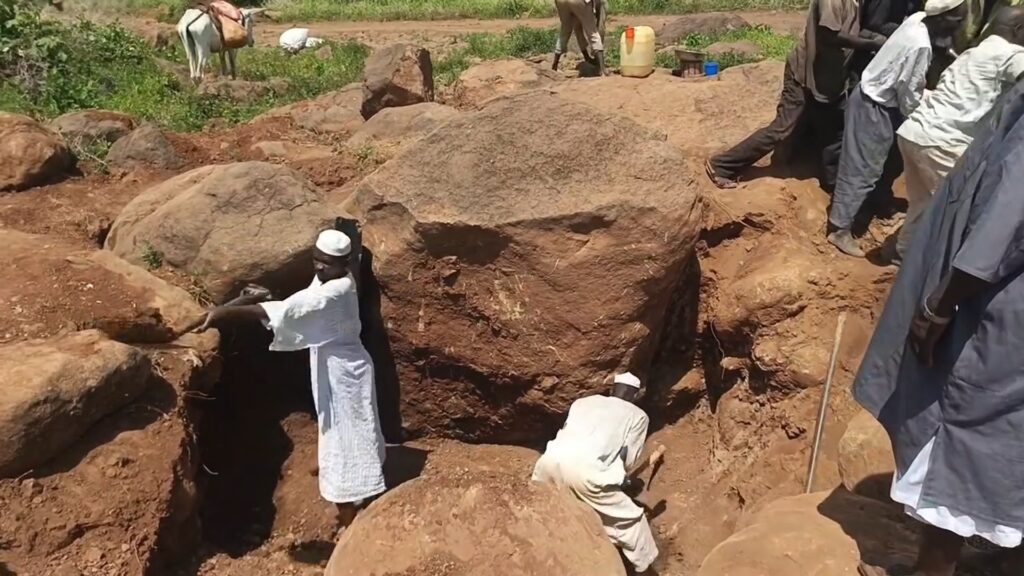
In the central Darfur region of Sudan, residents of the town of Golo are undertaking a remarkable community effort to repair a rugged and deteriorated road by hand. This initiative aims to improve access for emergency vehicles, which is vital for the safety and well-being of the local population.
The road in question has been notoriously difficult to navigate, especially during the rainy seasons when it becomes almost impassable. Prior to the residents’ efforts, emergency services faced significant delays reaching people in need, exacerbating health and safety risks in the area.
With limited resources and infrastructure support, the people of Golo have taken it upon themselves to clear debris and level the rough terrain manually. This labor-intensive process involves removing rocks, filling potholes, and making the path smoother to allow ambulances and fire trucks to pass through more quickly and safely.
This grassroots repair work highlights the resilience and determination of the community, as formal government assistance and funding for road maintenance have been scarce. The repairs, though modest, have already begun to show positive effects by reducing travel times for emergency responders.
Local leaders in Golo expressed hope that their efforts will attract more attention to the infrastructure needs of Darfur’s rural areas. ‘‘Improving this road is not just about convenience; it is about saving lives,’’ one resident noted.
In addition to emergency access, the repaired road is expected to facilitate better transportation for daily activities such as moving goods, accessing education, and connecting with neighboring communities.
This initiative also underscores the broader challenges facing Sudan’s Darfur region, where conflict and economic hardship have limited development opportunities for years. Infrastructure projects like this one, relying on community cooperation, serve as temporary but essential solutions to ongoing difficulties.
Humanitarian organizations have acknowledged the value of such local efforts and called for increased support to complement community-led repairs. Enhanced investment in infrastructure is crucial to improving overall living conditions, especially in fragile and marginalized regions.
The story of Golo residents repairing their road by hand is a powerful example of grassroots mobilization and the critical role of infrastructure in emergency preparedness. It serves as a reminder that even small acts of collective effort can contribute significantly to the safety and resilience of vulnerable communities.
As Sudan continues to address its complex political and economic landscape, the perseverance of towns like Golo offers hope that local initiatives can pave the way for broader systemic improvements in infrastructure and public services across the country.