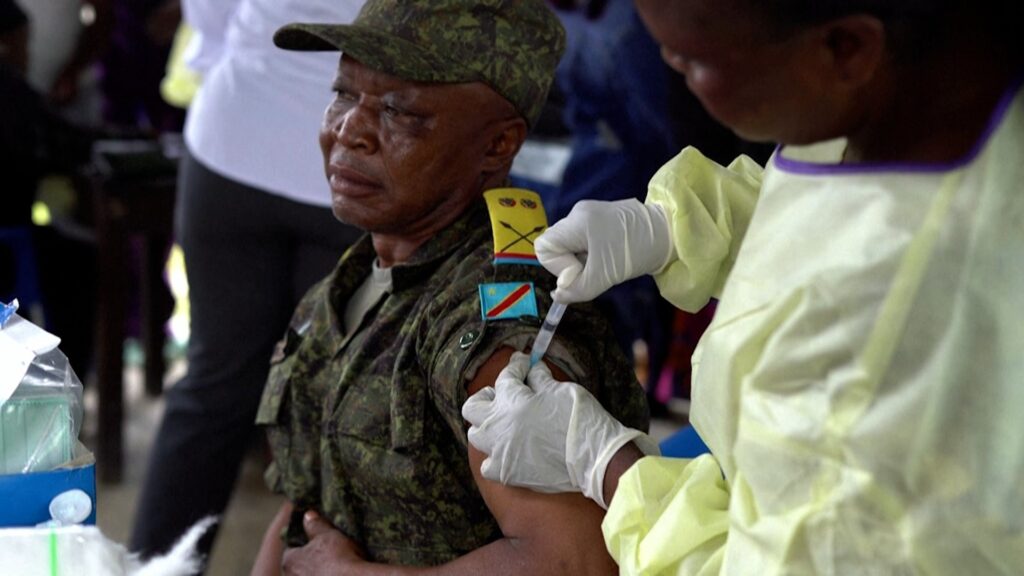
The Democratic Republic of Congo (DR Congo) has embarked on a critical vaccination campaign targeting the largest and deadliest Ebola outbreak in its history. Health authorities have received a shipment of 70,000 doses of the Ervebo vaccine, which they hope will prove effective against the current strain of the virus, identified as the Bundibugyo strain.
This outbreak has caused considerable alarm both within DR Congo and internationally due to its rapid spread and high mortality rate. The Ervebo vaccine, which has been previously used against other Ebola strains, represents a significant tool in the fight to contain the outbreak.
Efforts are now concentrated on rapid and widespread vaccination of frontline health workers, contacts of confirmed cases, and high-risk communities to halt the transmission of the virus. The vaccine deployment is part of a broader response strategy that includes surveillance, case management, and community engagement.
Health officials stress the urgency of vaccination given the lethality of the Bundibugyo strain, which has historically been associated with severe symptoms and a high fatality rate. The introduction of the Ervebo vaccine in this context marks an unprecedented use of a vaccine designed originally for the Zaire strain of Ebola, adapted in hope to control this variant.
The response teams also face considerable logistical challenges in reaching remote and often conflicted areas of DR Congo where the virus has been reported. Despite these challenges, the delivery and administration of the 70,000 vaccine doses signify an unprecedented effort to contain the outbreak.
International organizations, including the World Health Organization, have collaborated closely with DR Congo’s Ministry of Health to coordinate the response. Enhanced surveillance and rapid diagnostic testing are being employed to identify new cases quickly and efficiently.
Public health messaging campaigns have been launched alongside vaccination efforts to educate the population on Ebola transmission, symptoms, and the importance of vaccination to build community trust and acceptance.
This vaccination effort is seen as a beacon of hope amid a crisis that has overwhelmed health systems and communities. Successful containment of the outbreak through vaccination could serve as a model for responding to future emergent strains of Ebola virus.
In conclusion, DR Congo’s initiation of vaccination against the Bundibugyo strain using the Ervebo vaccine is a vital step forward in combating the largest and most deadly Ebola outbreak recorded in the region, promising to save lives and restore health security.
This unprecedented health intervention underscores the importance of rapid vaccine deployment, international cooperation, and community engagement in managing public health emergencies.