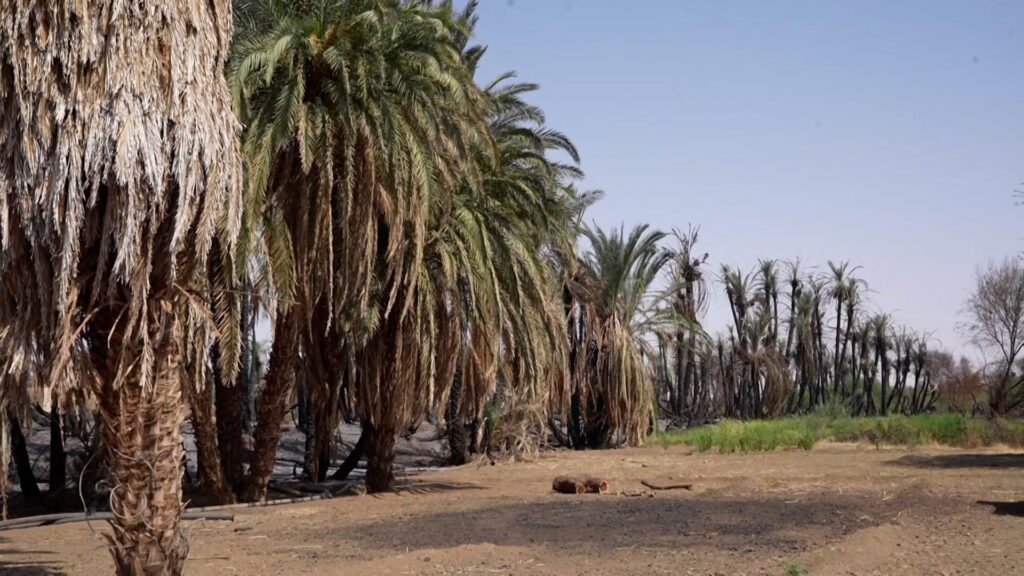
In Sudan’s Northern State, date palm trees are more than just flora—they are a vital economic lifeline for local residents. These trees provide not only food but also income and employment opportunities in a region where economic resources are limited. However, this crucial resource is facing severe threats due to increasing drought conditions and frequent wildfires.
Date palms have thrived in the arid climate of Northern Sudan for centuries, adapted to withstand harsh desert conditions. The fruit from these trees is a staple in the local diet and a significant export product, supporting the livelihoods of thousands. Unfortunately, climate change has exacerbated the dryness of the environment, leading to prolonged droughts that stress the trees.
Drought reduces the availability of water essential for the date palms to grow and produce fruit. This scarcity impacts the quality and quantity of date harvests, directly affecting farmers’ income. In addition to drought, wildfires pose a devastating threat. These fires can quickly spread through dry palm groves, destroying entire plantations within hours and leaving nothing but ashes.
Farmers and community members have reported that the frequency and intensity of these wildfires have increased in recent years. This escalation is linked to the higher temperatures and drier conditions caused by climate change. Unfortunately, firefighting resources and infrastructure in Northern State are limited, making it difficult to control these blazes once they start.
The loss of date palms has broader implications beyond immediate economic impact. These trees contribute to soil stabilization, preventing desertification—a major concern in the region. Their destruction accelerates land degradation, further reducing agricultural productivity and threatening food security.
To combat these challenges, local authorities and international organizations are seeking solutions. Efforts include planting fire-resistant tree species, improving water management and irrigation practices, and providing training on wildfire prevention and response. Additionally, promoting sustainable farming techniques could help maintain the health of date palm groves.
However, these measures require funding and coordination at multiple levels. Investment in infrastructure, such as water reservoirs and firefighting equipment, is crucial. Community awareness campaigns are also essential to prevent accidental fires, often caused by human activities.
The plight of Sudan’s date palm trees highlights the broader vulnerability of agriculture to climate change in arid regions. Protecting these trees is not just about preserving an economic resource but also about sustaining the cultural heritage and environmental balance that date palms represent.
Without immediate action, the future of date palm cultivation in Northern Sudan appears uncertain. The combined forces of drought and wildfires threaten to wipe out a critical source of income and nutrition for many families. Preserving this natural resource is imperative for the resilience and prosperity of local communities.