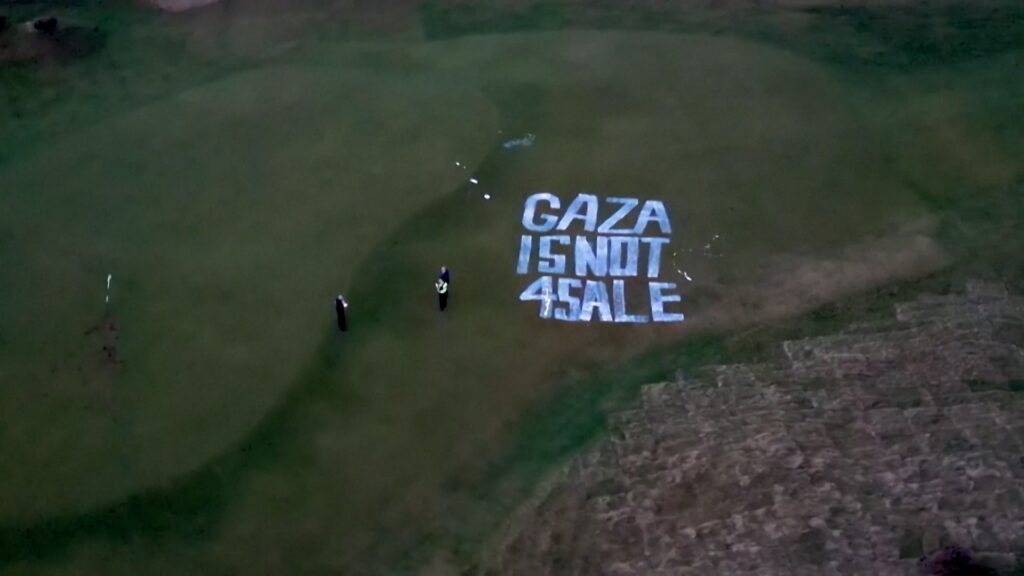
In a shocking development, seven individuals have been charged in connection with the damage caused to Donald Trump’s Turnberry golf resort in Scotland in 2025. What makes this case particularly alarming are allegations pointing toward a possible ‘terrorist connection’ behind the incident.
The Turnberry golf resort, known for its luxury and prestige, has been a favorite destination for golf enthusiasts and high-profile visitors alike. However, in 2025, the estate suffered significant damage, prompting an intensive investigation by Scottish authorities.
According to reports, the suspects apprehended are believed to have orchestrated the attack with motives beyond simple vandalism or protest. Investigators are exploring links between the individuals and extremist groups, which has heightened security concerns around the region.
Authorities remain tight-lipped about the specific nature of the terrorist allegations, but sources hint at connections to organized groups that have historically been hostile toward Western interests. The suspects, whose identities remain confidential at this stage, are facing multiple charges related to property destruction and terrorism.
The investigation marks one of the most high-profile cases to involve the Trump brand in the UK, stirring debates about security measures at luxury properties. Local residents and businesses have expressed mixed feelings, with some supporting stricter controls to prevent future attacks and others worried about potential restrictions impacting tourism and local economy.
Donald Trump, former U.S. President and the owner of Turnberry through the Trump Organization, had long invested in the property, promoting it as a world-class golf destination. The incident and subsequent allegations cast a shadow over these efforts, drawing international media attention.
Legal experts emphasize the seriousness of the charges, noting that terrorism-related offenses carry significant penalties and require thorough judicial proceedings. The case is expected to unfold over the coming months, with prosecutors aiming to establish the full extent of the suspects’ involvement and any broader conspiracies.
Security analysts suggest that this incident may lead to a reassessment of security protocols at luxury resorts worldwide, especially those linked to prominent figures. The potential terrorist dimension challenges existing paradigms of property crime, urging stakeholders to consider new threat models.
As more details emerge, the case will likely have ramifications beyond Scotland, influencing both counter-terrorism strategy and the management of high-profile international assets. For now, authorities continue their work to bring those responsible to justice, while the public watches closely, concerned about safety and the broader implications of this unprecedented event.