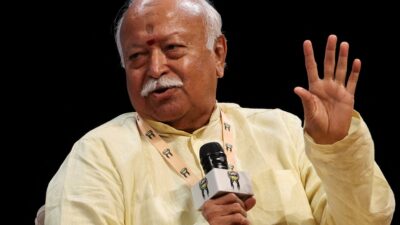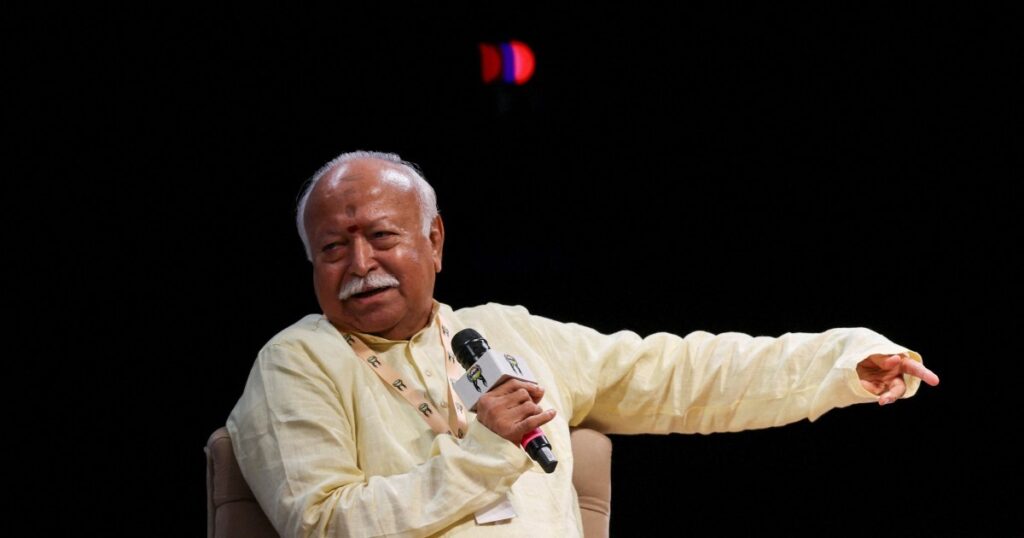
RSS Chief Mohan Bhagwat is set to deliver a speech at a discreetly organized event in New York this Saturday, stirring conversations and raising questions about the nature of the gathering and its hosts. Known for his leadership of the Rashtriya Swayamsevak Sangh (RSS), an influential Hindu nationalist organization in India, Bhagwat’s international engagements often draw significant attention both for their political and cultural implications.
The upcoming event, deliberately shrouded in secrecy, has fueled speculation about whether the focus will be on themes of unity and oneness or if it will emphasize Hindu supremacist ideologies, a controversial topic many critics associate with the RSS. The organization promotes a vision of India centered on Hindu cultural hegemony, which has been a source of intense debate within and outside India.
Details about the event’s hosts remain veiled, with limited information available about the groups or individuals coordinating Bhagwat’s visit. This secrecy adds to the intrigue, prompting observers to question the motivations behind the gathering and its potential impact on international perceptions of Hindu nationalism.
Bhagwat’s scheduled remarks will likely address the RSS’s ideological stance and its aspirations, possibly aiming to present a narrative of inclusiveness and cultural cohesion. However, past statements by Bhagwat and the RSS have sometimes been criticized for endorsing a vision that sidelines minority communities,
raising concerns about the implications for social harmony.
The New York event is part of a broader pattern of the RSS and its affiliates seeking to expand their influence globally, especially among the Indian diaspora. This campaign aims to strengthen cultural ties and political support, which could have significant repercussions for diaspora politics and global perceptions of Hindu nationalism.
As the event approaches, international media and political analysts will be closely monitoring Bhagwat’s speech and the identities of the secretive hosts. Their revelations could either ease fears of exclusivity and supremacy or confirm suspicions about a concerted effort to promote a particular ideology on foreign soil.
In conclusion, Mohan Bhagwat’s New York appearance encapsulates the complex and often controversial role of the RSS on the global stage. It highlights ongoing debates about nationalism, identity politics, and the balance between cultural pride and supremacy narratives in a diverse world.