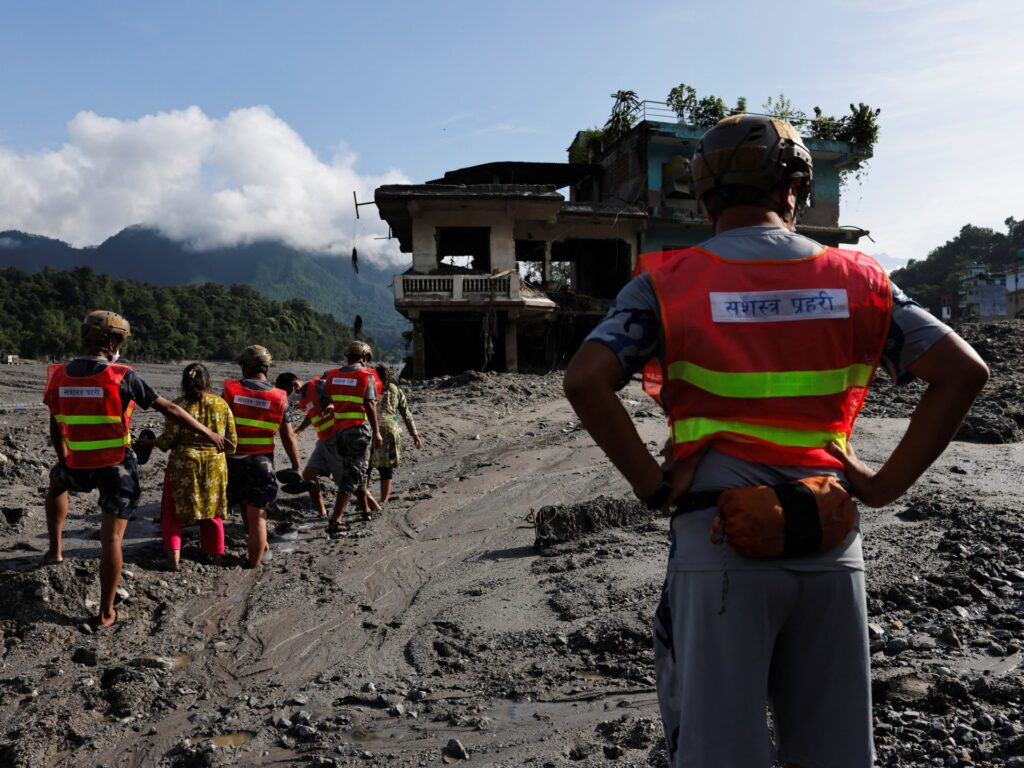
The catastrophic flood near the Nepal-China border has claimed more than 470 lives, with over 1,500 people still missing as rescue operations remain on hold. This devastating event has unfolded due to a glacial lake outburst flood (GLOF) triggered by glacial melting and heavy rainfall, a recurrent threat in the Himalayan region.
The floodwaters caused massive destruction in both Nepal and Tibet, sweeping away homes, infrastructure, and lives. Authorities have been conducting search and rescue missions, but efforts are currently stalled amid rising concerns over a barrier lake upstream.
This barrier lake, formed by landslides blocking the flow of rivers, poses a significant risk of further flooding. Experts warn that if the natural dam fails, it could unleash a new wave of floodwaters, exacerbating the already dire humanitarian crisis.
Rescue teams on the ground are coordinating with local and international aid organizations to prepare for emergency responses in the event of another flood surge. Meanwhile, temporary shelters have been set up to accommodate those displaced by the disaster.
Local governments have issued warnings and urged residents in vulnerable areas to evacuate promptly. Efforts to monitor the barrier lake’s stability are being intensified using satellite imagery and on-site inspections.
The Nepalese government has declared a state of emergency and called for international assistance to handle the mounting crisis. Medical teams and relief materials are being dispatched to affected regions, but access remains difficult due to damaged roads and ongoing weather challenges.
This tragic event highlights the increasing impact of climate change in the Himalayan region, where rising temperatures accelerate glacial melting, creating unstable conditions for glacial lakes.
Experts emphasize the urgent need for long-term hazard mitigation strategies, including improved early warning systems and sustainable environmental management to prevent such disasters in the future.
Communities affected by the flooding face a challenging period ahead, requiring substantial aid for rebuilding infrastructure, restoring livelihoods, and addressing psychological trauma.
As the situation develops, authorities continue to assess risks and prioritize safety to prevent further loss of life in this fragile mountainous terrain.