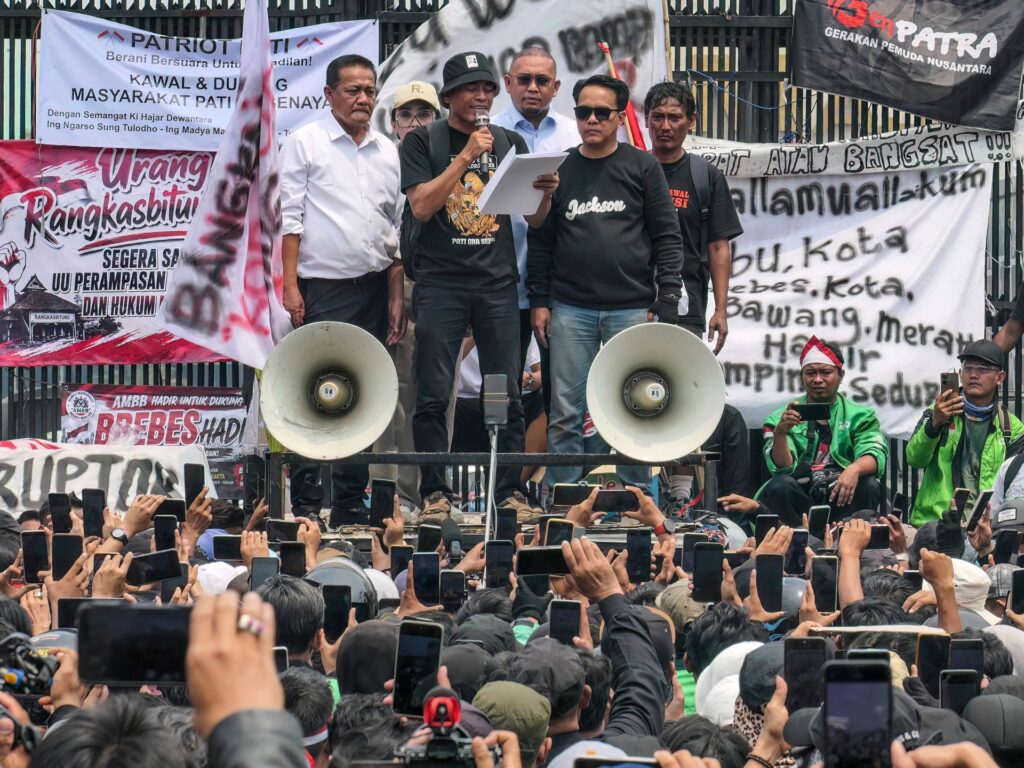
Thousands of Indonesians gathered in Jakarta outside the parliament building to protest against corruption and demand harsher penalties. This massive demonstration reflects widespread frustration over the perceived lack of effective measures to combat corruption in Indonesia’s government and public institutions.
The protesters, from various walks of life including students, civil society groups, and ordinary citizens, carried banners and chanted slogans urging lawmakers to enact stricter laws and ensure tougher enforcement against corrupt officials. The rally was peaceful but passionate, highlighting the critical issue that has long plagued the nation.
Indonesia has struggled with corruption at multiple levels, undermining development, governance, and public trust. Despite some efforts in recent years to crack down on corrupt practices, many Indonesians feel that penalties remain too lenient and that enforcement is inconsistent.
The protesters called for the government to strengthen the legal framework against corruption, increase transparency, and empower anti-corruption agencies like the Corruption Eradication Commission (KPK). Several speakers emphasized that corruption hampers economic progress and equality and that a stronger commitment is needed from all branches of government.
Parliament members present during the demonstration acknowledged the concerns raised but urged patience and noted ongoing legislative efforts aimed at reform. However, protesters remained firm, demanding immediate tangible results.
This protest is one of the largest in recent years related to corruption issues in Indonesia, signaling growing public dissatisfaction and the urgency for reform. Analysts suggest that sustained public pressure could lead to significant policy changes addressing corruption more aggressively.
The government has vowed to continue efforts to improve governance and tackle corruption, but the demonstrators’ call for harsher penalties underscores the high expectations of Indonesian citizens for accountability and justice. As the country moves forward, the balance between political will and societal demand for anti-corruption measures will be critical in shaping Indonesia’s future governance landscape.