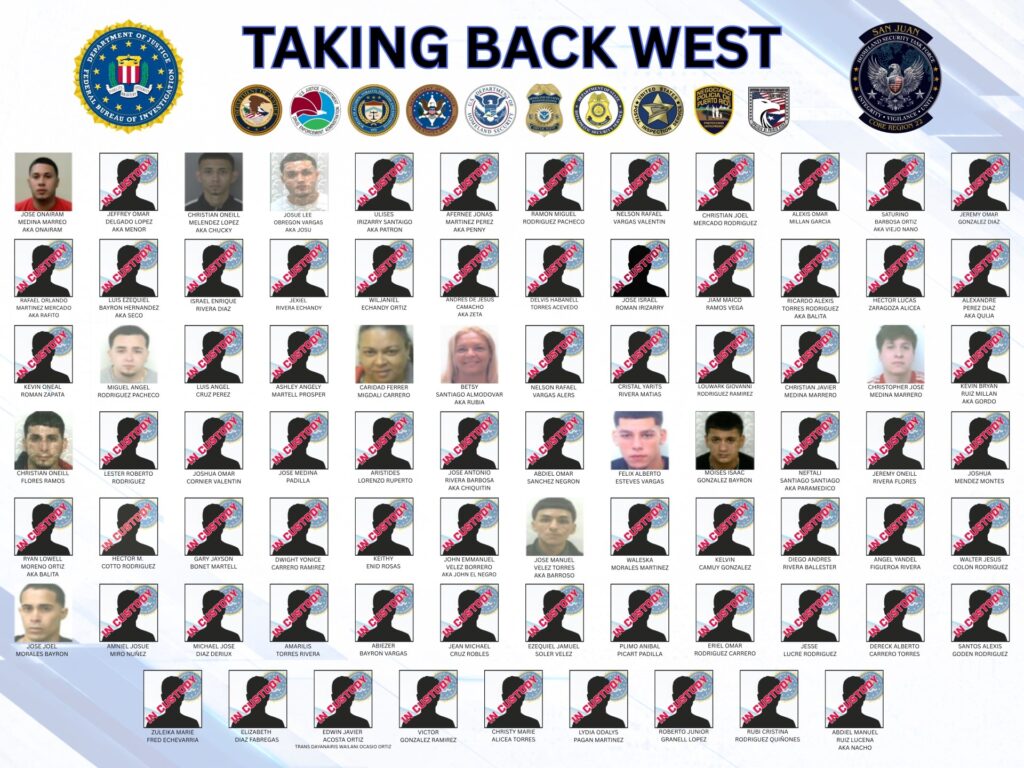
In a significant move targeting organized crime, the United States has charged 81 individuals as part of a major crackdown on criminal gangs and transnational organizations operating in Puerto Rico. This operation is a continuation of efforts spearheaded during the Trump administration, focusing on dismantling powerful criminal networks linked to drug cartels and other illicit activities.
The recent arrests were made under a specialized federal task force initiative designed to combat the increasing threat posed by organized crime groups in the region. These gangs have long been involved in drug trafficking, weapons smuggling, money laundering, and violent crimes, deeply affecting Puerto Rico’s social and economic fabric.
Authorities revealed that the operation was the result of months of intelligence gathering, surveillance, and coordinated raids across the island. Law enforcement officials seized large quantities of narcotics, firearms, and significant amounts of cash believed to be linked to illegal operations.
This crackdown underscores the United States government’s commitment to disrupt and dismantle criminal infrastructure that transcends national borders, particularly focusing on the Caribbean corridor, which has become a key transit point for drug shipments into the mainland.
The individuals charged include gang leaders, drug traffickers, and members of transnational criminal organizations that have been operating with impunity in Puerto Rico. Federal prosecutors emphasized that these charges are a critical step in weakening the influence of these gangs and restoring security to affected communities.
Puerto Rico has struggled with high rates of violent crime, much of which is attributed to organized gangs competing for control over drug territories and other illicit enterprises. The federal task force’s initiative aims not only to arrest offenders but also to dismantle the operational capabilities of these groups.
Key law enforcement agencies involved in the investigation include the FBI, the Drug Enforcement Administration (DEA), the Bureau of Alcohol, Tobacco, Firearms and Explosives (ATF), and local Puerto Rican police, showcasing a multi-agency approach to tackling complex criminal networks.
This multi-pronged strategy includes targeting money laundering schemes and financial operations that empower these gangs, alongside direct action against their members. Experts believe that cutting off the financial lifelines of these organizations is as crucial as arresting their foot soldiers and leaders.
The crackdown aligns with broader national security efforts aimed at securing the US borders and reducing the flow of illegal drugs into the country. The Trump administration previously launched similar initiatives focusing on cartels and gangs, aiming to curb the violence and crime associated with drug trafficking.
Community leaders in Puerto Rico have expressed cautious optimism about the arrests, hoping that sustained federal intervention will bring long-term relief and improved safety for residents.
These arrests also send a clear message to other criminal organizations operating in and around Puerto Rico that federal authorities are increasing their enforcement presence and will pursue these groups aggressively.
Moving forward, the task force plans to continue its operations, utilizing enhanced intelligence and technology to monitor and disrupt gang activities proactively. The goal is to create an environment where law-abiding citizens can live free from the threat of gang violence and drug-related crime.
Officials have promised that public safety initiatives will complement enforcement actions, including investments in prevention programs and community outreach to address the root causes of gang involvement.
This latest round of charges marks one of the most extensive law enforcement actions against criminal gangs in Puerto Rico in recent years, reinforcing the ongoing commitment of the federal government to combat organized crime at all levels.
The impact of this operation is expected to be felt across Puerto Rico, with reductions in drug trafficking routes, a depletion of gang resources, and a potential decrease in violent crimes linked to these organizations.
As the legal process moves forward, federal prosecutors are prepared to present compelling evidence gathered during the investigation to ensure convictions and effective sentencing. This legal strategy is integral to breaking the cycle of crime and impunity often enjoyed by powerful criminal networks.
The operation’s success also serves as a blueprint for similar initiatives targeting transnational gangs in other parts of the United States and its territories, reflecting a comprehensive approach to national security and public safety.
In conclusion, the charging of 81 individuals in Puerto Rico highlights the persistent and evolving challenge of criminal gangs and the determined response by federal authorities to dismantle these networks. Continued vigilance and cooperation among agencies remain essential to sustaining progress in this critical fight against organized crime.