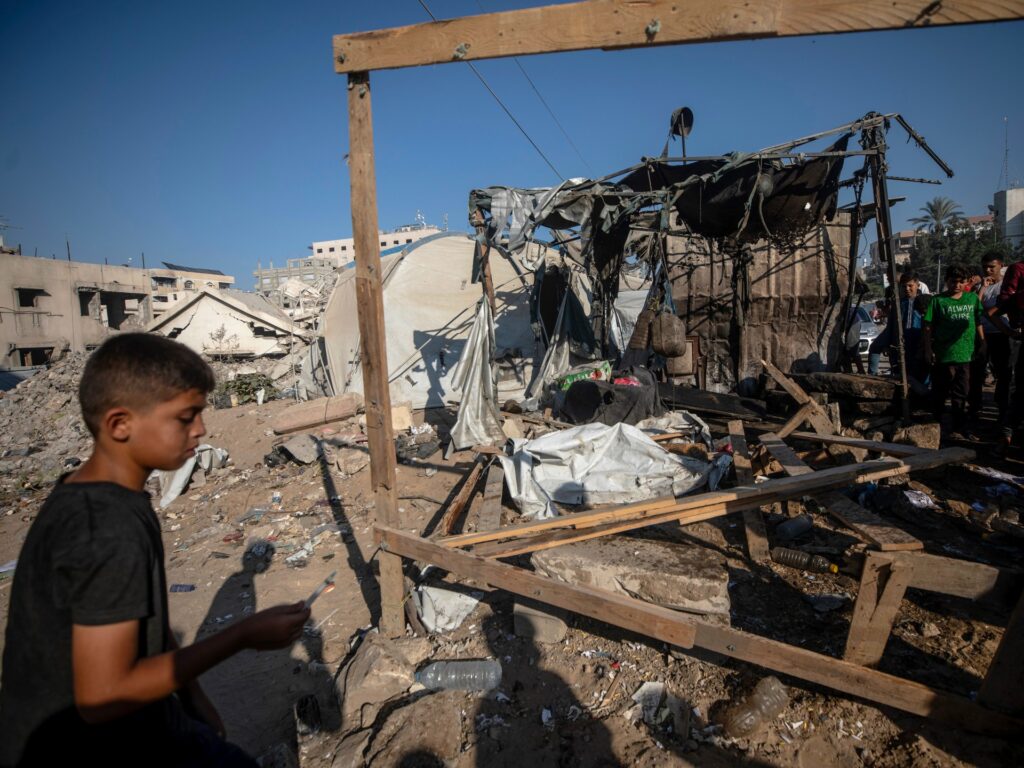
In the latest escalation of tensions in Gaza, three Palestinians were killed in Israeli strikes following renewed threats from Israel’s defence minister concerning the use of kites and balloons by Palestinians. The strikes have intensified the volatile situation in the region, drawing international concern over the potential for further violence.
The Israeli defence minister made a strong statement warning of possible expulsions of Palestinians from areas where kites or balloons are flown into Israeli territory. These aerial devices have been used by Palestinians as a form of protest, often causing fires when they drift over the border into Israeli land.
This development marks a significant intensification of Israel’s approach to the protests, which have seen the deployment of kites and balloons as symbolic resistance and a tactic to disrupt and pressure Israel. The use of such devices has prompted harsh responses from Israel, citing security concerns and the need to protect its citizens.
The three fatalities in the strikes underscore the high stakes and tragic consequences of the ongoing confrontations. The violence has drawn widespread condemnation and calls for restraint from the international community, urging both sides to seek peaceful solutions.
The conflict over the kite-flying protests is emblematic of the broader Israeli-Palestinian conflict, where acts of defiance and military responses continue to fuel cycles of violence. The renewed threats to expel Palestinians highlight the delicate and deeply contested nature of territorial control and security in the region.
Observers note that the situation remains highly fluid, with the potential for further escalations if provocations and retaliations continue. The international community continues to monitor developments closely, advocating for dialogue and measures to avoid further loss of life.
The strike killings and the defence minister’s warnings have sparked fears of a new round of heightened confrontations, potentially affecting the prospects for peace and stability in Gaza and beyond. The humanitarian impact on the civilian population also remains a critical concern, as the region faces ongoing economic hardships and restrictions.
In summary, the deadly strikes in Gaza following Israel’s renewed threats over kite and balloon flying exacerbate an already fraught situation. The cycle of protest and military retaliation continues to pose significant challenges for peace efforts, underscoring the urgent need for diplomatic engagement and conflict resolution initiatives.
As the world watches, the hope remains that both parties will find a path to de-escalate tensions and pursue coexistence rather than conflict, to prevent further loss of life and suffering in one of the most enduring and complex conflicts of our time.