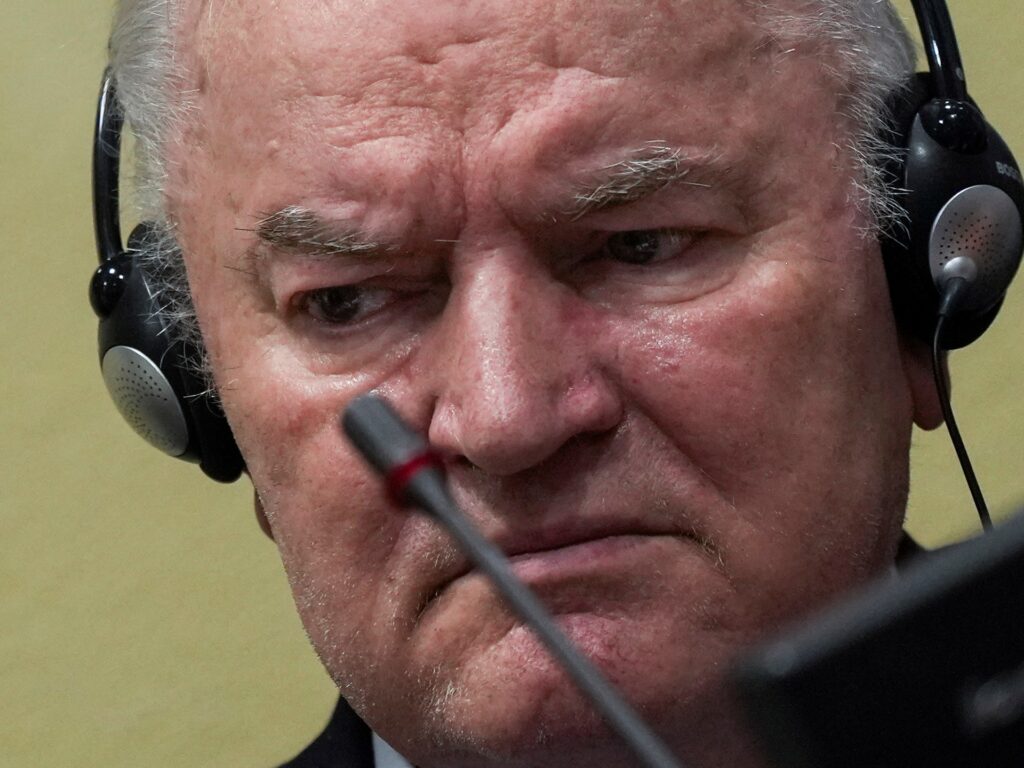
Ratko Mladic, the Bosnian Serb military leader infamous for his pivotal role in the Bosnian War and the Srebrenica genocide, has died in prison at the age of 84. Mladic’s death marks the end of a contentious chapter in the history of the Balkans and international justice.
Born in 1942, Ratko Mladic rose through the ranks of the Yugoslav People’s Army before becoming the chief military commander of the Bosnian Serb forces during the Bosnian War from 1992 to 1995. His leadership was marked by brutal ethnic cleansing campaigns and massacres against Bosnian Muslims and Croats.
Mladic is most notoriously known for his involvement in the Srebrenica massacre in July 1995, where more than 8,000 Bosniak men and boys were systematically killed in what is considered the worst atrocity on European soil since World War II. The massacre was later classified as genocide by international courts.
Following years in hiding after the war, Mladic was arrested in 2011 and transferred to The Hague to face trial before the International Criminal Tribunal for the former Yugoslavia (ICTY). In 2017, he was convicted of genocide, war crimes, and crimes against humanity, including the Srebrenica genocide, sieges, torture, and forced displacement.
He was sentenced to life imprisonment, a verdict that was hailed by many international observers as a significant step towards justice for the victims of the Bosnian War.
Throughout the proceedings, Mladic maintained his innocence, denying involvement in any war crimes. His trial was a pivotal moment in post-conflict reconciliation efforts in the Balkans, symbolizing accountability for high-ranking military officials.
Mladic’s death in prison closes a painful chapter but also reopens conversations about justice, reconciliation, and the healing process for the people affected by the Yugoslav wars. His actions and subsequent conviction continue to be a stark reminder of the brutal consequences of ethnic nationalism and war.
His legacy is deeply divisive: regarded as a war hero by some Serbian nationalists, while reviled as a war criminal by the international community and the families of victims. The death of Ratko Mladic is a significant moment in modern European history, invoking reflections on justice, memory, and the future of peace in the region.
As the region grapples with this news, global human rights organizations have reiterated the importance of remembering the victims and continuing efforts to prevent such atrocities from happening again.
Mladic’s life and actions remain a complex, controversial part of the history of the Balkans and international law, symbolizing both the horrors of ethnic conflict and the long path towards justice and reconciliation.