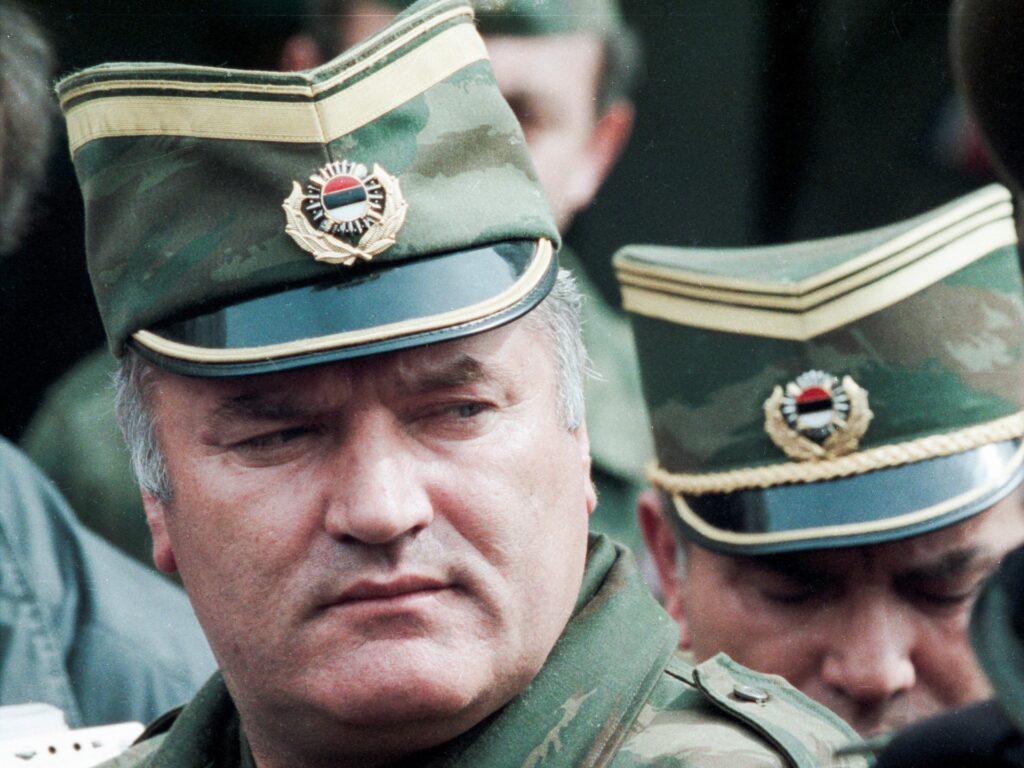
Ratko Mladic, the notorious Bosnian Serb military leader widely known as the ‘butcher of Bosnia,’ has died at the age of 84. The UN tribunal in The Hague confirmed that Mladic passed away in a United Nations prison hospital in the Netherlands.
Mladic was convicted for war crimes, crimes against humanity, and genocide committed during the Bosnian War in the 1990s. His military role was pivotal in some of the war’s most brutal episodes, including the Siege of Sarajevo and the Srebrenica massacre, the latter recognized as the worst massacre in Europe since World War II.
The United Nations International Criminal Tribunal for the former Yugoslavia (ICTY) found Mladic guilty in 2017, sentencing him to life imprisonment for his involvement in the atrocities that resulted in the deaths of thousands of civilians.
His conviction was a significant moment in international justice, representing accountability for wartime atrocities that previously went unpunished. Mladic’s death marks the end of a controversial and painful chapter in the history of the Balkans and the global fight against impunity for war crimes.
Born in 1942, Mladic rose through the ranks of the Yugoslav People’s Army before becoming the chief military commander of the Bosnian Serb forces. Under his command, countless atrocities were committed, including ethnic cleansing campaigns directed primarily against Bosnian Muslims and Croats.
International efforts to bring Mladic to justice spanned over a decade, with the war criminal evading capture for many years before finally being arrested in Serbia in 2011.
The death of Ratko Mladic in a UN prison hospital closes the chapter on his life, but it also reinforces the importance of international judicial mechanisms in combating crimes against humanity. His legacy remains deeply divisive, evoking strong emotions in Bosnia, the Balkans, and beyond.
Victims and survivors of the Bosnian War remember Mladic for the immense suffering they endured and see his sentencing as a measure of justice for the atrocities committed. Governments and human rights organizations continue to highlight the critical need for vigilance against the recurrence of such crimes and emphasize the imperative of reconciliation and peacebuilding in post-conflict societies.
The passing of Mladic reminds the global community of the ongoing responsibility to address war crimes and ensure that such acts never happen again. His death in detention underscores the role of international justice in holding accountable those who perpetrate grave violations of human rights and international law.
As the world reflects on the tragic legacy of the Bosnian War and the crimes committed during that time, the focus remains on remembering the victims, supporting survivors, and strengthening global efforts to prevent genocide and other mass atrocities in the future.