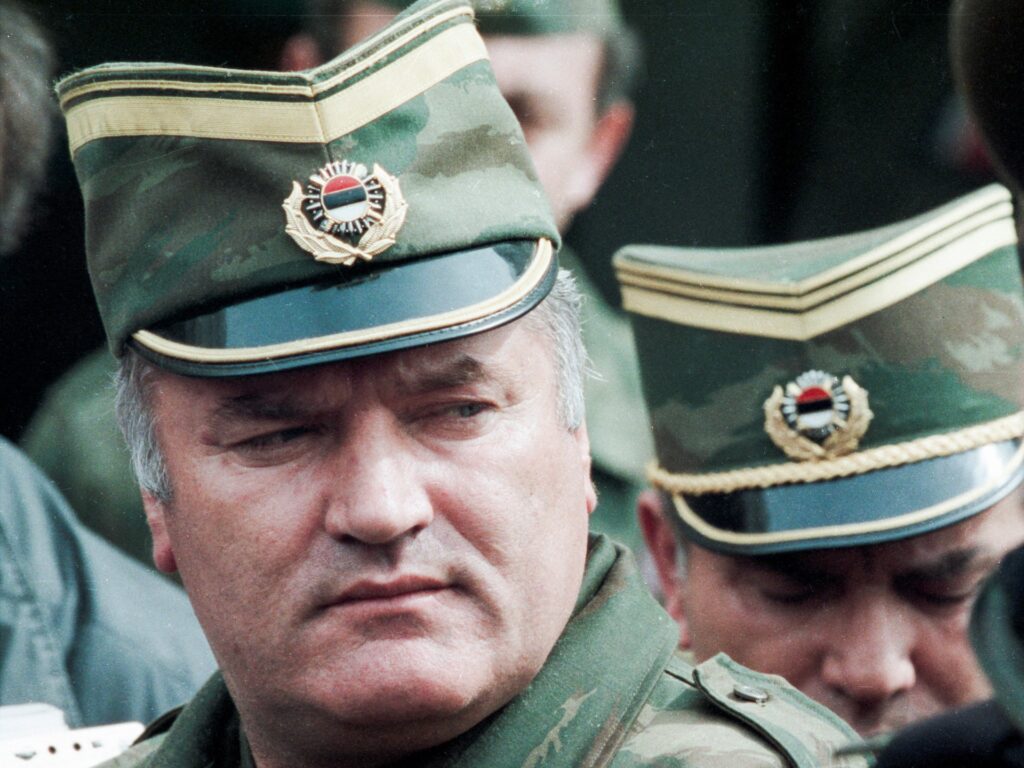
Ratko Mladic, the Bosnian Serb military leader known as the “Butcher of Bosnia,” has died in a United Nations prison hospital located in The Hague, Netherlands. Mladic was a prominent figure during the Bosnian War in the early 1990s and was convicted of multiple war crimes, including genocide, by the International Criminal Tribunal for the former Yugoslavia (ICTY).
Mladic’s death marks the end of a significant chapter in the pursuit of justice for war crimes committed during the Yugoslav Wars. He was infamous for his role in orchestrating atrocities such as the Srebrenica massacre, where more than 8,000 Bosniak men and boys were systematically killed in 1995.
Born in 1942, Mladic rose to become the chief military commander of the Bosnian Serb forces during the conflict. His leadership was marked by aggressive sieges, including the prolonged siege of Sarajevo, which resulted in thousands of civilian deaths.
The ICTY found Mladic guilty in 2017 of genocide, war crimes, and crimes against humanity. His conviction was pivotal in holding key figures accountable for the horrors that unfolded during the Balkan conflicts.
Mladic was serving a life sentence at the time of his death. Reports indicate that he passed away in the UN detention facility hospital in The Hague, where he had been held since his extradition in 2011.
The reaction to Mladic’s death has been mixed. For many survivors and victims’ families, his death may bring a sense of closure to years of pain and suffering. However, some groups continue to view him as a hero, reflecting the ongoing divisions within the region over the interpretation of the conflict.
International leaders and human rights organizations have reiterated the importance of justice and reconciliation in the Balkans, emphasizing the need to remember the victims and uphold the rule of law.
Mladic’s passing also raises questions about the future of war crimes tribunals and efforts to address accountability for atrocities worldwide. The ICTY officially closed in 2017, but its legacy continues to impact international justice systems.
The Bosnian War, which lasted from 1992 to 1995, resulted in the deaths of an estimated 100,000 people and displaced millions. The conflict remains one of the most devastating in European history since World War II.
As the region continues to grapple with its past, Mladic’s legacy remains a stark reminder of the human cost of ethnic hatred and conflict. His death may signal the closing of a painful chapter but also underscores the ongoing challenges of achieving lasting peace and healing in Bosnia and Herzegovina and the wider Balkans.
The international community continues to support initiatives aimed at fostering dialogue, reconciliation, and justice to prevent the recurrence of such tragedies in the future. Memorials and educational programs remain crucial in honoring the victims and promoting a culture of peace.
In conclusion, Ratko Mladic’s death in a UN prison hospital marks the end of a controversial and brutal figure who left an indelible mark on the history of the Balkans. His life and actions will be studied and remembered as a somber lesson on the consequences of war crimes and the enduring quest for justice.