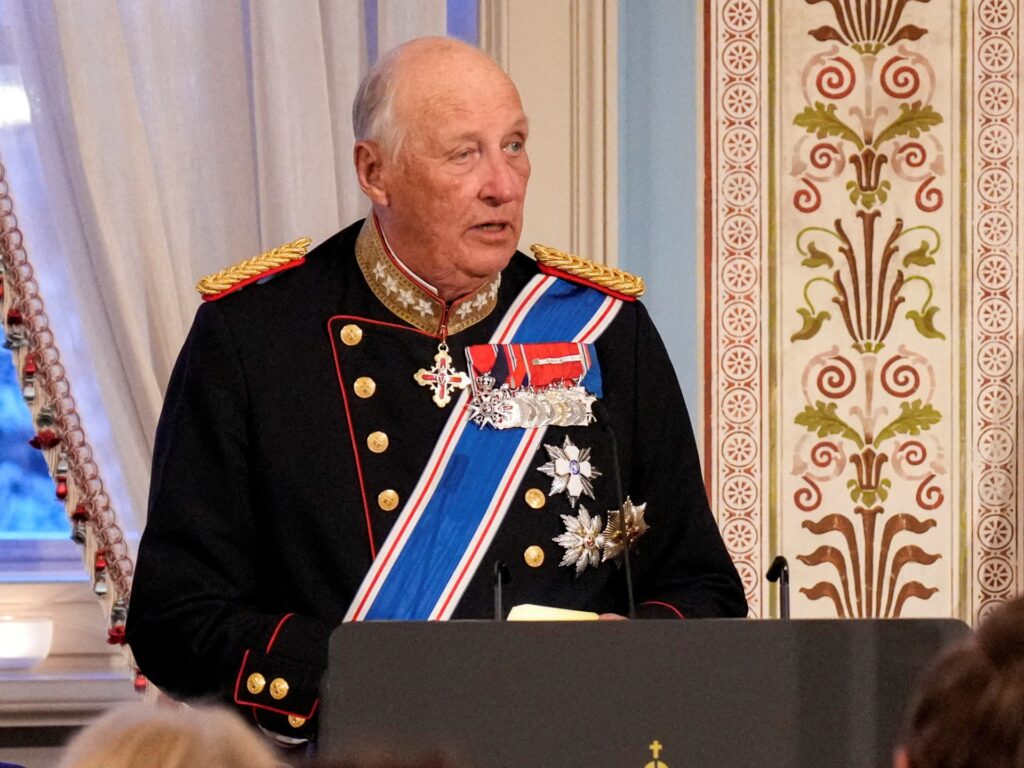
King Harald V of Norway, Europe’s oldest reigning monarch, has been hospitalized in Oslo since August 17 due to a blood disease. The Royal Palace has reported that the King is currently in an ‘extremely serious’ condition, underscoring the gravity of his health situation.
King Harald V has ruled Norway since 1991 and is well respected not only within his country but across Europe for his long-standing service and dedication to his role. His illness has understandably caused concern among the Norwegian public and international observers alike.
The exact nature of the blood disease affecting King Harald remains undisclosed, but the palace’s statement highlights the critical status of his health. Medical teams are providing continuous care, and the royal family has appealed for privacy during this difficult time.
King Harald’s prolonged hospital stay has disrupted his royal duties, prompting the delegation of certain responsibilities to other members of the royal family. His son, Crown Prince Haakon, has been increasingly visible in public engagements, reassuring citizens and maintaining continuity in the monarchy’s functions.
The news of the King’s serious condition has sparked an outpouring of support from Norwegians and world leaders. Many have sent messages wishing for his recovery and expressing solidarity with the royal family.
This situation also brings attention to the constitutional role of the monarch in Norway, which is largely ceremonial but symbolically significant. The monarchy plays a central role in national identity and unity, especially during times of crisis.
Healthcare experts emphasize the challenges of managing blood diseases, which can range from infections to chronic conditions needing intensive treatment. Despite advancements in medical care, such diseases remain serious, especially in elderly patients like King Harald, who is in his late 80s.
Historically, King Harald has been a symbol of stability and resilience for Norway, having guided the nation through numerous events over more than three decades on the throne. His potential incapacity raises questions about succession protocols and the future leadership of the Norwegian monarchy.
The palace has committed to providing regular updates on the King’s condition to keep the public informed. Meanwhile, Norwegians are rallying in support, reflecting the deep respect and affection held for their monarch.
This developing story continues to draw attention as the nation hopes for the King’s recovery and the continuation of his reign, acknowledging the significant role he has played in European history and Norwegian society.